
Galaxy S24+ vs Google Pixel 8

Galaxy S24+
Galaxy S24+
Starting at

Refurbished price:A$639.00

Versus A$873.00 new

See options
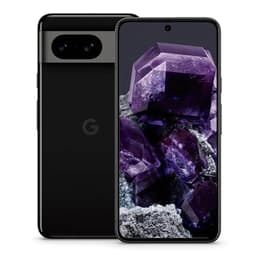
Google Pixel 8
Google Pixel 8
Starting at

Refurbished price:A$465.00

Versus A$1,245.00 new

See options

Ratings

The Samsung Galaxy S24 Plus, released in January 2024, and the Google Pixel 8, launched in October 2023, are both prominent Android smartphones offering distinct user experiences. While the Galaxy S24 Plus emphasizes a larger, high-resolution display and robust performance, the Pixel 8 focuses on a compact design, advanced computational photography, and a streamlined software experience. Both devices run on the Android operating system, with each manufacturer providing their unique software enhancements and long-term support commitments.

Scores

Durability

When considering the practical lifespan of these devices, both the Galaxy S24 Plus and the Pixel 8 offer substantial software support, contributing to their longevity.

  • Software Support: The Samsung Galaxy S24 Plus is committed to providing seven years of software updates, including OS upgrades and security patches [1, 17]. Similarly, the Google Pixel 8 also offers an extensive seven years of OS and security updates, along with regular Feature Drops, ensuring support until at least October 2030 [10, 13, 15, 27]. This long-term commitment from both manufacturers means users can expect their devices to remain current and secure for an extended period.
  • Build and Durability: Both smartphones feature an IP68 rating for dust and water resistance, indicating a high level of protection against environmental elements [8, 14, 20]. The Galaxy S24 Plus incorporates an aluminum frame and Gorilla Glass Victus 2 for its front and back, contributing to its sturdy construction [20, 34]. The Pixel 8 also uses Gorilla Glass Victus for its front and back, paired with an aluminum frame [8].
  • Practical Lifespan: With comparable durability features and identical long-term software support, both devices are designed to offer a practical lifespan that extends well beyond typical usage cycles, making them suitable for users seeking a device they can keep for many years.

Release year

2024

2023

Operating system

Android

Android

Foldable

No

No

Performance

The performance of the Galaxy S24 Plus and the Pixel 8 is driven by their respective internal components, leading to different strengths in real-world usage.

  • Processing Power: The Galaxy S24 Plus is equipped with a current-generation processor, which delivers top-tier performance, allowing it to handle demanding applications and graphics-intensive games smoothly [1, 32]. Users report a fast and responsive experience, with the device capable of running any app or game without significant slowdowns [32, 33]. The Pixel 8 features Google's custom-designed processor, which provides a smooth software experience and efficient handling of everyday tasks and AI-driven features [16, 41]. While it offers decent performance, some comparisons suggest it may not match the raw processing power of some competitors for the most intensive tasks [7].
  • Multitasking and Responsiveness: The Galaxy S24 Plus typically comes with 12GB of RAM, which significantly aids in keeping multiple applications open in the background and ensures quick switching between them [9, 29, 36]. The Pixel 8, with 8GB of RAM, also offers a responsive experience for general use and multitasking, though heavy users might notice differences when managing a large number of active applications [8, 39].
  • Battery Behavior: The Galaxy S24 Plus houses a 4900mAh battery, often providing well over a day of moderate use, with some users reporting up to two days on a single charge, particularly with the Snapdragon variant [2, 30, 32]. The Pixel 8 has a 4575mAh battery, which generally provides a full day of mixed usage, with heavy users potentially needing a recharge by late afternoon [6, 7, 45]. Both devices support fast wired and wireless charging, allowing for quick power top-ups [2, 8].

Memory (GB)

12 GB

8 GB

Screen quality

Both smartphones offer high-quality displays, but they differ in size, resolution, and peak brightness, impacting the visual experience.

  • Display Technology and Clarity: The Samsung Galaxy S24 Plus features a 6.7-inch AMOLED display with a QHD+ resolution (3120x1440 pixels), resulting in a very sharp and detailed image [1, 3, 11, 29]. The Google Pixel 8 comes with a slightly smaller 6.2-inch OLED display with a Full HD+ resolution (1080x2400 pixels) [8, 14, 39]. Both technologies offer vibrant colors and deep blacks, but the higher pixel density of the S24 Plus provides a finer level of detail.
  • Brightness and Outdoor Visibility: The Galaxy S24 Plus boasts an impressive peak brightness of 2600 nits, making it exceptionally easy to view content even under direct sunlight [1, 11, 17]. The Pixel 8 also offers a bright display with a peak brightness of 2000 nits, ensuring good visibility in various lighting conditions [8, 39].
  • Refresh Rate and Smoothness: Both devices feature an adaptive refresh rate that can scale from 1Hz to 120Hz, providing smooth scrolling and animations while optimizing battery consumption [1, 3, 8, 39]. This dynamic adjustment ensures a fluid user interface experience across different activities, from static reading to fast-paced gaming.

Resolution

1440x3120

1080 x 2400

Audiovisual

The camera systems on the Galaxy S24 Plus and Pixel 8 approach photography with different hardware configurations and processing philosophies.

  • Rear Camera System: The Galaxy S24 Plus is equipped with a versatile triple-camera setup, including a 50MP main sensor, a 12MP ultrawide lens, and a 10MP telephoto lens with 3x optical zoom [2, 24, 29]. This configuration provides flexibility for various shooting scenarios, from wide landscapes to zoomed-in subjects. The Pixel 8 features a dual-camera system, comprising a 50MP main sensor and a 12MP ultrawide lens [8, 14, 19]. While it lacks a dedicated telephoto lens, Google's computational photography excels at digital zoom and image processing.
  • Photography Performance: The Galaxy S24 Plus delivers objectively impressive photos, particularly in daylight, with good detail and natural colors [2, 29]. Its low-light performance is also noted as good [29]. However, some users have reported inconsistencies in image processing, with images sometimes appearing softer or exhibiting color noise [36, 42]. The Pixel 8 is highly praised for its outstanding camera system, producing excellent pictures in auto mode with strong low-light capabilities and accurate color reproduction [19, 21]. Its AI-driven features like 'Best Take' and 'Magic Editor' offer advanced editing capabilities [16, 19].
  • Video and Audio: Both phones are capable of high-quality video recording, with the Galaxy S24 Plus supporting 8K video at 30fps and 4K at 60fps [24]. The Pixel 8 also offers strong video stabilization and clean sound recording [21]. Both devices feature stereo speakers, providing a good audio experience for media consumption [8, 20, 36].

Miscellaneous

Beyond core specifications, several practical elements differentiate the user experience of the Galaxy S24 Plus and the Pixel 8.

  • Connectivity and Ports: Both smartphones support modern connectivity standards, including 5G, Wi-Fi 6E/7, and Bluetooth 5.3, ensuring fast and reliable wireless connections [8, 34]. Both utilize a USB-C port for charging and data transfer, but neither includes a traditional headphone jack [8].
  • Biometric Security: For secure unlocking, both devices feature an in-display fingerprint sensor [8, 14, 29]. The Pixel 8 also offers a reliable face unlock feature [38].
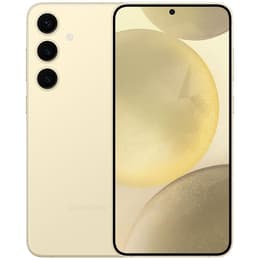
  • Design and Handling: The Galaxy S24 Plus measures 158.5 x 75.9 x 7.6mm and weighs 197g, offering a substantial feel in hand [29, 34]. The Pixel 8 is more compact and slightly thicker at 150.5 x 70.8 x 8.9 mm and weighs 187g, which some users find comfortable for one-handed use [8, 39, 41]. The Galaxy S24 Plus features a flatter design with squared-off edges, while the Pixel 8 has a more rounded aesthetic [11, 38].

Weight

200 oz

187 oz

Screen size (in)

6.7

6.2

Network

5G

5G

SIM card

Physical SIM + eSIM

Physical SIM + eSIM

Carrier compatibility

Unlocked

Unlocked

Connector

USB-C

USB-C

The Samsung Galaxy S24 Plus and the Google Pixel 8 each present compelling options for Android users, catering to slightly different priorities. User feedback often highlights the Galaxy S24 Plus's stunning, high-resolution display and its powerful, consistent performance, especially for demanding applications and gaming [1, 20, 32, 33]. Its battery life is also frequently praised, particularly for the Snapdragon variant [30, 32]. However, some users have noted that the camera, while capable, may not always deliver the most consistent results or significant upgrades over previous generations [36, 42].

Conversely, the Google Pixel 8 receives consistent acclaim for its exceptional camera capabilities, driven by advanced computational photography and AI features that enhance image quality and offer unique editing tools [16, 19, 21]. Its clean software experience and the promise of seven years of updates are also significant advantages for users prioritizing long-term software support and a streamlined interface [10, 27, 38]. Common criticisms for the Pixel 8 often revolve around its battery life, which is generally considered adequate but not outstanding for heavy users, and occasional reports of the fingerprint reader being less reliable than some competitors [23, 25, 38, 43].

Users prioritizing a large, vibrant, and incredibly bright display for media consumption and a device with robust raw performance for intensive tasks may find the Samsung Galaxy S24 Plus well-suited to their needs. On the other hand, individuals who value a compact form factor, a top-tier camera system with advanced AI features, and a pure Android experience with extended software longevity will likely lean towards the Google Pixel 8. Both devices represent quality-assured refurbished options, providing an eco-friendly alternative for consumers seeking reliable technology.


See all articles

Our recent comparisons