
Compare models
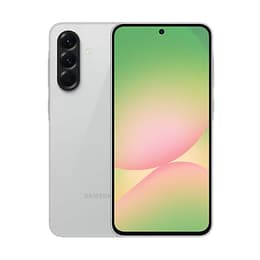
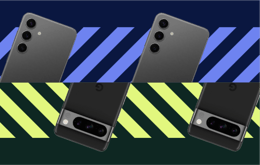
Galaxy A56 vs Google Pixel 6a
- 1-year warranty
- Free standard shipping
- Free 30-day returns
Differences at a glance
The Samsung Galaxy A56 (2025) and the Google Pixel 6a (2022) are popular mid-range smartphones designed to deliver reliable everyday performance without the complexity or scale of flagship devices. While both models run on the Android operating system, they approach hardware design, software ecosystems, and user experience through distinct philosophies. Choosing between them depends on whether you prioritize a larger modern display with fast charging or a compact footprint optimized for straightforward software interaction.
Available Models
Colour
Storage (GB)
Scores
Durability
When evaluating hardware longevity and support timelines, both devices offer distinct software windows relative to their release schedules.
- Release timeline and support: The Galaxy A56 arrived in early 2025, granting it a significantly more extended official software support window compared to the Google Pixel 6a, which debuted in mid-2022.
- Expected lifespan: Because of its later launch date, the Galaxy A56 will maintain current security patches and system updates further into the future, making it well-suited for long-term daily use.
- Repairability and build durability: Both models incorporate robust water and dust resistance ratings alongside solid frame construction, though routine wear over several years is typical for daily-driven mobile hardware.
Release year
2025
2022
Foldable
No
No
Performance
Underneath their exteriors, these phones manage everyday tasks, multitasking, and power consumption differently based on their internal hardware configurations.
- Storage and memory: The Galaxy A56 features flexible configurations including higher RAM tiers and up to 256GB of storage, whereas the Pixel 6a relies on a fixed 128GB storage capacity paired with moderate RAM.
- Everyday responsiveness: Both devices handle standard web browsing, social media applications, and streaming smoothly, though the Galaxy A56 handles heavy multitasking and intense background tasks with fewer slowdowns thanks to its newer processing hardware.
- Battery behavior: The Galaxy A56 includes a larger battery capacity paired with faster wired charging capabilities, while the Pixel 6a relies on a smaller cell and slower charging speeds, meaning heavy users will require more frequent recharges on the older Google model.
Screen quality
Visual output and physical dimensions dictate how each phone feels during media consumption, reading, and outdoor navigation.
- Display technology and size: The Galaxy A56 features a expansive 6.7-inch Super AMOLED screen, whereas the Pixel 6a opts for a more compact 6.1-inch OLED panel, offering deeper blacks and high contrast for viewing photos.
- Refresh rate and smoothness: The Galaxy A56 supports a 120Hz refresh rate for fluid scrolling through menus and web pages, while the Pixel 6a is capped at a standard 60Hz refresh rate.
- Outdoor visibility: Both screens reach adequate brightness levels for daylight readability, though the larger canvas on the Samsung model provides more workspace for productivity tasks.
Resolution
1080x2340
1080 x 2400
Audiovisual
Capturing daily memories and handling media playback depend on the integrated sensor arrays and built-in acoustic hardware.
- Camera capabilities: The Galaxy A56 features a triple-lens rear setup led by a high-resolution primary sensor alongside an ultra-wide and a macro lens, while the Pixel 6a uses a dual-lens configuration backed by computational photography software.
- Photo and video output: The Pixel 6a excels at natural color processing and low-light still photography through software tuning, while the Galaxy A56 delivers sharp daylight imagery and versatile framing options with its multi-lens array.
- Audio and media: Both devices provide clear stereo speaker output suitable for hands-free calls and casual video watching, though neither includes a traditional 3.5mm headphone jack.
Miscellaneous
Practical daily usability is shaped by physical dimensions, connectivity standards, and biometric security features.
- Build and handling: The Galaxy A56 is larger and heavier due to its expansive screen, making it ideal for media consumption, whereas the Pixel 6a offers a lighter, narrower profile that fits comfortably in smaller pockets.
- Biometrics and sensors: Both models utilize under-display optical fingerprint sensors for secure unlocking alongside standard motion and orientation sensors.
- Connectivity: Modern 5G connectivity, Wi-Fi standards, and Bluetooth support are standard across both units, ensuring reliable pairing with wireless accessories and mobile networks.
Weight
198 oz
250 oz
Screen size (in)
6.7
6.1
SIM card
Physical SIM + eSIM
Physical SIM + eSIM
Carrier compatibility
Unlocked
Unlocked
What the community thinks
User discussions across community forums highlight distinct preferences for each of these smartphones. Owners of the Google Pixel 6a frequently praise its clean software layout, compact form factor, and reliable point-and-shoot camera capabilities. At the same time, common criticisms point toward its slower charging speeds and standard 60Hz screen. Conversely, Galaxy A56 users often highlight the fluid 120Hz display, modern design, and robust battery life as major daily advantages, while noting that its larger physical size is less suited for single-handed use.
When deciding between the two, users prioritizing a compact device with streamlined software will find the Pixel 6a well-suited to their needs. Meanwhile, users prioritizing a high-refresh-rate large display, faster charging capabilities, and extended software support will lean toward the Galaxy A56. For buyers exploring sustainable purchasing routes, a quality-assured refurbished option provides an eco-friendly alternative to purchasing newly manufactured hardware. Ultimately, the right choice depends entirely on individual preferences regarding screen size, software longevity, and physical handling.