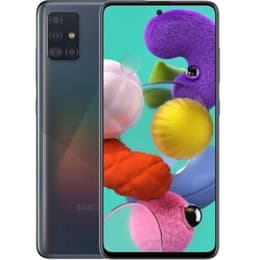
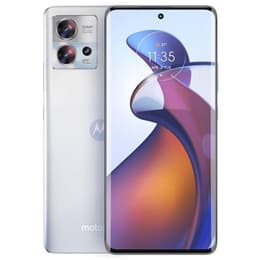

Galaxy A51 vs Motorola Edge 30 Fusion

Galaxy A51
Galaxy A51
Starting at

Refurbished price:A$196.16

Versus A$592.00 new

See options
Motorola Edge 30 Fusion
Starting at

Refurbished price:A$257.46

Versus A$1,352.00 new

See options

The Samsung Galaxy A51, released in late 2019 and early 2020, and the Motorola Edge 30 Fusion, launched in September 2022, are both Android smartphones designed to cater to different user priorities. While the Galaxy A51 offered a balanced experience for its time, the Edge 30 Fusion arrived later with more advanced hardware and a focus on performance and a smoother display experience. The primary distinctions between these two devices lie in their release timelines, processing power, display technology, and camera capabilities.

Scores

Durability

The practical lifespan of a smartphone is significantly influenced by its release date and the manufacturer's software support policy.

  • Release Timeline: The Samsung Galaxy A51 was initially released in December 2019 and January 2020, making it an older device compared to the Motorola Edge 30 Fusion, which launched in September 2022. This age difference directly impacts their expected longevity.
  • Software Longevity: The Galaxy A51, which debuted with Android 10, received major Android updates up to Android 13. However, software support for the 4G LTE variant of the Galaxy A51 officially ended in early 2024, meaning it no longer receives security patches or operating system upgrades. In contrast, the Motorola Edge 30 Fusion launched with Android 12 and was expected to receive updates up to Android 14. Its major OS update cycle likely concluded around late 2025 or early 2026, though security patches might extend slightly longer.
  • Physical Durability: The Galaxy A51 features a plastic back and frame with a Gorilla Glass 3 front for screen protection. The Motorola Edge 30 Fusion offers a more robust build with a Gorilla Glass 5 front and glass back, complemented by an aluminum frame, and carries an IP52 rating for dust and splash resistance. Users seeking a device with more recent software support and a more durable build will find the Edge 30 Fusion to be a more current option.

Release year

2019

2022

Compatible with latest Update

No

Yes

Operating system

Android

Android

Foldable

No

No

Performance

Performance is a key differentiator, with the newer Motorola Edge 30 Fusion offering a more capable experience for demanding tasks.

  • Processing Power: The Samsung Galaxy A51 is equipped with a mid-range processor from its release era, which capably handles everyday applications and general browsing. However, users engaging in more intensive activities like graphic-heavy gaming or extensive multitasking may experience slower response times and occasional delays. The Motorola Edge 30 Fusion, on the other hand, integrates a processor that was considered flagship-level at its launch. This allows it to manage demanding applications, complex games, and seamless multitasking with greater efficiency and responsiveness.
  • Memory and Storage: The Galaxy A51 was available with 4GB, 6GB, or 8GB of RAM, and offered storage options of 64GB, 128GB, or 256GB, with the added flexibility of expandable storage via a microSD card up to 512GB. The Edge 30 Fusion typically comes with 8GB or 12GB of RAM and internal storage capacities of 128GB, 256GB, or 512GB, but it does not support expandable storage.
  • Battery Behavior: The Galaxy A51 houses a 4000 mAh battery, providing sufficient power for a day of moderate use, with 15W fast charging support. The Motorola Edge 30 Fusion features a 4400 mAh battery and supports significantly faster 68W charging, which can replenish the battery quickly. Despite its more powerful components and higher refresh rate display, some users report the Edge 30 Fusion offers decent battery life, often lasting a full day.

Memory (GB)

6 GB

8 GB

Screen quality

Both devices feature vibrant displays, but the Motorola Edge 30 Fusion offers a more fluid visual experience.

  • Display Technology and Clarity: The Samsung Galaxy A51 features a 6.5-inch Super AMOLED Infinity-O display with a 1080 x 2400 pixel resolution. This panel delivers deep blacks and rich colors, providing a clear viewing experience for everyday content. The Motorola Edge 30 Fusion sports a slightly larger 6.55-inch P-OLED display, also with a 1080 x 2400 pixel resolution, but enhances the visual experience with HDR10+ support.
  • Refresh Rate and Smoothness: A key difference lies in the refresh rate; the Galaxy A51 operates at a standard 60Hz. The Edge 30 Fusion, however, boasts a 144Hz refresh rate, resulting in noticeably smoother scrolling, more fluid animations, and a more responsive feel during interactions and gaming.
  • Brightness and Viewing Experience: Both displays offer good brightness levels for indoor use. The Edge 30 Fusion's P-OLED panel, combined with HDR10+ and a higher peak brightness of up to 1100 nits, provides a more vivid and immersive viewing experience, particularly for HDR content and in brighter outdoor conditions.

Resolution

1080 x 2400

1080 x 2400

Screen type

Super AMOLED

P-OLED

Audiovisual

The camera systems of these smartphones cater to different levels of photographic ambition, with the Edge 30 Fusion offering more advanced features.

  • Rear Camera Capabilities: The Samsung Galaxy A51 includes a quad-camera setup on the rear, featuring a 48MP main sensor, a 12MP ultrawide lens, a 5MP macro camera, and a 5MP depth sensor. It performs well in good lighting conditions, capturing decent everyday photos. The Motorola Edge 30 Fusion features a triple camera system with a 50MP main sensor that includes optical image stabilization (OIS), a 13MP ultrawide lens with autofocus that can also function for macro shots, and a 2MP depth sensor. The OIS on the main sensor helps in producing clearer images, especially in challenging lighting, and contributes to more stable video recording.
  • Low-Light and Video Performance: While the Galaxy A51 can struggle with low-light photography, producing mushy or noisy images, its video recording capabilities extend up to 4K at 30 frames per second. The Edge 30 Fusion generally offers improved low-light performance due to OIS and a larger sensor. It also supports higher resolution video recording, capable of capturing footage at up to 8K at 30 frames per second or 4K at 30/60 frames per second.
  • Front Camera and Audio: Both devices feature a 32MP front-facing camera for selfies and video calls. For audio, the Galaxy A51 typically offers a single bottom-firing speaker. The Motorola Edge 30 Fusion provides a more immersive audio experience with stereo speakers.

Main camera

48 megapixels

50 megapixels

Front camera

32 megapixels

32 megapixels

Miscellaneous

Beyond core specifications, several practical elements distinguish the user experience of these two devices.

  • Connectivity and Ports: The Samsung Galaxy A51 supports 4G LTE networks, Wi-Fi 5 (802.11ac), and Bluetooth 5.0. It also retains a 3.5mm headphone jack and uses a USB-C port for charging and data transfer. The Motorola Edge 30 Fusion is equipped with more modern connectivity options, including 5G network support, Wi-Fi 6E (802.11ax), and Bluetooth 5.2, offering faster wireless speeds and improved network performance. It exclusively uses a USB-C port and does not feature a 3.5mm headphone jack.
  • Biometric Security and Design: Both smartphones incorporate an optical under-display fingerprint sensor for secure unlocking. The Galaxy A51 has dimensions of 158.5 x 73.6 x 7.9 mm and weighs 172g, featuring a design with a plastic back that Samsung referred to as "glasstic." The Edge 30 Fusion is slightly thinner and lighter at 158.5 x 71.2 x 7.5 mm and 168g (for the vegan leather variant), with a more premium feel due to its glass back and aluminum frame.
  • Additional Features: The Edge 30 Fusion also includes an IP52 rating for dust and splash resistance, adding a layer of durability. Its haptic feedback system is often noted by users for providing a more refined tactile experience.

Weight

172 oz

168 oz

Screen size (in)

6.5

6,55

Network

4G

5G

SIM card

Physical SIM

Dual Physical SIM

Carrier compatibility

Unlocked

Unlocked

The Samsung Galaxy A51 and Motorola Edge 30 Fusion cater to distinct user needs, largely influenced by their respective release dates and technological advancements.

The Galaxy A51 was often praised for its vibrant Super AMOLED display, the inclusion of a traditional 3.5mm headphone jack, and expandable storage, which were significant advantages for many users. However, common criticisms included its performance, which could be sluggish with demanding applications or gaming, and its camera's limitations in low-light conditions. Users also note that software support for the device has concluded.

Conversely, the Motorola Edge 30 Fusion garnered positive feedback for its exceptionally smooth 144Hz P-OLED display, robust performance for a wide range of tasks, and its premium build quality. Its main camera, particularly with optical image stabilization, was also well-regarded. Some users, however, expressed concerns about the ultrawide camera's performance and the absence of a headphone jack or expandable storage.

Users prioritizing a device for basic daily communication, media consumption, and who value a headphone jack and expandable storage might find the Galaxy A51 suitable, especially if their usage does not involve intensive applications. For those who require a more powerful device for gaming, demanding apps, and a significantly smoother visual experience, coupled with faster charging and 5G connectivity, the Motorola Edge 30 Fusion presents a more compelling option. It also offers a more modern design and improved camera capabilities for photography and videography. Both models are available as quality-assured refurbished options, providing an eco-friendly alternative for consumers.

See all articles

Our recent comparisons