Galaxy A33 5G vs Motorola Razr 40

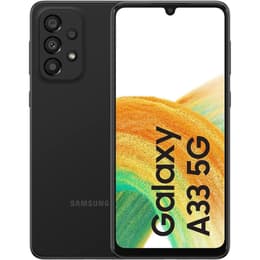
Galaxy A33 5G
Galaxy A33 5G
Starting at

Refurbished price:A$206.00

Versus A$495.00 new

See options
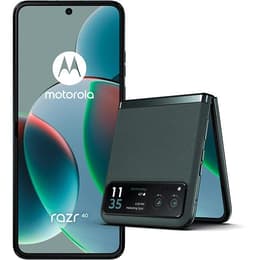
Motorola Razr 40
Motorola Razr 40
See options

The Samsung Galaxy A33 5G, released in April 2022, and the Motorola Razr 40, launched in June 2023, represent distinct approaches to smartphone design and functionality. The Galaxy A33 5G offers a traditional slab form factor, focusing on a balanced mid-range experience, while the Motorola Razr 40 introduces a foldable clamshell design, prioritizing portability and a unique user interaction. Both devices operate on the Android platform, providing access to a wide ecosystem of applications and services.

Scores

Durability

When considering the long-term usability of these devices, their release timelines and software support policies are key factors.

  • Release and Software Support: The Galaxy A33 5G, released in April 2022, was promised four generations of Android OS updates and five years of security updates from its launch. This commitment suggests a longer period of official software support, potentially extending its practical lifespan. The Motorola Razr 40, launched in June 2023, typically receives fewer major OS updates compared to Samsung's mid-range offerings, though it benefits from a more recent release date.
  • Physical Durability: The Galaxy A33 5G features Corning Gorilla Glass 5 for screen protection and carries an IP67 rating for water and dust resistance, meaning it can withstand submersion in up to 1 meter of freshwater for up to 30 minutes. The Motorola Razr 40, with its foldable design, has a water-repellent coating and Gorilla Glass Victus protecting its external display. Its hinge mechanism is a critical component for its durability, designed for repeated folding and unfolding.
  • Repairability: The Galaxy A33 5G is generally considered to have similar repairability to other Samsung A-series phones, which often involves standard component replacement. The Razr 40's foldable nature introduces more complex internal components and a specialized hinge, which can make repairs more intricate.

Release year

2022

2023

Compatible with latest Update

Yes

Yes

Operating system

Android

Android

Foldable

No

Yes

Performance

The performance of a smartphone dictates how smoothly it handles daily tasks and demanding applications.

  • Processing Power: The Galaxy A33 5G is equipped with an octa-core processor designed to manage heavy-duty multitasking and everyday applications efficiently. Users generally report a smooth experience for typical usage, with light games running well. However, graphic-intensive games may place a higher demand on its processing capabilities. The Motorola Razr 40 features an octa-core processor that provides capable performance for general use. While it handles daily tasks without significant slowdowns, it may not match the performance of devices with more powerful chipsets, particularly in demanding scenarios like intensive gaming or heavy multitasking.
  • Multitasking and Storage: Both devices offer various RAM configurations, typically starting from 6GB or 8GB, which supports smooth app switching and background processes. The Galaxy A33 5G comes with 128GB or 256GB of internal storage and supports expandable storage via a microSD card up to 1TB, offering flexibility for users with large media libraries. The Motorola Razr 40 also provides 128GB or 256GB storage options, with some variants offering 8GB or 12GB of RAM, but it does not include a microSD card slot for expansion.
  • Battery Behavior: The Galaxy A33 5G houses a 5000 mAh battery, which is designed to provide extended usage on a single charge, often lasting through a full day for many users. The Motorola Razr 40 has a 4200 mAh battery. Despite its smaller capacity compared to some traditional smartphones, its power efficiency allows it to offer respectable battery life, with some users reporting it can last a full day.

Memory (GB)

4 GB

8 GB

Screen quality

The display is a primary interface for smartphone interaction, and both devices offer distinct visual experiences.

  • Display Technology and Size: The Galaxy A33 5G features a 6.4-inch Super AMOLED Infinity-U display with a Full HD+ resolution (1080 x 2400 pixels). This technology is known for producing deep blacks and vibrant colors. The Motorola Razr 40's main display is a larger 6.9-inch foldable LTPO AMOLED panel with a Full HD+ resolution (1080 x 2640 pixels). Its key differentiator is the foldable form factor, allowing the device to become more compact when closed. It also includes a 1.5-inch external OLED display for quick notifications and interactions.
  • Refresh Rate and Brightness: The Galaxy A33 5G offers a 90Hz refresh rate, contributing to smoother scrolling and a more fluid visual experience compared to standard 60Hz displays. Samsung claims a maximum brightness of up to 800 nits, which aids visibility in various lighting conditions. The Motorola Razr 40's main display boasts a higher 144Hz refresh rate, providing an even more responsive and smooth visual experience, particularly noticeable in fast-paced content. Its main display can reach up to 1400 nits peak brightness, while the external display can reach 1000 nits, enhancing outdoor visibility.
  • Viewing Experience: The Galaxy A33 5G provides a consistent, expansive viewing area suitable for media consumption and productivity. The Razr 40 offers a unique viewing experience with its foldable screen, which can be beneficial for hands-free viewing in a 'tent' mode, and its external display provides quick access to information without needing to open the phone.

Resolution

1080 x 2400

1080 x 2640

Screen type

Super AMOLED

Foldable LTPO AMOLED

Audiovisual

Both smartphones offer camera systems designed to capture everyday moments, though with different strengths and features.

  • Rear Camera System: The Galaxy A33 5G is equipped with a quad-camera setup on the rear, featuring a 48MP main sensor with Optical Image Stabilization (OIS), an 8MP ultrawide lens, a 5MP macro lens, and a 2MP depth sensor. This versatile array aims to cover a range of photographic situations. The Motorola Razr 40 features a dual-camera system on the rear, consisting of a 64MP main sensor with OIS and a 13MP ultrawide lens that also supports autofocus for macro shots. The higher megapixel count on the main sensor can capture more detail, which is then often processed down to 16MP images.
  • Photography Performance: The Galaxy A33 5G's main camera with OIS helps in capturing clearer shots, especially in low light, and smoother videos. Its ultrawide camera expands the field of view, while the macro and depth sensors offer specialized shooting modes. The Razr 40's main camera performs well in good lighting, producing images with realistic colors and good dynamic range. Its ultrawide camera, with autofocus, is useful for both wide shots and close-up subjects. A notable feature of the Razr 40 is the ability to use its main rear cameras for high-quality selfies, utilizing the external display as a viewfinder.
  • Video Recording and Front Camera: Both devices are capable of recording video at up to 4K resolution at 30 frames per second. For front-facing cameras, the Galaxy A33 5G has a 13MP sensor, suitable for video calls and selfies. The Motorola Razr 40 features a 32MP front camera, which uses pixel binning to produce 8MP images, offering detailed selfies.

Main camera

48 megapixels

64 megapixels

Front camera

13 megapixels

32 megapixels

Miscellaneous

Beyond core features, several practical elements contribute to the overall user experience of these smartphones.

  • Connectivity: Both the Galaxy A33 5G and the Motorola Razr 40 support 5G connectivity, enabling faster mobile data speeds where available. For Wi-Fi, the Galaxy A33 5G supports Wi-Fi 5 (802.11 a/b/g/n/ac), while the Motorola Razr 40 offers the newer Wi-Fi 6E standard, which can provide faster and more stable connections on compatible networks. Both include Bluetooth for wireless accessory connections, with the A33 5G featuring Bluetooth 5.1 and the Razr 40 having Bluetooth 5.2.
  • Ports and Sensors: Both smartphones utilize a USB-C port for charging and data transfer. The Galaxy A33 5G notably lacks a 3.5mm headphone jack, a common omission in modern smartphones. The Motorola Razr 40 also omits a headphone jack. For security and convenience, the Galaxy A33 5G features an in-display fingerprint sensor. The Motorola Razr 40 integrates a side-mounted fingerprint sensor and also supports face recognition for unlocking.
  • Design and Handling: The Galaxy A33 5G has a traditional slab design, measuring 159.7 x 74 x 8.1 mm and weighing 186 grams, with a matte plastic back and sides. The Motorola Razr 40, when unfolded, measures 170.8 x 74 x 7.4 mm and weighs 188.6 grams. Its key design aspect is its ability to fold into a compact form factor (88.2 x 74 x 15.8 mm), making it highly portable. It features a plastic front and back, an aluminum frame, and a stainless steel hinge.

Weight

186 oz

189 oz

Screen size (in)

6.4

6,9

Network

5G

5G

SIM card

Physical SIM

Dual Physical SIM + eSIM

Carrier compatibility

Unlocked

Unlocked

The Samsung Galaxy A33 5G and the Motorola Razr 40 cater to different user preferences, each offering a distinct set of advantages. User feedback for the Galaxy A33 5G often praises its consistent performance for daily tasks, reliable battery life, and the vibrant Super AMOLED display, making it a solid choice for those seeking a dependable smartphone experience in a traditional form factor. Some common criticisms might include its design, which some users find less innovative compared to higher-end models, and the absence of a headphone jack.

The Motorola Razr 40, on the other hand, is frequently lauded for its unique foldable design, which offers exceptional portability and a novel user interaction with its external display. Users appreciate the high refresh rate of its main screen and the ability to use the main camera for selfies. Criticisms sometimes point to its performance not being on par with some non-foldable phones in a similar segment, and the inherent durability concerns associated with foldable screens, though the hinge mechanism is generally well-regarded.

Users prioritizing a robust, long-lasting battery and a proven, consistent smartphone experience in a conventional design may find the Galaxy A33 5G well-suited to their needs. Its extended software support also makes it an appealing option for those who keep their devices for several years. Conversely, users who value a compact, stylish device with a unique foldable form factor and are keen on innovative interaction methods will likely lean towards the Motorola Razr 40. It offers a fresh take on smartphone usage, particularly for those who enjoy the convenience of a smaller device when not in active use.

For those considering either of these devices, exploring quality-assured refurbished options can provide an eco-friendly alternative, offering access to these technologies while supporting sustainable consumption.
See all articles

Our recent comparisons