
Compare models

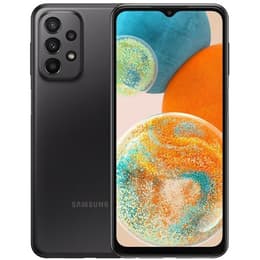
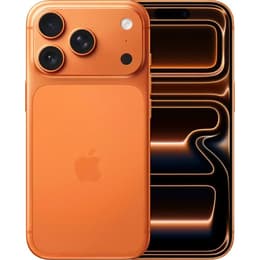
Galaxy A23 vs iPhone 17 Pro

  • 1-year warranty
  • Free standard shipping
  • Free 30-day returns
Galaxy A23
Starting at

Refurbished price:A$208.00

Versus A$715.00 new

See options
iPhone 17 Pro
Starting at

Refurbished price:A$1,591.20

Versus A$1,899.00 new

See options

Differences at a glance

The Samsung Galaxy A23 (2022) and the Apple iPhone 17 Pro (2025) are smartphones belonging to different eras, ecosystems, and market tiers. While the Galaxy A23 focuses on essential daily communication features under the Android operating system, the iPhone 17 Pro operates on iOS and delivers advanced processing power and modern hardware innovations. These devices differ fundamentally in release timing, build complexity, and target user expectations.

Available Models

Colour

Storage (GB)

Scores

Durability

The Galaxy A23 and iPhone 17 Pro diverge significantly in their release timelines and anticipated software support lifespans, influencing how long each device remains current for everyday use.

  • Release timeline and age: The Galaxy A23 launched in early 2022, whereas the iPhone 17 Pro debuted in late 2025, placing them several years apart in generational hardware development.
  • Software longevity: The iPhone 17 Pro benefits from a multi-year window of future iOS upgrades, while the Galaxy A23 is further along in its official software support lifecycle.
  • Repairability and durability: Both models feature standard structural resilience, though choosing a quality-assured refurbished option provides a sustainable choice that extends device utility without requiring newly manufactured hardware.

Release year

2022

2025

Compatible with latest Update

Yes

Yes

Operating system

Android

iOS

Foldable

No

No

Performance

System responsiveness and daily multitasking capabilities vary notably between the two models due to their distinct hardware configurations and optimization approaches.

  • Multitasking and app handling: The iPhone 17 Pro handles demanding applications and heavy multitasking smoothly with minimal loading delays, whereas the Galaxy A23 manages everyday tasks like web browsing and messaging reliably.
  • Battery behavior: Users report that the Galaxy A23 sustains typical daily use comfortably on a single charge, while the iPhone 17 Pro incorporates advanced power efficiency to manage intensive workloads throughout a full day.
  • Storage capacity: Both devices offer varying internal storage configurations to accommodate personal photos, media files, and downloaded applications.

Screen quality

Viewing experiences differ extensively based on the panel technologies, refresh rates, and brightness outputs integrated into each smartphone.

  • Display technology: The iPhone 17 Pro features a vibrant OLED display with deep blacks and high peak brightness, while the Galaxy A23 utilizes an LCD screen suitable for standard indoor and outdoor visibility.
  • Smoothness and refresh rates: The iPhone 17 Pro supports higher refresh rates for fluid scrolling and animations, compared to the standard refresh rate found on the Galaxy A23.
  • Resolution and clarity: Both screens provide clear text rendering and adequate sharpness for viewing videos, reading documents, and browsing social media feeds.

Resolution

1080 x 2408

2622x1206

Screen type

PLS LCD

Super Retina XDR

Audiovisual

Photography and media capture capabilities reflect the distinct engineering priorities of each device class, ranging from versatile multi-lens arrays to simplified everyday shooters.

  • Camera versatility: The iPhone 17 Pro equips a sophisticated multi-lens camera system capable of detailed low-light photography and high-definition video recording, while the Galaxy A23 provides a capable primary camera for casual snapshots.
  • Video and audio recording: Video capture on the iPhone 17 Pro includes advanced stabilization and audio clarity, whereas the Galaxy A23 handles basic home videos and video calls adequately.
  • Media consumption: Built-in stereo speakers on the iPhone 17 Pro deliver immersive sound output for media playback, compared to the single speaker setup on the Galaxy A23.

Main camera

50 megapixels

48 megapixels

Front camera

8 megapixels

18 megapixels

Miscellaneous

Physical handling, connectivity standards, and sensor hardware define the practical day-to-day usability of these smartphones.

  • Connectivity and ports: The iPhone 17 Pro adopts modern USB-C standards and fast wireless communication protocols, while the Galaxy A23 includes traditional connectivity features alongside expandable storage via a memory card slot.
  • Dimensions and weight: Both smartphones offer comfortable handling profiles, though differences in materials result in distinct weight distributions in the hand.
  • Authentication sensors: The iPhone 17 Pro relies on advanced facial recognition, whereas the Galaxy A23 features a side-mounted fingerprint sensor for unlocking and security.

Weight

197 oz

206 oz

Screen size (in)

6.6

6.3

Network

4G

5G

SIM card

Dual Physical SIM

eSIM

Carrier compatibility

Unlocked

Unlocked

What the community thinks

Real-world users frequently praise the Galaxy A23 for its reliable battery longevity and straightforward interface during basic tasks, though some note performance limitations when running intensive applications. Conversely, owners of the iPhone 17 Pro highlight its fluid display responsiveness and capable camera array, while occasional feedback points to its heavier weight and higher complexity. Users prioritizing simple daily communication, expandable storage, and essential functions will find the Galaxy A23 well-suited to their needs. On the other hand, users prioritizing advanced photography, rapid multitasking performance, and long-term software updates will lean toward the iPhone 17 Pro. Selecting an eco-friendly alternative like a quality-assured refurbished option from Back Market allows consumers to acquire either device while supporting sustainable purchasing habits. Ultimately, the choice depends entirely on individual workflow requirements and software ecosystem preferences.
Our recent comparisons