Galaxy A23 vs iPhone 14 Plus

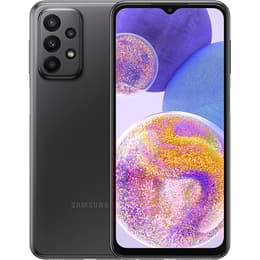
Galaxy A23
Galaxy A23
See options
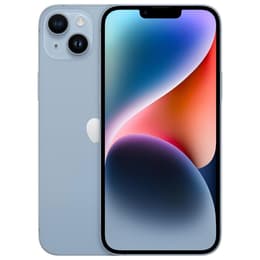
iPhone 14 Plus
iPhone 14 Plus
Starting at

Refurbished price:A$480.00

Versus A$1,249.00 new

See options

Ratings

The Samsung Galaxy A23, released in March 2022, and the Apple iPhone 14 Plus, launched in October 2022, are smartphones designed for different user experiences. While the Galaxy A23 operates on the Android platform, offering a customizable interface, the iPhone 14 Plus runs on Apple's iOS, known for its integrated ecosystem. This comparison will explore their core differences in areas like display technology, performance capabilities, and camera systems to help users make an informed decision.

Scores

Durability

The longevity of a smartphone is influenced by its build, software support, and repairability. These two devices offer distinct approaches to durability and long-term usability.

  • Software Support: The iPhone 14 Plus, being an Apple device, typically receives major iOS updates for approximately five to six years from its release, potentially extending its software lifespan further than the Galaxy A23. The Galaxy A23, running Android, generally receives two to three major OS upgrades and around four years of security updates.
  • Physical Durability: The iPhone 14 Plus features a Ceramic Shield front cover and a glass back with an aluminum frame, contributing to its robust feel and offering enhanced drop protection. The Galaxy A23 uses a plastic back and a glass front protected by Corning Gorilla Glass 5, providing a good level of scratch and minor impact resistance. Both devices carry an IP rating for water and dust resistance, with the iPhone 14 Plus rated IP68 for greater immersion protection.
  • Expected Lifespan: Users prioritizing extended software support and a more premium build for long-term use might find the iPhone 14 Plus more aligned with their needs. The Galaxy A23 offers a solid practical lifespan, especially for users who do not require the absolute latest software features beyond a few years.

Release year

2022

2022

Compatible with latest Update

Yes

Yes

Operating system

Android

iOS

Foldable

No

No

Performance

Performance is a key differentiator, impacting how smoothly applications run, how quickly tasks are completed, and the overall responsiveness of the device.

  • Processing Power: The iPhone 14 Plus is equipped with a powerful current-generation processor, enabling it to handle demanding applications, graphic-intensive games, and extensive multitasking with ease. The Galaxy A23 (4G variant) features a processor designed for efficient everyday performance, suitable for general browsing, social media, and light gaming. The 5G variant of the A23 includes a slightly more capable processor.
  • Multitasking and Responsiveness: Users of the iPhone 14 Plus will experience very fluid navigation and quick app loading times, even with multiple applications open simultaneously, thanks to its optimized hardware and software integration. The Galaxy A23 provides a responsive experience for typical daily usage, though it may exhibit more noticeable delays when switching between numerous heavy applications or during intensive gaming sessions.
  • Storage and Expandability: The iPhone 14 Plus offers internal storage options up to 512GB but does not support expandable storage. The Galaxy A23 comes with up to 128GB of internal storage and includes a microSD card slot, allowing users to expand storage by up to 1TB. This is a significant advantage for users who require extensive storage for media and files without relying on cloud services.

Memory (GB)

4 GB

6 GB

Screen quality

The display is the primary interface for interaction, and both devices offer large screens with different underlying technologies and characteristics.

  • Display Technology and Clarity: The iPhone 14 Plus features a 6.7-inch Super Retina XDR OLED display, providing deep blacks, high contrast, and vibrant colors, resulting in a visually rich viewing experience. The Galaxy A23 has a 6.6-inch PLS LCD display, which offers good color reproduction and brightness suitable for general use.
  • Resolution and Brightness: The iPhone 14 Plus boasts a higher resolution of 2778 x 1284 pixels, translating to a sharper image with a pixel density of 458 pixels per inch (ppi). It also achieves higher peak brightness levels, making it more comfortable to view content outdoors or in bright conditions. The Galaxy A23's 1080 x 2408 pixel resolution (around 400 ppi) provides clear visuals for its display type.
  • Refresh Rate: A notable difference is the refresh rate. The Galaxy A23 (both 4G and 5G variants) offers a 90Hz or 120Hz refresh rate, contributing to smoother scrolling and a more fluid feel during interactions. The iPhone 14 Plus maintains a standard 60Hz refresh rate.

Resolution

1080 x 2408

1284 x 2778

Screen type

PLS LCD

Super Retina XDR OLED

Audiovisual

Both smartphones are equipped with multiple cameras, but their capabilities and photographic output differ, catering to various user preferences.

  • Rear Camera System: The iPhone 14 Plus features a dual 12MP camera system, including a main wide-angle lens with sensor-shift optical image stabilization (OIS) and an ultrawide lens. It excels in capturing detailed images with accurate colors, particularly in challenging lighting conditions, thanks to its advanced image processing. The Galaxy A23 offers a versatile quad-camera setup, including a 50MP main lens with OIS, a 5MP ultrawide, a 2MP macro, and a 2MP depth sensor.
  • Low-Light Photography and Video: The iPhone 14 Plus demonstrates strong performance in low-light scenarios, producing bright and clear photos with reduced noise. Its video recording capabilities are also advanced, supporting 4K Dolby Vision HDR video up to 60 frames per second, along with features like Cinematic mode and Action mode for stabilized footage. The Galaxy A23 captures good photos in well-lit environments, and its main camera with OIS helps in reducing blur. Video recording is typically at Full HD (1080p) at 30 frames per second.
  • Front Camera: For selfies and video calls, the iPhone 14 Plus includes a 12MP TrueDepth front camera with autofocus, delivering sharp and well-exposed self-portraits. The Galaxy A23 has an 8MP front camera, suitable for everyday selfies and video calls.

Main camera

50 megapixels

12 megapixels

Front camera

8 megapixels

12 megapixels

Miscellaneous

Beyond the core features, several practical elements contribute to the overall user experience and daily convenience of these devices.

  • Connectivity: The iPhone 14 Plus supports 5G and Wi-Fi 6, offering faster cellular and wireless data speeds for compatible networks and routers. The Galaxy A23 is available in both 4G and 5G variants, with the 5G model supporting Wi-Fi 5. Both devices include Bluetooth for connecting accessories, with the iPhone 14 Plus featuring Bluetooth 5.3 and the Galaxy A23 using Bluetooth 5.1.
  • Ports and Biometrics: The iPhone 14 Plus utilizes Apple's Lightning port for charging and data transfer and relies on Face ID for secure facial recognition. The Galaxy A23 features a USB-C port for charging and data, a 3.5mm headphone jack, and a side-mounted fingerprint sensor for biometric authentication.
  • Design and Handling: The iPhone 14 Plus has dimensions of 160.8 x 78.1 x 7.8 mm and weighs 203 grams, featuring a flat-edged design. The Galaxy A23 measures 165.4 x 76.9 x 8.4 mm and weighs 195 grams, with a slightly thicker profile and a more rounded design. Both are large devices, offering ample screen real estate.

Weight

195 oz

203 oz

Screen size (in)

6.6

6,7

Network

4G

5G

SIM card

Dual Physical SIM

Physical SIM + eSIM

Carrier compatibility

Unlocked

Unlocked

User feedback often highlights the iPhone 14 Plus for its consistent performance, excellent camera capabilities, and long-lasting battery life, making it a reliable choice for those deeply integrated into the Apple ecosystem. Criticisms sometimes point to its 60Hz display, which some users feel is a limitation compared to other devices in its category. The Galaxy A23 is frequently praised for its large, high-refresh-rate display and impressive battery capacity, offering a strong value proposition for everyday tasks and media consumption. Some users note that its performance, while capable, may not match the fluidity of higher-end devices during intensive use.

Users prioritizing a highly fluid software experience, advanced camera features, and a robust build with extended software support will find the iPhone 14 Plus well-suited to their needs. Its integrated ecosystem and strong performance make it ideal for professionals and those who value a seamless user journey. Conversely, users who prioritize a high-refresh-rate display, expandable storage, and a traditional headphone jack, along with solid battery life for general use, may lean toward the Galaxy A23. It serves well for students and casual users who appreciate flexibility and a large screen for media.

For those considering either device, exploring quality-assured refurbished options can provide an eco-friendly alternative, allowing access to these technologies while making a sustainable choice.

See all articles

Our recent comparisons