
Galaxy A23 5G vs iPhone SE (2020)

Galaxy A23 5G
Galaxy A23 5G
Starting at

Refurbished price:A$219.00

Versus A$457.00 new

See options
iPhone SE (2020)
iPhone SE (2020)
Starting at

Refurbished price:A$162.00

Versus A$529.00 new

See options

Ratings

The Samsung Galaxy A23 5G and the iPhone SE 2020 are two distinct smartphones, released in different years and operating on different ecosystems. The Galaxy A23 5G, launched in late 2022 and early 2023, runs on Android, while the iPhone SE 2020, released in April 2020, operates on Apple's iOS. These devices cater to users with varying preferences, primarily differing in their display technology, camera capabilities, and overall design philosophy.

Scores

Durability

When considering the longevity of these devices, several factors come into play, including their release timelines, software support, and physical durability.

  • Release Timeline and Software Support: The iPhone SE 2020 was released in April 2020, while the Galaxy A23 5G saw its initial release in September 2022 in some regions and January 2023 in others. The iPhone SE 2020 launched with iOS 13.4 and has received updates up to iOS 26.3, indicating a strong commitment to software longevity from Apple, typically spanning 5-6 years from release. The Galaxy A23 5G launched with Android 12 and One UI 4.1, and has since received updates, including Android 14 by December 2023. Android devices generally receive fewer major OS updates than iPhones, which could mean a shorter period of official software support for the Galaxy A23 5G compared to the iPhone SE 2020.
  • Repairability and Physical Durability: The iPhone SE 2020 has an iFixit repairability score of 6 out of 10, with the display and battery being relatively straightforward to replace. However, its glass back is noted as difficult to replace. It also features an IP67 rating for dust and water resistance. The Galaxy A23 5G features Corning Gorilla Glass 5 for screen protection but does not have an official IP rating. The practical lifespan of both devices will depend on usage and care, but the iPhone SE 2020's longer software support and IP rating may offer a slight edge in overall longevity for users prioritizing these aspects.

Release year

2022

2020

Compatible with latest Update

Yes

Yes

Operating system

Android

iOS

Foldable

No

No

Performance

The performance of a smartphone is crucial for daily tasks, from app usage to multitasking and gaming. These two devices offer different experiences in this regard.

  • Processing Power and Responsiveness: The iPhone SE 2020 is equipped with a powerful processor that enables smooth operation for demanding applications and efficient multitasking. This allows for quick app loading and a fluid user experience across the iOS ecosystem. The Galaxy A23 5G features a processor designed to provide efficient performance for everyday tasks and can handle various applications smoothly.
  • Storage and Multitasking: The iPhone SE 2020 offers internal storage options of 64GB, 128GB, and 256GB, but does not support expandable storage. It comes with 3GB of RAM, which is sufficient for managing multiple applications in the iOS environment. The Galaxy A23 5G provides more flexible storage options, including 64GB or 128GB internal storage, with the ability to expand up to 1TB via a MicroSD card. It is available with 4GB, 6GB, or 8GB of RAM, which supports effective multitasking within the Android operating system.
  • Battery Behavior: The iPhone SE 2020 has a smaller battery capacity, which often translates to more frequent charging for heavy users. Users have reported that it may not consistently last a full day with intensive use. In contrast, the Galaxy A23 5G is equipped with a larger battery, generally providing extended usage times and potentially lasting a full day or more for many users.

Memory (GB)

4 GB

3 GB

Screen quality

The display is a primary interface for any smartphone, and these two models present different visual experiences.

  • Display Technology and Resolution: The iPhone SE 2020 features a 4.7-inch Retina IPS LCD display with a resolution of 1334x750 pixels. This provides clear visuals for its size. The Galaxy A23 5G boasts a larger 6.6-inch PLS LCD display with a higher resolution of 1080x2408 pixels (FHD+), offering a more expansive viewing area and sharper detail.
  • Brightness and Refresh Rate: The iPhone SE 2020's display offers a typical brightness of 625 nits, which is adequate for most indoor and outdoor conditions. It has a standard refresh rate. The Galaxy A23 5G stands out with a 120Hz refresh rate, providing smoother scrolling and a more fluid visual experience, particularly noticeable in fast-paced content or navigation. Its brightness levels are also suitable for various lighting environments.
  • Screen Size and Viewing Experience: The iPhone SE 2020's compact 4.7-inch screen is well-suited for one-handed use and users who prefer a smaller device. The Galaxy A23 5G's larger 6.6-inch display offers a more immersive viewing experience for media consumption and multitasking, though it results in a larger overall device footprint.

Resolution

1080 x 2408

750 x 1334

Screen type

PLS LCD

Retina IPS LCD

Audiovisual

Both smartphones offer camera systems capable of capturing everyday moments, but they approach photography with different hardware and software philosophies.

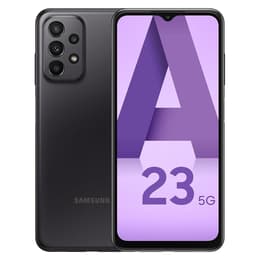
  • Rear Camera System: The iPhone SE 2020 features a single 12MP main camera with optical image stabilization (OIS). While it uses hardware similar to an older iPhone model, its image processing benefits significantly from its advanced processor, resulting in good everyday photos with natural colors and impressive dynamic range. However, it tends to struggle in very low-light conditions. The Galaxy A23 5G comes with a versatile quad-camera setup, including a 50MP main sensor with OIS, a 5MP ultrawide lens, and two 2MP sensors for macro and depth. The main camera typically bins down to 12.5MP, producing colorful and detailed images in good lighting.
  • Video Recording and Front Camera: The iPhone SE 2020 is capable of recording video at up to 4K resolution at 60 frames per second, offering excellent video quality with strong stabilization. Its 7MP front camera delivers sharp selfies with good skin tones. The Galaxy A23 5G records video at Full HD (1080p) at 30 frames per second with its main camera. Its 8MP front camera also records at 1080p at 30fps and is suitable for video calls and selfies.
  • Specialized Features: The iPhone SE 2020's single lens still offers Portrait mode for people, leveraging computational photography. The Galaxy A23 5G's ultrawide lens provides a broader perspective for landscapes and group shots, and its macro lens allows for close-up photography, though the quality of these secondary lenses can vary.

Main camera

50 megapixels

12 megapixels

Front camera

8 megapixels

7 megapixels

Miscellaneous

Beyond core performance and display, several practical features contribute to the overall user experience of these smartphones.

  • Connectivity and Ports: The iPhone SE 2020 supports 4G LTE and features Wi-Fi 6 and Bluetooth 5.0. It uses Apple's proprietary Lightning port for charging and data transfer and lacks a traditional 3.5mm headphone jack. The Galaxy A23 5G offers 5G connectivity, along with Wi-Fi 802.11 a/b/g/n/ac and Bluetooth 5.1. It includes a USB Type-C 2.0 port and retains a 3.5mm headphone jack, offering more universal connectivity options.
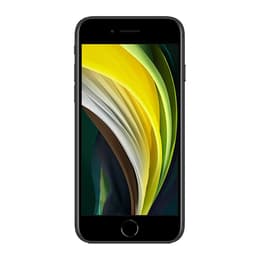
  • Biometric Authentication and Sensors: The iPhone SE 2020 relies on Touch ID, a fingerprint sensor integrated into the home button, for secure authentication. It also includes standard sensors like an accelerometer, gyroscope, and barometer. The Galaxy A23 5G features a side-mounted fingerprint sensor for security. It also includes a range of sensors such as an accelerometer, gyro sensor, geomagnetic sensor, grip sensor, virtual light sensing, and virtual proximity sensing.
  • Design and Handling: The iPhone SE 2020 has a compact design with a 4.7-inch screen, glass front and back, and an aluminum frame, weighing 148g. Its dimensions make it easy for one-handed operation. The Galaxy A23 5G is a larger device with a 6.6-inch screen, featuring a plastic back with a matte finish and a Gorilla Glass 5 front, weighing around 195-197g. Its 'Ambient Edge' design integrates the camera module smoothly into the back.

Weight

197 oz

148 oz

Screen size (in)

6.6

4.7

Network

5G

4G

SIM card

Physical SIM

Physical SIM + eSIM

Carrier compatibility

Unlocked

Unlocked

User feedback for the iPhone SE 2020 often praises its powerful processor, which keeps the device feeling responsive and capable for its age. Many appreciate its compact form factor and the familiarity of the home button with Touch ID. However, frequent criticisms revolve around its battery life, which many users find insufficient for a full day of heavy use, and its display technology, which is considered dated compared to more modern screens. Its single camera, while capable in good lighting, also receives criticism for its low-light performance.

The Samsung Galaxy A23 5G is frequently lauded for its large, smooth 120Hz display, which enhances the viewing experience for media and general navigation. Users also appreciate its long-lasting battery and the inclusion of a 3.5mm headphone jack and expandable storage. Common concerns sometimes point to the overall camera performance, particularly the secondary lenses, and the plastic build materials, which some perceive as less premium. The software experience, while functional, may not always be as fluid as higher-end devices.

Users prioritizing a compact device with a powerful processor and a long software support window may find the iPhone SE 2020 well-suited to their needs, especially if they are already invested in the Apple ecosystem. Conversely, users who value a large, high-refresh-rate display, extended battery life, and the flexibility of expandable storage and a headphone jack might lean towards the Galaxy A23 5G. Both devices are available as quality-assured refurbished options, providing an eco-friendly alternative for consumers.
See all articles

Our recent comparisons