
Samsung
Compare models
Differences at a glance
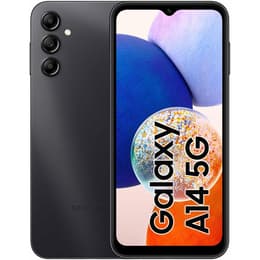
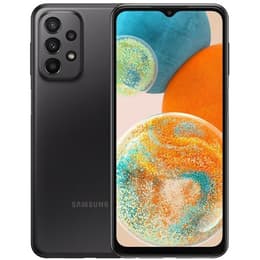
The Samsung Galaxy A14, released in early 2023, and the Samsung Galaxy A23, launched in early 2022, are both Android smartphones designed for everyday use. While sharing a similar design philosophy and the Android operating system with Samsung's One UI, the A14 arrived as a slightly newer option, bringing some updated features, whereas the A23 often offers a higher refresh rate display and optical image stabilization in its camera system. Both devices aim to provide a balanced smartphone experience for users seeking reliability and essential functionalities.
Colour
Storage (GB)
When considering the long-term usability of these devices, their release timelines and software support policies are key factors.
Release year
Compatible with latest Update
Operating system
Foldable
The responsiveness and capability of a smartphone's internal components significantly impact daily user experience, from app loading to multitasking.
The display is a primary interface for any smartphone, influencing everything from content consumption to daily interactions.
Resolution
Screen type
For many users, the camera system is a crucial aspect of a smartphone, capturing memories and daily moments.
Main camera
Front camera
Beyond core features, several practical elements contribute to the overall user experience and device utility.
Weight
Screen size (in)
Network
SIM card
Carrier compatibility
The Samsung Galaxy A14 and Galaxy A23 both offer a solid foundation for users seeking a reliable Android smartphone experience. User feedback for the Galaxy A14 often praises its strong battery life and decent main camera performance in good lighting conditions. [16, 25, 26, 33] Criticisms frequently point to its sometimes sluggish performance and the absence of an ultrawide camera in some variants. [16, 25, 33] For the Galaxy A23, users appreciate its long-lasting battery and the inclusion of Optical Image Stabilization (OIS) on its main camera, which can lead to clearer photos. [24, 27, 32] However, common concerns include its performance, which can feel slow, and the display's outdoor visibility. [20, 24, 27]
Users prioritizing a slightly newer device with a longer window for major Android updates and a capable main camera for daylight photography may find the Galaxy A14 well-suited to their needs. Those who value optical image stabilization for more consistent photo quality, especially in varied lighting, and potentially faster charging, might lean towards the Galaxy A23. Both devices represent practical choices for everyday communication, media consumption, and light productivity. For those considering these models, exploring quality-assured refurbished options can provide an eco-friendly alternative, extending the life cycle of these devices and offering a sustainable choice.