
Galaxy A14 5G vs Motorola Razr 40 Ultra

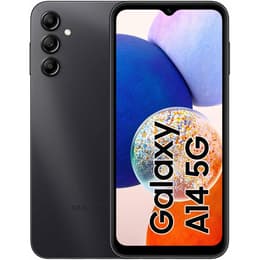
Galaxy A14 5G
Galaxy A14 5G
Starting at

Refurbished price:A$220.00

Versus A$280.00 new

See options
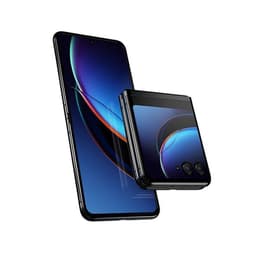
Motorola Razr 40 Ultra
See options

The Samsung Galaxy A14 5G, released in early 2023, and the Motorola Razr 40 Ultra, launched in mid-2023, represent distinct approaches to smartphone design and functionality. While the Galaxy A14 5G offers a traditional smartphone experience with a focus on core features, the Razr 40 Ultra stands out with its innovative foldable design and dual-screen setup. Both devices operate on the Android platform, but they cater to different user preferences through their form factors and performance capabilities.

Scores

Durability

The longevity of a smartphone is influenced by its release timeline, software support, and ease of repair. These factors contribute to the practical lifespan users can expect from their devices.

  • Release Timeline and OS Support: The Samsung Galaxy A14 5G was released in January 2023, while the Motorola Razr 40 Ultra followed in June 2023. The Galaxy A14 5G is expected to receive two years of Android OS updates and four years of security updates. The Razr 40 Ultra launched with Android 13, but some users have noted slower software updates compared to other devices.
  • Repairability: The Galaxy A14 5G has a repairability score of 8 out of 10, indicating it is relatively easy to disassemble. Its battery is secured with an adhesive pull pouch, simplifying replacement, and some camera components can be serviced without full device disassembly. Information regarding the specific repairability score for the Motorola Razr 40 Ultra is less readily available, though foldable phones generally present more complex repair challenges due to their intricate designs.
  • Expected Practical Lifespan: Users prioritizing extended software support and straightforward repairs may find the Galaxy A14 5G a practical choice for longer-term use. The Razr 40 Ultra's unique foldable mechanism, while innovative, introduces additional considerations for long-term mechanical durability, though its software support timeline is a key factor for its overall lifespan.

Release year

2023

2023

Compatible with latest Update

Yes

Yes

Operating system

Android

Android

Foldable

No

Yes

Performance

Performance is a key differentiator, impacting how smoothly applications run, how quickly tasks are completed, and the overall responsiveness of the device.

  • Processor Capabilities: The Motorola Razr 40 Ultra is equipped with a processor designed for demanding applications and multitasking, allowing for smooth operation even with graphic-intensive games. The Samsung Galaxy A14 5G features a processor capable of handling most daily tasks and providing efficient performance for general use.
  • Storage and Responsiveness: The Razr 40 Ultra offers larger internal storage options, typically 256GB and 512GB, utilizing UFS 3.1 technology for faster data access. The Galaxy A14 5G comes with 64GB or 128GB of internal storage, expandable via microSD, and uses UFS 2.2 storage. The Razr 40 Ultra's more powerful internal components contribute to a highly responsive user experience, particularly when switching between applications or running multiple processes simultaneously.
  • Battery Behavior: The Galaxy A14 5G houses a 5000mAh battery, which users report can comfortably last a full day, and sometimes up to two days with lighter usage. The Razr 40 Ultra has a 3800mAh battery, which, for a foldable device, provides a solid all-day battery experience for many users, partly due to its efficient display technology. Both devices support wired charging, with the Razr 40 Ultra also offering 5W wireless charging.

Memory (GB)

4 GB

8 GB

Screen quality

The display is a primary interface for user interaction, and differences in technology, resolution, and refresh rate significantly affect the viewing experience.

  • Display Technology and Clarity: The Motorola Razr 40 Ultra features a 6.9-inch foldable pOLED main display, offering deep blacks, vibrant colors, and a high resolution of 1080x2640 pixels. It also boasts a 3.6-inch pOLED cover display with a resolution of 1056x1066 pixels. The Samsung Galaxy A14 5G has a 6.6-inch PLS LCD display with a 1080x2408 pixel resolution.
  • Brightness and Refresh Rate: The Razr 40 Ultra's main display offers a high refresh rate of 165Hz and a peak brightness of 1400 nits, with its cover display also featuring a 144Hz refresh rate and 1100 nits peak brightness. This high refresh rate contributes to very smooth scrolling and animations. The Galaxy A14 5G provides a 90Hz refresh rate for smoother visuals than standard displays, though its maximum brightness of around 520 nits can make outdoor visibility challenging in bright conditions.
  • Viewing Experience: The Razr 40 Ultra's foldable design and large, interactive cover screen offer a versatile viewing experience, allowing users to perform tasks and view notifications without opening the main display. The Galaxy A14 5G provides a large, clear display suitable for general media consumption and browsing, with good detail and color accuracy.

Resolution

1080 x 2408

1080 x 2640

Screen type

PLS LCD

Foldable LTPO AMOLED

Audiovisual

Camera capabilities are often a deciding factor for many users, with differences in sensor size, lens types, and software processing impacting image and video quality.

  • Rear Camera Systems: The Motorola Razr 40 Ultra features a dual rear camera setup, including a 12MP main camera with a wide f/1.5 aperture and optical image stabilization (OIS), alongside a 13MP ultrawide lens that also functions for macro photography. The Samsung Galaxy A14 5G is equipped with a triple rear camera system, comprising a 50MP main sensor with an f/1.8 aperture, a 2MP macro camera, and a 2MP depth sensor.
  • Photography Performance: In good lighting, the Razr 40 Ultra produces images with good detail and natural colors, and its wider aperture and OIS contribute to improved low-light performance compared to some competitors. The Galaxy A14 5G's main camera is capable of capturing detailed photos in everyday scenarios. However, the Razr 40 Ultra's cameras may struggle in very dark environments, and the Galaxy A14 5G's additional 2MP sensors offer limited practical utility beyond the main lens.
  • Video Recording and Front Cameras: Both devices support video recording, with the Razr 40 Ultra capable of 4K video at 30/60fps and HDR10+ support, while the Galaxy A14 5G records in Full HD at 30fps. For selfies, the Razr 40 Ultra has a 32MP internal front camera, and its external display allows for using the main rear cameras for high-quality selfies. The Galaxy A14 5G features a 13MP front camera.

Main camera

50 megapixels

12 megapixels

Front camera

13 megapixels

32 megapixels

Miscellaneous

Beyond core specifications, practical elements like connectivity, physical design, and additional features contribute to the overall user experience.

  • Connectivity and Ports: Both smartphones support 5G connectivity, enabling faster mobile data speeds. The Motorola Razr 40 Ultra includes Wi-Fi 6E and Bluetooth 5.3, while the Samsung Galaxy A14 5G supports Wi-Fi 802.11 a/b/g/n/ac (dual band) and Bluetooth 5.2. Both devices feature a USB-C port for charging and data transfer, but only the Galaxy A14 5G retains a 3.5mm headphone jack.
  • Build Materials and Durability: The Razr 40 Ultra features a premium build with Gorilla Glass Victus protecting its cover screen and a water-repellent design with an IP52 rating. The Galaxy A14 5G has a plastic body, which contributes to its durability against drops, but it lacks an official IP rating for water and dust resistance.
  • Dimensions and Sensors: The Razr 40 Ultra's foldable design makes it compact when closed (88.4 x 73.95 x 15.1 mm) and a standard smartphone size when unfolded (170.8 x 73.95 x 6.9-7.35 mm), weighing around 184.5-188.5g. The Galaxy A14 5G measures 167.7 x 78 x 9.1 mm and weighs approximately 202-205g. Both devices include fingerprint sensors for secure unlocking, with the Razr 40 Ultra integrating it into the power button.

Weight

201 oz

1 oz

Screen size (in)

6.6

6.9

Network

5G

5G

SIM card

Physical SIM

Dual Physical SIM

Carrier compatibility

Unlocked

Unlocked

User feedback highlights distinct strengths for both the Samsung Galaxy A14 5G and the Motorola Razr 40 Ultra. The Galaxy A14 5G is frequently praised for its long-lasting battery, a display that offers good detail and color accuracy, and a capable main camera for its segment. Users also appreciate its commitment to software and security updates, making it a reliable option for those seeking a device with a longer support lifespan. However, common criticisms include its mono speaker, the absence of an official IP rating for water resistance, and slower charging speeds.

The Motorola Razr 40 Ultra garners significant praise for its sleek, innovative foldable design and its large, highly functional external display, which enhances usability without needing to open the phone. Its smooth performance, capable of handling demanding applications, and generally good battery life for a foldable device are also frequently highlighted. Conversely, some users have expressed concerns about its camera performance in low-light conditions and the pace of software updates.

Users prioritizing a traditional smartphone experience with strong battery life, consistent software support, and a focus on essential features may find the Samsung Galaxy A14 5G well-suited to their needs. It offers a practical and dependable choice for everyday communication and media consumption. For those who value innovative design, a highly interactive external display, and robust performance for more intensive tasks, the Motorola Razr 40 Ultra presents a compelling option. Its unique form factor and powerful internals cater to users seeking a distinctive and versatile device. Both models are available as quality-assured refurbished options, providing an eco-friendly alternative for consumers.


See all articles

Our recent comparisons