
Galaxy A14 5G vs Galaxy A23

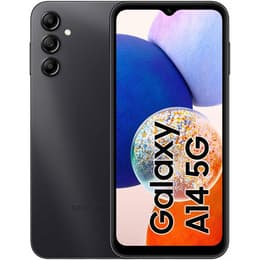
Galaxy A14 5G
Galaxy A14 5G
Starting at

Refurbished price:A$220.00

Versus A$280.00 new

See options
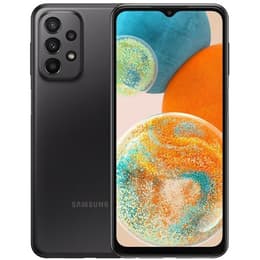
Galaxy A23
Galaxy A23
See options

The Samsung Galaxy A14 5G, released in January 2023, and the Samsung Galaxy A23, launched in March 2022, represent two closely related smartphones within Samsung's A-series lineup. While both devices offer a similar core Android experience, the A14 5G introduces a slightly newer operating system at launch, whereas the A23 often features a smoother display refresh rate and optical image stabilization in its camera system. Both run on the Android operating system, providing access to a wide ecosystem of applications and services.

Scores

Durability

When considering the long-term usability of these devices, their release timelines and software support policies are key differentiators.

  • Release Timeline: The Galaxy A14 5G was introduced in January 2023, making it a more recent model compared to the Galaxy A23, which launched in March 2022. This difference in release date impacts their respective software support cycles.
  • Software Longevity: The Galaxy A14 5G is expected to receive two major Android OS upgrades, potentially up to Android 15, and four years of security updates, extending its support until around 2027. The Galaxy A23, while upgradable to Android 14, is generally expected to have Android 14 as its final major OS update. However, Samsung has extended security update support for some Galaxy devices, including the A23, for up to seven years.
  • Durability Features: Both phones feature plastic builds, which can offer some resilience against drops compared to glass. The Galaxy A23 includes Gorilla Glass 5 for screen protection. Neither device typically carries an official IP rating for water and dust resistance, meaning they are not designed for submersion, though some regional variants or specific models of the A23 might have an IP53 rating for splash resistance.

Release year

2023

2022

Compatible with latest Update

Yes

Yes

Operating system

Android

Android

Foldable

No

No

Performance

The performance of the Galaxy A14 5G and Galaxy A23 varies based on their internal components, influencing daily responsiveness and handling of demanding applications.

  • Processing Power: The Galaxy A14 5G is equipped with an octa-core processor that provides smooth performance for everyday tasks, including web browsing, social media, and casual gaming. The Galaxy A23, depending on its variant, features a processor that offers efficient performance, capable of handling gaming with occasional minor frame drops, though some users have noted intermittent UI stutters.
  • Multitasking and Storage: Both devices offer various RAM configurations, typically ranging from 4GB to 8GB, which impacts how many applications can run simultaneously without slowdowns. They also provide 64GB or 128GB of internal storage, with the flexibility to expand storage further using a microSD card.
  • Battery Endurance: Both smartphones are powered by a 5,000mAh battery, designed to provide extended usage. The Galaxy A14 5G is frequently reported to last up to two days on a single charge with moderate use. Similarly, the Galaxy A23 also offers long battery life, often extending to two days between charges.

Memory (GB)

4 GB

4 GB

Screen quality

The visual experience on both devices is delivered through large displays, though with some distinctions in smoothness and outdoor visibility.

  • Display Technology and Size: Both the Galaxy A14 5G and Galaxy A23 feature a 6.6-inch PLS LCD display with a Full HD+ resolution of 1080 x 2408 pixels, offering a large viewing area for content.
  • Refresh Rate: The Galaxy A14 5G provides a 90Hz refresh rate, contributing to a smoother scrolling experience. The Galaxy A23 5G variant, however, often boasts a 120Hz refresh rate, which can result in even more fluid animations and a more responsive feel during navigation and gaming.
  • Brightness and Clarity: While both displays offer good clarity, the Galaxy A14 5G's screen may present some challenges with visibility in direct sunlight. The Galaxy A23 5G's display is generally considered bright enough for outdoor use, though it may not reach the intensity of higher-end panels.

Resolution

1080 x 2408

1080 x 2408

Screen type

PLS LCD

PLS LCD

Audiovisual

The camera systems on the Galaxy A14 5G and Galaxy A23 offer different capabilities for capturing photos and videos.

  • Rear Camera Configuration: The Galaxy A14 5G features a triple-camera setup, including a 50-megapixel main sensor, a 2-megapixel macro lens, and a 2-megapixel depth sensor. It does not include an ultrawide camera. In contrast, the Galaxy A23 comes with a quad-camera system, comprising a 50-megapixel main sensor with Optical Image Stabilization (OIS), a 5-megapixel ultrawide lens, a 2-megapixel macro lens, and a 2-megapixel depth sensor.
  • Photography Performance: The main camera on the Galaxy A14 5G performs well in brightly lit conditions, producing good images, but its performance diminishes in low-light environments and when capturing fast-moving subjects. The Galaxy A23's main camera also delivers good results in daylight, with the added benefit of OIS for more stable shots. However, its low-light photos can appear soft and noisy, and the ultrawide camera's quality is generally lower.
  • Video and Front Camera: Both devices are capable of recording video at 1080p resolution at 30 frames per second, though the Galaxy A23 5G variant can record up to 4K at 30fps. For selfies, the Galaxy A14 5G is equipped with a 13-megapixel front camera, while the Galaxy A23 features an 8-megapixel front camera.

Main camera

50 megapixels

50 megapixels

Front camera

13 megapixels

8 megapixels

Miscellaneous

Beyond core features, several practical elements distinguish the user experience of these two Samsung smartphones.

  • Connectivity and Ports: Both the Galaxy A14 5G and Galaxy A23 support 5G connectivity, along with Wi-Fi 5 (802.11 a/b/g/n/ac) for wireless internet. The Galaxy A14 5G features Bluetooth 5.2, a slightly newer standard than the Bluetooth 5.0 or 5.1 found in the Galaxy A23. Both devices include a USB-C 2.0 port for charging and data transfer, and notably, both retain a 3.5mm headphone jack.
  • Biometric Security and Sensors: For secure unlocking, both smartphones incorporate a side-mounted fingerprint sensor. They also include standard sensors such as an accelerometer, proximity sensor, and gyroscope.
  • Physical Characteristics: The Galaxy A14 5G measures 167.7 x 78 x 9.1mm and weighs 204 grams. The Galaxy A23 is slightly more compact and lighter at 164.5 x 76.9 x 8.4mm and 195 grams. Both devices utilize plastic for their back panels, contributing to their overall feel and durability.

Weight

201 oz

195 oz

Screen size (in)

6.6

6.6

Network

5G

4G

SIM card

Physical SIM

Dual Physical SIM

Carrier compatibility

Unlocked

Unlocked

User feedback for the Galaxy A14 5G often highlights its impressive battery life, capable of lasting up to two days, and its solid performance for its segment. Users also appreciate its newer software at launch and the promise of extended security updates. Common criticisms include the absence of an official IP rating for water resistance and a single speaker.

The Galaxy A23 is frequently praised for its long-lasting battery and, particularly in its 5G variant, a smooth 120Hz display. The inclusion of an ultrawide camera and Optical Image Stabilization (OIS) on the main lens are also noted as strong points. However, some users have pointed out occasional UI stutters and less impressive low-light camera performance. Like the A14 5G, it generally lacks an official IP rating.

Users prioritizing a device with a slightly newer software foundation and a longer guaranteed period for major OS updates may find the Galaxy A14 5G more aligned with their needs. Its robust battery life and capable main camera in good lighting make it suitable for everyday communication and media consumption. On the other hand, individuals who value a smoother display experience, particularly for scrolling and gaming, along with the versatility of an ultrawide camera and the stability provided by OIS for photography, might lean towards the Galaxy A23. Both devices offer a reliable Android experience, and choosing a quality-assured refurbished option for either model can be an eco-friendly alternative for consumers.

See all articles

Our recent comparisons