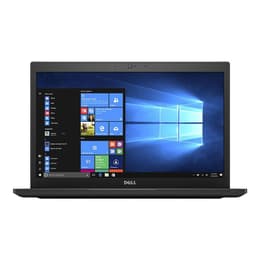
Dell Latitude 5310 13" vs Dell Latitude 7490 14"

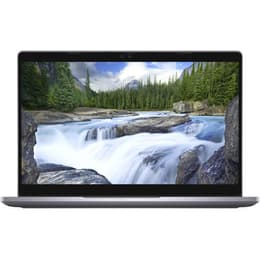
Dell Latitude 5310 13"
See options
Dell Latitude 7490 14"
See options

The Dell Latitude 5310, released in mid-2020, and the Dell Latitude 7490, introduced in early 2018, are business-oriented laptops designed for productivity and reliability. While both are part of Dell's professional Latitude series, they differ primarily in their release timelines, core processing capabilities, and form factors. The 5310 offers a more recent hardware generation and a slightly more compact design, whereas the 7490 provides a larger screen option and a proven, robust build.

Scores

Durability

When considering the longevity of these devices, their release timelines and Dell's typical support cycles are key factors. The Dell Latitude 5310, being a newer model from 2020, benefits from a longer expected period of software updates and security patches compared to the 2018 Dell Latitude 7490. Both models are built with durability in mind, featuring robust chassis designed for business environments.

  • Software Support: The Latitude 5310, released later, is likely to receive operating system updates and security support for a longer duration, extending its practical usability into the future.
  • Build Quality: Both laptops feature durable constructions, with the Latitude 5310 often utilizing a magnesium alloy case and the Latitude 7490 offering a magnesium alloy chassis with an optional carbon fiber lid, contributing to their resilience against daily wear and tear.
  • Repairability: Dell Latitude devices are generally designed with business users in mind, often allowing for component upgrades like RAM and storage, which can extend their functional lifespan. The Latitude 5310, for instance, supports up to 32GB or 64GB of DDR4 RAM across two SODIMM slots, a feature that enhances its upgrade potential.

Release year

2020

2017

Last Os Compatibility

Yes

Yes

Operating system

Windows 11

Windows 11

Performance

The performance of these laptops is largely influenced by their respective processor generations and system configurations. The Dell Latitude 5310 typically features 10th Generation Intel Core processors, while the Dell Latitude 7490 is equipped with 8th Generation Intel Core processors. This difference in generation impacts their ability to handle demanding applications and multitasking.

  • Processing Power: The Latitude 5310's newer generation processors generally offer improved efficiency and performance for everyday tasks, including web browsing, document editing, and running multiple business applications simultaneously. The Latitude 7490, with its 8th Gen processors, still provides solid performance for general productivity and multitasking, as noted by users.
  • System Responsiveness: Both models benefit from fast NVMe SSD storage options, ensuring quick boot times and rapid application loading. The Latitude 5310 supports DDR4 RAM at up to 3200MHz, while the Latitude 7490 typically uses 2400MHz DDR4 RAM, with both supporting configurations up to 32GB or more, allowing for smooth multitasking across various applications.
  • Battery Behavior: The Latitude 5310 often comes with a 60Wh battery, with users reporting up to 11-13 hours of usage, making it suitable for extended periods away from a power source. The Latitude 7490, available with 42Wh or 60Wh batteries, also offers good to outstanding battery life, with some configurations achieving around 9-15 hours in real-world use.

Memory (GB)

16 GB

16 GB

Processor

Core i5 - Gen 10 (U)

Core i7 - Gen 8 (U)

Graphic card

Integrated Graphics

Integrated Graphics

Screen quality

The display experience on the Dell Latitude 5310 and 7490 varies based on their available panel options, impacting clarity, brightness, and overall viewing comfort. Both models offer Full HD resolution options, which is suitable for productivity tasks.

  • Display Technology and Resolution: The Latitude 5310 typically features a 13.3-inch Full HD (1920 x 1080) IPS display, often with touch capabilities and anti-glare properties. The Latitude 7490 offers a 14.0-inch display, with Full HD (1920 x 1080) IPS panels being common, also with anti-glare finishes and optional touchscreens. Some configurations of both models may include lower resolution HD (1366 x 768) panels.
  • Brightness and Color Reproduction: The Latitude 5310's display generally offers around 300 nits of brightness and covers about 72-91% of the sRGB color gamut, providing clear visuals for indoor use. The Latitude 7490's Full HD IPS panels typically range from 277 to 305 nits of brightness and can cover around 118% of the sRGB spectrum, offering vibrant colors. Both models are noted for not using PWM for brightness adjustment, which can contribute to reduced eye strain.
  • Viewing Experience: The 13.3-inch screen of the 5310 provides a compact and portable viewing area, while the 14-inch screen of the 7490 offers a slightly larger workspace, which can be beneficial for multitasking. Both feature 60Hz refresh rates, standard for business laptops, ensuring smooth scrolling and video playback.

Resolution

1920 x 1080

1366 x 768

Screen type

IPS

IPS

Camera

Audiovisual

For communication and media consumption, both the Dell Latitude 5310 and 7490 are equipped with standard features suitable for professional use, focusing on clear audio and video for virtual meetings and presentations.

  • Webcam Quality: Both laptops typically include a 720p webcam, which is adequate for video conferencing and online collaboration in well-lit environments. The Latitude 5310 often includes a physical privacy shutter for the webcam, offering an added layer of security and peace of mind.
  • Audio Experience: Both models feature stereo speakers and array microphones, designed to provide clear audio for calls and media playback. The Latitude 7490, for example, is noted for solid sound output. The 5310 also offers good speaker quality for a laptop of its age.
  • Microphone Performance: The integrated microphones in both devices are generally suitable for capturing voice clearly during online meetings, ensuring effective communication without requiring external accessories for typical use cases.

Miscellaneous

Beyond core performance and display, several practical elements differentiate the Dell Latitude 5310 and 7490, including their connectivity options, physical dimensions, and security features, which cater to the needs of mobile professionals.

  • Connectivity and Ports: The Latitude 5310 offers more modern connectivity with Wi-Fi 6 (802.11ax) and Bluetooth 5, alongside a versatile port selection including USB 3.2 Gen 2 Type-C with optional Thunderbolt 3, HDMI 1.4, RJ45 Ethernet, and a microSD card reader. The Latitude 7490 features Wi-Fi 5 (802.11ac) and Bluetooth 4.2, with a comprehensive array of ports including USB 3.1 Gen 1 Type-A, USB Type-C (optional Thunderbolt 3), HDMI 1.4, RJ45 Ethernet, and an SD 4.0 card reader.
  • Physical Attributes: The Latitude 5310 is slightly lighter and more compact, weighing around 1.22 kg (2.69 lbs) with a thickness of 17.5-19.7 mm, making it highly portable. The Latitude 7490 is a 14-inch laptop, weighing approximately 1.4 kg (3.1 lbs) and measuring 17.9 mm thick, offering a balance between screen size and portability. Both feature comfortable, backlit keyboards suitable for extended typing sessions.
  • Security and Sensors: Both models include essential business security features. The Latitude 5310 offers optional fingerprint readers and IR face recognition for Windows Hello. The Latitude 7490 also provides optional fingerprint readers, SmartCard readers, and IR cameras for secure login.

Weight

7500 oz

2500 oz

Screen size

13

14

The Dell Latitude 5310 and 7490 both stand as capable business laptops, each with distinct advantages that cater to different user priorities. User feedback for the Latitude 5310 often highlights its strong battery life, solid build quality, and the benefits of its more recent hardware generation, making it a reliable choice for general productivity and mobile work. Criticisms are few but sometimes point to its integrated graphics not being suited for demanding visual tasks.

The Latitude 7490 is frequently praised for its robust and durable construction, excellent keyboard, and consistently strong performance for business applications, alongside its impressive battery longevity. Some users have noted that certain display configurations might not be as bright as competitors, and the device can get warm under heavy load.

Users prioritizing a more recent hardware platform, slightly enhanced portability, and a longer window for software support may find the Dell Latitude 5310 to be a more suitable option. Its Wi-Fi 6 connectivity and optional Thunderbolt 3 port also offer a more future-proof setup for modern peripherals and networks. Conversely, individuals who value a slightly larger screen, a proven track record of durability, and a comprehensive port selection for legacy accessories might lean towards the Dell Latitude 7490. Both models are excellent choices for professionals and students seeking dependable performance for everyday tasks.

For those considering these models, exploring quality-assured refurbished options can provide a sustainable choice, extending the life cycle of these robust business machines.

See all articles

Our recent comparisons