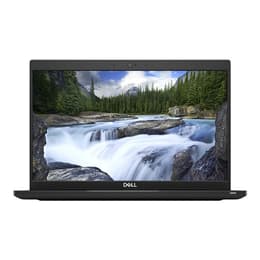
Dell Latitude 5410 14" vs Dell Latitude 7390 13"

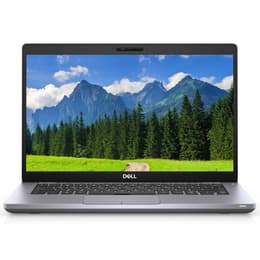
Dell Latitude 5410 14"
Starting at

Refurbished price:A$640.00

Versus A$1,425.00 new

See options
Dell Latitude 7390 13"
See options

The Dell Latitude 5410, released in 2020, and the Dell Latitude 7390, launched in 2018, are business-oriented laptops designed for productivity and reliability. Both devices run on the Windows operating system, offering a familiar user experience. The primary distinctions lie in their form factor, with the 5410 being a 14-inch traditional laptop and the 7390 often available in a more compact 13.3-inch design, sometimes with 2-in-1 convertible options. These differences cater to varying preferences for portability and screen real estate.

Scores

Durability

When considering the longevity of these devices, their release timelines are a key factor. The Dell Latitude 5410, being a 2020 model, benefits from a more recent launch compared to the 2018 Dell Latitude 7390. This typically translates to a longer period of official software support and driver updates from Dell, as well as extended compatibility with future Windows operating system versions.

  • Software Support: The Latitude 5410 is expected to receive operating system updates and security patches for a longer duration than the 7390, offering a more future-proof experience.
  • Repairability: Both Latitude models are generally designed with business users in mind, often featuring accessible internal components for maintenance and upgrades, contributing to their practical lifespan. The Latitude 5410 allows for easy RAM and storage upgrades.
  • Expected Lifespan: While both are robust, the newer components and extended software support of the 5410 suggest it may remain a viable daily driver for a slightly longer period before performance or compatibility issues arise.

Release year

2020

2017

Last Os Compatibility

Yes

Yes

Operating system

Windows 11

Windows 11

Performance

The performance capabilities of these laptops are largely influenced by their internal components, particularly their processors and memory configurations. The Dell Latitude 5410 generally features a more recent generation of processors compared to the Dell Latitude 7390, which can impact overall responsiveness and efficiency.

  • Processing Power: The Latitude 5410, with its newer generation of processors, typically offers improved speeds for everyday tasks, faster application loading, and more efficient handling of demanding software compared to the 7390. The Latitude 7390, while capable, provides solid performance for office productivity and multitasking.
  • Multitasking Efficiency: The Latitude 5410 supports up to 64GB of DDR4 RAM across two slots, allowing for significant expansion and smoother multitasking with numerous applications open simultaneously. The Latitude 7390 typically supports up to 16GB of DDR4 RAM, which is sufficient for most business tasks but offers less headroom for intensive multitasking.
  • Battery Behavior: The Latitude 5410 offers various battery capacities, including a 68Wh option that can provide extended usage, with some users reporting up to 19 hours of web browsing under optimal conditions. The Latitude 7390 typically comes with a 60Wh battery, offering a full day's work with around 12.5 hours of stamina in tests. Actual battery life for both models will vary based on usage patterns and configuration.

Memory (GB)

16 GB

16 GB

Processor

Core i5 - Gen 10 (U)

Core i7 - Gen 8 (U)

Graphic card

Integrated Graphics

Integrated Graphics

Screen quality

The visual experience on these laptops is shaped by their display technology, resolution, and overall brightness, catering to different user preferences and work environments.

  • Display Technology and Resolution: Both the Latitude 5410 and 7390 commonly feature Full HD (1920 x 1080) IPS displays, providing clear visuals and comfortable viewing angles. Some configurations of the 5410 may include lower-resolution HD TN panels. The 7390 often includes touch-enabled options, particularly in its 2-in-1 convertible variants.
  • Brightness and Clarity: The Latitude 7390 generally offers a brighter display, typically around 300 nits, which enhances visibility in well-lit environments and outdoors. The standard Latitude 5410 display often has a lower brightness of around 220 nits, though 300-nit options are available. Users have noted that the 5410's display can be a weak point, with some panels covering a limited color gamut and using aggressive PWM at lower brightness levels.
  • Screen Size and Viewing Experience: The Latitude 5410 features a larger 14-inch screen, offering more screen real estate for productivity tasks and viewing multiple windows simultaneously. The 7390's 13.3-inch display provides a more compact and portable viewing experience, which can be advantageous for users who frequently travel.

Resolution

1920 x 1080

1600 x 1200

Screen type

IPS

IPS

Camera

Audiovisual

For communication and media consumption, the camera, microphone, and speakers are important considerations. Both Dell Latitude models are equipped with features suitable for business use, though with some differences.

  • Camera System: Both laptops typically include a 720p HD webcam for video conferencing. The Latitude 5410 often features an IR HD webcam with a privacy shutter, enhancing security and privacy. The Latitude 7390 also offers an optional IR camera for facial recognition login.
  • Microphone Quality: Both devices are equipped with integrated microphones designed for clear audio capture during calls and recordings.
  • Speaker Output: The Latitude 5410 includes dual 2W speakers, providing adequate audio for video calls and general media consumption. The Latitude 7390 also features built-in speakers, offering a comparable audio experience.
  • Video Recording: The 720p resolution of the webcams on both models is suitable for standard video conferencing, but neither is designed for high-fidelity video recording.

Miscellaneous

Beyond core performance and display, several practical elements contribute to the overall user experience and suitability for different workflows.

  • Connectivity Options: The Latitude 5410 supports newer wireless standards, including Wi-Fi 6 (802.11ax) and Bluetooth 5.1, offering faster and more stable wireless connections. The Latitude 7390 typically features Wi-Fi 5 (802.11ac) and Bluetooth 4.2. Both offer optional mobile broadband for connectivity on the go.
  • Port Types: Both laptops provide a comprehensive selection of ports. The Latitude 5410 includes a USB-C 3.2 Gen 2 port with DisplayPort and Power Delivery, and optional Thunderbolt 3 support, alongside multiple USB-A ports, HDMI, and an RJ-45 Ethernet port. The Latitude 7390 also features USB-C (with optional Thunderbolt 3), USB-A, HDMI, and an RJ-45 port on some configurations.
  • Weight and Dimensions: The Latitude 7390 is generally lighter and more compact, starting around 1.13 kg (2.49 lbs) with a 13.3-inch screen, making it highly portable. The 14-inch Latitude 5410 starts at approximately 1.47 kg (3.26 lbs), offering a larger screen in a slightly heavier and thicker chassis.
  • Security Features: Both models offer robust security features, including optional fingerprint readers, IR cameras for facial recognition, and SmartCard readers.

Weight

7500 oz

1500 oz

Screen size

14

13

Choosing between the Dell Latitude 5410 and the Dell Latitude 7390 depends largely on individual priorities regarding performance, portability, and display characteristics. The Latitude 5410, as a newer model, generally offers more up-to-date internal components, including a more recent processor generation and support for faster wireless standards like Wi-Fi 6. Its 14-inch display provides a larger workspace, which can be beneficial for users who prioritize screen real estate for multitasking or data analysis. However, some users have noted that the standard display quality on the 5410 can be a point of concern, with lower brightness and color accuracy in certain configurations.

The Latitude 7390, while an older model, remains a capable and highly portable option, especially for those who value a compact and lightweight design. Its 13.3-inch form factor, often with touch-enabled and 2-in-1 convertible options, makes it versatile for professionals on the go. Users frequently praise its vivid display and solid battery life for a full workday. However, its older processor generation and Wi-Fi 5 connectivity mean it may not offer the same level of future-proofing or raw performance as the 5410.

Users prioritizing the latest performance, extended software support, and a larger screen for stationary work may lean towards the Latitude 5410. Conversely, those who value maximum portability, a potentially brighter display, and the flexibility of a 2-in-1 design will find the Latitude 7390 well-suited to their needs. Both models represent reliable business-grade laptops, and opting for a quality-assured refurbished option for either can be an eco-friendly alternative to purchasing new, extending the life cycle of these devices.

See all articles

Our recent comparisons