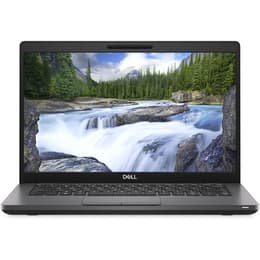
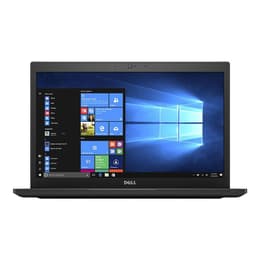

Dell Latitude 5400 14" vs Dell Latitude 7490 14"

Dell Latitude 5400 14"
See options
Dell Latitude 7490 14"
See options

The Dell Latitude 5400 and Dell Latitude 7490 are 14-inch business-oriented laptops designed for productivity and reliability. The Latitude 7490 was released in 2018, while the Latitude 5400 followed in 2019, offering a slightly more recent iteration of Dell's professional line. Both models run on the Windows operating system and are built to handle everyday business tasks, differing primarily in their design refinements, display options, and some internal component choices.

Scores

Durability

When considering the longevity of these devices, both the Latitude 5400 and 7490 offer robust build quality and good repairability, extending their practical lifespan.

  • Release Timeline: The Latitude 7490, released in 2018, precedes the Latitude 5400, which debuted in 2019. This means the 5400 may receive software updates for a slightly longer period.
  • OS Support & Repairability: Both models are compatible with Windows 11, which helps extend their supported lifespan beyond the end-of-life for Windows 10. User reports indicate that both laptops are relatively easy to service, with accessible internal components like RAM and storage, contributing to their repairability and potential for upgrades.
  • Expected Lifespan: Given their business-grade construction and modular designs, both devices are built for extended use. The Latitude 5400 has undergone MIL-STD-810G testing, indicating a high level of durability. The Latitude 7490 also features a durable magnesium alloy exterior and a sturdy hinge, suggesting similar resilience.

Release year

2019

2017

Last Os Compatibility

Yes

Yes

Operating system

Windows 11

Windows 11

Performance

Both the Latitude 5400 and 7490 are equipped to handle typical business and productivity workloads, though the 5400 benefits from slightly newer processor variants.

  • Processor Capabilities: The Latitude 5400 generally features 8th Generation Intel Core processors (Whiskey Lake variants), while the Latitude 7490 also uses 8th Generation Intel Core processors (Kaby Lake Refresh variants). In practical terms, both provide smooth performance for demanding applications, multitasking, and web browsing.
  • Memory and Storage: Both laptops support DDR4 RAM, typically configurable up to 32GB, with some 5400 configurations supporting up to 64GB. They also offer fast NVMe PCIe M.2 SSD storage options, ensuring quick boot times and responsive application loading.
  • Battery Behavior: The Latitude 5400, with its larger battery options (up to 68Wh), can offer extended usage, with some tests showing over 13 hours of battery life. The Latitude 7490, with battery options up to 60Wh, typically provides around 6 to 9 hours of use, though some configurations with low-power panels can achieve longer durations. Both feature ExpressCharge technology for rapid recharging.

Memory (GB)

16 GB

16 GB

Processor

Core i7 - Gen 8 (U)

Core i7 - Gen 8 (U)

Graphic card

Integrated Graphics

Integrated Graphics

Screen quality

The display experience on these 14-inch laptops varies, with the Latitude 7490 generally offering brighter panel options.

  • Display Technology and Resolution: Both models offer 14-inch displays with options for HD (1366x768) and Full HD (1920x1080) resolutions. Full HD panels on both typically feature anti-glare coatings, which are beneficial for reducing reflections in various lighting conditions.
  • Brightness and Clarity: The Latitude 7490 often comes with brighter display options, with some panels reaching 277 to 305 nits, providing good visibility even in well-lit environments. The Latitude 5400's Full HD panels are typically around 220 nits, which some users might find less vibrant, especially outdoors.
  • Refresh Rate and Viewing Experience: Both laptops generally feature standard 60Hz refresh rates, suitable for productivity tasks. The Latitude 7490's IPS panels offer wide viewing angles and good color reproduction, making them suitable for tasks requiring visual accuracy. The Latitude 5400 also offers Wide Viewing Angle (WVA) panels, providing a consistent viewing experience from different perspectives.

Resolution

1920 x 1080

1366 x 768

Screen type

IPS

IPS

Camera

Audiovisual

For communication and media consumption, both Latitude models provide functional audio-visual components suitable for business use.

  • Camera and Microphone Quality: Both the Latitude 5400 and 7490 are equipped with HD webcams, suitable for video conferencing and online meetings. The Latitude 5400 includes a webcam privacy shutter for enhanced security. The Latitude 7490 may offer an optional IR camera for Windows Hello facial recognition.
  • Speaker Output: Both devices feature integrated speakers, often enhanced with audio tuning software like Waves MaxxAudio Pro. While the Latitude 5400's speakers are generally described as clear and good for a business PC, some users have noted that the Latitude 7490's speakers can be less impressive or "pretty bad" in terms of loudness and overall quality.
  • Video Recording Features: The webcams on both laptops typically support video recording at up to 30 frames per second, providing adequate quality for standard video calls and basic content creation.

Miscellaneous

Beyond core performance, these laptops offer a range of practical features that enhance their usability in professional environments.

  • Connectivity Options: Both the Latitude 5400 and 7490 provide comprehensive connectivity, including multiple USB Type-A ports, HDMI 1.4, RJ-45 Ethernet, and a universal audio jack. They also feature USB Type-C ports, with optional Thunderbolt 3 support on both, offering versatile docking and peripheral connections. Both support Wi-Fi 5 (802.11ac) and Bluetooth connectivity.
  • Security and Sensors: Both models include security features such as a Noble lock slot. The Latitude 5400 often integrates a fingerprint reader into the power button and offers an optional IR camera. The Latitude 7490 also features an optional fingerprint reader and IR camera for Windows Hello.
  • Design and Portability: The Latitude 5400 weighs around 1.48 kg (3.26 lbs), while the Latitude 7490 ranges from approximately 1.41 kg (3.1 lbs) to 1.56 kg (3.44 lbs). Both are designed for portability, with the 7490 featuring a magnesium alloy and carbon-fiber lid in some configurations, contributing to a sturdy feel.

Weight

7500 oz

2500 oz

Screen size

14

14

The Dell Latitude 5400 and 7490 both stand as reliable choices for users seeking a business-grade laptop, each with distinct advantages. Users frequently praise the Latitude 5400 for its long battery life, especially with larger battery configurations, and its robust build quality, making it a dependable workhorse. Its slightly newer release year also means potentially longer software support. However, some users note that its display brightness can be a limitation in certain environments.

The Latitude 7490 is often lauded for its comfortable keyboard, vivid screen colors, and strong performance for its generation. Its premium build materials, including magnesium alloy and carbon fiber, are also frequently highlighted. Criticisms sometimes point to its speakers being less than ideal and the potential for the device to run warm under heavy load.

Users prioritizing maximum battery endurance and a slightly newer platform for extended software support may find the Latitude 5400 more aligned with their needs. Conversely, those who value a brighter display, a potentially more premium feel in build materials, and a highly regarded typing experience might lean towards the Latitude 7490. Both models represent solid choices for professionals and students, and considering a quality-assured refurbished option for either can be a sustainable choice for acquiring these capable devices.

See all articles

Our recent comparisons