
Asus Zenfone 9 vs Galaxy S22 5G

Asus Zenfone 9
Asus Zenfone 9
See options
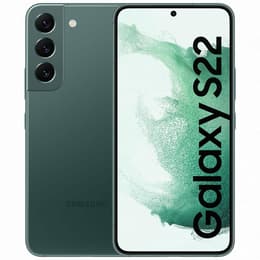
Galaxy S22 5G
Galaxy S22 5G
Starting at

Refurbished price:A$369.00

Versus A$1,149.00 new

See options

The Asus Zenfone 9 (released July 2022) and the Samsung Galaxy S22 5G (released February 2022) are both compact Android smartphones that offer flagship-level performance in a smaller form factor. While the Zenfone 9 emphasizes a highly portable design with a focus on battery longevity and a unique camera stabilization system, the Galaxy S22 5G provides a more refined ecosystem experience with a versatile camera setup and extended software support.

Scores

Durability

When considering the long-term usability of these devices, their release timelines and software support policies are key factors.

  • Release Timeline: The Samsung Galaxy S22 5G was released in February 2022, making it slightly older than the Asus Zenfone 9, which launched in July 2022. This difference in release date impacts their respective software support windows.
  • Software Longevity: Samsung has a strong commitment to software updates, promising four major Android OS upgrades and five years of security updates for the Galaxy S22 5G, with Android 16 being its final major OS upgrade. In contrast, the Asus Zenfone 9 typically receives two years of Android OS updates. This means the Galaxy S22 5G offers a significantly longer period of official software support.
  • Repairability and Build: Both devices feature an IP68 rating for dust and water resistance, indicating good protection against environmental elements. The Galaxy S22 5G uses Gorilla Glass Victus+ on both the front and back, paired with an aluminum frame, suggesting a durable construction. The Zenfone 9 also has Gorilla Glass Victus on the front and an aluminum frame, but opts for a polymer material on the back, which some users find less fragile and lighter.

Performance

Both smartphones are equipped with powerful internal components designed to handle demanding applications and multitasking efficiently.

  • Processing Power: The Asus Zenfone 9 features a current-generation processor, enabling it to manage intensive tasks like gaming and video editing smoothly. The Samsung Galaxy S22 5G also utilizes a high-performance processor, ensuring responsive operation across various applications.
  • Battery Performance: The Zenfone 9 houses a 4300mAh battery, which, combined with its compact display, often results in impressive battery life, with many users reporting it lasting a full day or even longer with moderate use. The Galaxy S22 5G has a smaller 3700mAh battery. While it can last through an average day, heavy users may find themselves needing to charge more frequently.
  • Storage and Responsiveness: Both devices offer configurations with ample RAM (up to 16GB for Zenfone 9 and 8GB for Galaxy S22 5G) and fast internal storage options (128GB or 256GB), contributing to quick app loading and seamless multitasking.

Memory (GB)

6 GB

8 GB

Screen quality

The visual experience on both devices is delivered through high-quality displays, though with some distinctions in size and characteristics.

  • Display Technology and Size: The Asus Zenfone 9 features a 5.9-inch Super AMOLED display, while the Samsung Galaxy S22 5G comes with a slightly larger 6.1-inch Dynamic AMOLED 2X display. Both AMOLED panels deliver deep blacks and vibrant colors, providing an engaging viewing experience.
  • Resolution and Clarity: Both screens offer a Full HD+ resolution (1080 x 2400 pixels for Zenfone 9, 1080 x 2340 pixels for Galaxy S22 5G), resulting in sharp and clear visuals for everyday content consumption.
  • Refresh Rate and Brightness: Both devices support a 120Hz refresh rate, contributing to smoother scrolling and more fluid animations. The Galaxy S22 5G can reach a peak brightness of 1300 nits, offering good visibility in bright outdoor conditions. The Zenfone 9 also has a high peak brightness of 1100 nits, though some users have noted it can appear less bright than competitors in direct sunlight.

Audiovisual

Both smartphones offer capable camera systems, each with distinct strengths for capturing photos and videos.

  • Rear Camera System: The Asus Zenfone 9 features a dual-camera setup, including a 50MP main sensor with a 6-axis hybrid gimbal stabilizer and a 12MP ultra-wide lens. The gimbal stabilization is particularly effective for smooth video recording and improved low-light stills. The Samsung Galaxy S22 5G boasts a triple-camera system, comprising a 50MP main sensor, a 12MP ultra-wide lens, and a 10MP telephoto lens with 3x optical zoom. The inclusion of a dedicated telephoto lens provides greater versatility for zoomed-in shots.
  • Photography Performance: The Zenfone 9's main camera generally captures detailed images with accurate colors, and its low-light performance is strong. However, some users have noted that the camera's processing can sometimes lead to over-sharpening or inconsistent results, and the lack of a telephoto lens means digital zoom is used for distant subjects. The Galaxy S22 5G's camera system is known for producing consistently good photos across various conditions, with its telephoto lens offering clear zoomed images.
  • Video Recording and Audio: Both devices support high-resolution video recording, including 4K and 8K. The Zenfone 9's gimbal stabilization is a significant advantage for handheld video. Both phones feature stereo speakers, providing a good audio experience for media consumption. The Zenfone 9 also retains a 3.5mm headphone jack, a feature absent on the Galaxy S22 5G.

Miscellaneous

Beyond core performance and display, several practical features differentiate these two compact smartphones.

  • Connectivity: Both the Asus Zenfone 9 and Samsung Galaxy S22 5G support 5G networks, Wi-Fi 6 (or 6E for Zenfone 9), and Bluetooth 5.2, ensuring fast and reliable wireless connections. The Zenfone 9 supports dual SIMs.
  • Ports and Sensors: The Zenfone 9 uniquely includes a 3.5mm headphone jack, a feature increasingly rare in modern flagship phones. Both devices utilize a USB-C port for charging and data transfer. For security, the Zenfone 9 integrates a side-mounted fingerprint sensor into its power button, which also offers gesture controls. The Galaxy S22 5G features an in-display ultrasonic fingerprint sensor.
  • Design and Handling: The Zenfone 9 is known for its highly compact and lightweight design (169g, 146.5 x 68.1 x 9.1 mm), making it comfortable for one-handed use. Its back is made of a polymer material, which some users prefer for grip and perceived durability over glass. The Galaxy S22 5G is also a compact device (167g, 146 x 70.6 x 7.6 mm) with a premium glass and aluminum build.

Screen size (in)

5.9

6.2

Network

5G

5G

SIM card

Dual Physical SIM

Physical SIM + eSIM

Carrier compatibility

Unlocked

Unlocked

The Asus Zenfone 9 and Samsung Galaxy S22 5G both cater to users seeking a powerful smartphone in a compact form, yet they offer different strengths. Users often praise the Zenfone 9 for its exceptional battery life for its size, the inclusion of a 3.5mm headphone jack, and its effective gimbal camera stabilization, making it a strong contender for those who prioritize portability and multimedia features. Some criticisms include its shorter software update commitment and the camera's image processing in certain situations.

The Galaxy S22 5G is frequently lauded for its vibrant display, versatile camera system with a dedicated telephoto lens, and Samsung's commitment to long-term software support. However, its battery life is a common point of concern for heavy users, and some find its charging speed to be on the slower side.

Users prioritizing extended software longevity, a telephoto camera, and a premium glass build may find the Samsung Galaxy S22 5G better suited to their needs. Conversely, those who value a more compact design, superior battery life for its size, a headphone jack, and advanced video stabilization might lean towards the Asus Zenfone 9. Both devices represent quality-assured refurbished options, offering a sustainable choice for consumers.


See all articles

Our recent comparisons