Asus Zenfone 9 vs Galaxy A33 5G

Asus Zenfone 9
Asus Zenfone 9
See options
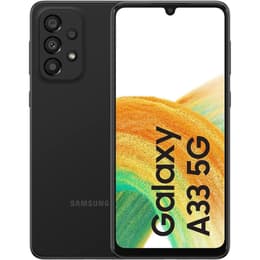
Galaxy A33 5G
Galaxy A33 5G
Starting at

Refurbished price:A$205.00

Versus A$495.00 new

See options

The Asus Zenfone 9 and the Samsung Galaxy A33 5G are both Android smartphones released in 2022, offering distinct experiences for different user preferences. The Zenfone 9, launched in July 2022, positions itself as a compact device with high-end internal components, while the Galaxy A33 5G, released in March 2022, provides a balanced mid-range option with a focus on display quality and battery longevity. Both devices run on the Android operating system, providing access to a wide ecosystem of applications and services.

Scores

Durability

When considering the long-term usability of these devices, their release timelines and software support policies are key factors. The Asus Zenfone 9 was released in July 2022, while the Samsung Galaxy A33 5G became available in March 2022.

  • Software Longevity: The Galaxy A33 5G offers a notable advantage with a commitment to four generations of Android operating system updates and five years of security updates. The Zenfone 9 typically receives two years of major OS updates.
  • Physical Durability: Both phones offer protection against environmental elements. The Zenfone 9 features Corning Gorilla Glass Victus on its display and an IP68 rating for dust and water resistance, indicating it can withstand submersion in up to 1.5 meters of water for 30 minutes. The Galaxy A33 5G comes with Corning Gorilla Glass 5 protection and an IP67 rating, meaning it is resistant to dust and can be submerged in up to 1 meter of water for 30 minutes.
  • Build Materials: The Zenfone 9 incorporates an aluminum frame and a polymer back, contributing to its compact yet sturdy feel. The Galaxy A33 5G features a plastic chassis for its frame and back.

Release year

2022

2022

Compatible with latest Update

Yes

Yes

Operating system

Android

Android

Foldable

No

No

Performance

The performance capabilities of the Asus Zenfone 9 and the Samsung Galaxy A33 5G cater to different user demands, primarily influenced by their internal hardware and battery configurations.

  • Processing Power: The Zenfone 9 is equipped with a high-performance processor, enabling it to handle demanding applications, intensive multitasking, and graphic-heavy gaming with smooth responsiveness. The Galaxy A33 5G features a capable mid-range processor that provides a smooth experience for everyday tasks, web browsing, and moderate gaming.
  • Memory and Storage: The Zenfone 9 offers generous memory options, with configurations up to 16GB of RAM and fast UFS 3.1 storage, which benefits app loading times and overall system fluidity. The Galaxy A33 5G comes with up to 8GB of RAM and UFS 2.2 storage, which is sufficient for typical smartphone usage, and includes expandable storage via a microSD card slot.
  • Battery Endurance: The Zenfone 9, despite its compact size, houses a 4300mAh battery that often provides a full day of use, and for some users, extends beyond. The Galaxy A33 5G is equipped with a larger 5000mAh battery, frequently delivering up to two days of usage on a single charge for many users.

Memory (GB)

6 GB

4 GB

Screen quality

The visual experience on both the Asus Zenfone 9 and the Samsung Galaxy A33 5G is delivered through high-quality displays, though they differ in size and refresh rate.

  • Display Technology and Clarity: Both devices feature AMOLED or Super AMOLED panels, known for producing vibrant colors, deep blacks, and excellent contrast. Both offer a Full HD+ resolution (1080 x 2400 pixels), ensuring sharp and clear visuals for text and images.
  • Size and Refresh Rate: The Zenfone 9 has a compact 5.9-inch display with a 120Hz refresh rate, providing a smooth scrolling and responsive user interface experience. The Galaxy A33 5G offers a larger 6.4-inch display with a 90Hz refresh rate, which still delivers a fluid visual experience for most users.
  • Brightness for Outdoor Use: The Zenfone 9 can reach a peak brightness of 1100 nits, offering good visibility even in bright outdoor conditions. The Galaxy A33 5G also provides good outdoor visibility with a peak brightness of 800 nits.

Resolution

1080 x 2400

1080 x 2400

Screen type

Super AMOLED

Super AMOLED

Audiovisual

The photographic and video capabilities of the Asus Zenfone 9 and the Samsung Galaxy A33 5G present different strengths, catering to varying user priorities in image and video capture.

  • Rear Camera Systems: The Zenfone 9 features a dual-camera setup with a 50MP main sensor that includes a unique gimbal stabilization system, enhancing video smoothness and low-light photography. It also has a 12MP ultrawide camera. The Galaxy A33 5G offers a quad-camera array, including a 48MP main sensor with optical image stabilization (OIS), an 8MP ultrawide, a 5MP macro, and a 2MP depth sensor.
  • Photography Performance: The Zenfone 9's main camera is noted for detailed images and strong low-light performance, though some users have observed inconsistencies in color processing and occasional over-sharpening. The Galaxy A33 5G's main camera performs well in daylight conditions, producing social media-ready photos, but its ultrawide camera can exhibit distortion.
  • Video Recording and Audio: The Zenfone 9 excels in video, offering up to 8K resolution at 24fps and 4K at various frame rates, with its gimbal stabilization providing very steady footage. The Galaxy A33 5G supports 4K video recording at 30fps. Both devices feature stereo speakers for an enhanced media consumption experience.

Main camera

50 megapixels

48 megapixels

Front camera

12 megapixels

13 megapixels

Miscellaneous

Beyond core performance and display, several practical elements differentiate the Asus Zenfone 9 and the Samsung Galaxy A33 5G, impacting daily usability and connectivity.

  • Connectivity Standards: Both smartphones support 5G connectivity for fast mobile data. The Zenfone 9 includes Wi-Fi 6E and Bluetooth 5.2, offering advanced wireless performance. The Galaxy A33 5G supports Wi-Fi 5 and Bluetooth 5.1.
  • Ports and Biometrics: The Zenfone 9 retains a 3.5mm headphone jack, a feature appreciated by users with wired audio accessories, alongside its USB-C port. It also features a side-mounted fingerprint sensor that doubles as a customizable smart key. The Galaxy A33 5G exclusively uses a USB-C port and omits the 3.5mm headphone jack. It incorporates an in-display fingerprint sensor for security.
  • Physical Design and Handling: The Zenfone 9 is designed for one-handed use, with compact dimensions (146.5 x 68.1 x 9.1 mm) and a lighter weight of 169 grams. The Galaxy A33 5G is a larger device, measuring 159.7 x 74 x 8.1 mm and weighing 186 grams.

Weight

169 oz

186 oz

Screen size (in)

5.9

6.4

Network

5G

5G

SIM card

Dual Physical SIM

Physical SIM

Carrier compatibility

Unlocked

Unlocked

User feedback for the Asus Zenfone 9 frequently highlights its appeal as a powerful, compact Android device, praised for its high-end performance and surprisingly good battery life for its size. Some users have noted that while its main camera is capable, the overall photographic experience can be inconsistent, and the software update policy is shorter compared to some competitors. The inclusion of a 3.5mm headphone jack is a recurring positive point for many.

The Samsung Galaxy A33 5G is often commended for its excellent battery life, vibrant Super AMOLED display, and Samsung's commitment to extended software and security updates. Users generally find its camera system to be solid for everyday use and social media, though some reviews suggest its processor performance might not match the fluidity of higher-end devices. The absence of a headphone jack is a point of consideration for some potential buyers.

Users prioritizing a compact form factor, top-tier performance for demanding applications, and the convenience of a headphone jack may find the Asus Zenfone 9 to be a suitable choice. Conversely, individuals who value extended software support, a larger display for media consumption, and exceptional battery life for prolonged use might lean towards the Samsung Galaxy A33 5G. Both devices offer compelling features within their respective segments, and considering quality-assured refurbished options can provide an eco-friendly alternative for acquiring either model.

See all articles

Our recent comparisons