
Motorola Razr 40 vs Oppo Find X5

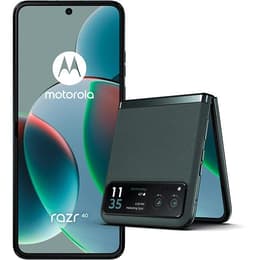
Motorola Razr 40
Motorola Razr 40
See options
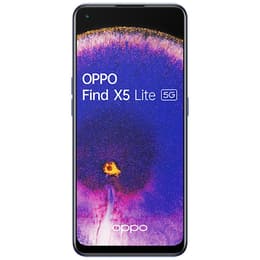
Oppo Find X5
Oppo Find X5
See options

Ratings

The Motorola Razr 40, released in June 2023, and the Oppo Find X5, launched in February 2022, represent distinct approaches to smartphone design. The Razr 40 offers a modern foldable clamshell form factor, emphasizing portability and a unique user experience. In contrast, the Oppo Find X5 is a traditional slab-style smartphone, focusing on a premium build and a comprehensive feature set. Both devices operate on the Android platform, but their core differentiators lie in their physical design, release timelines, and specific hardware priorities.

Scores

Durability

When considering the practical lifespan of these devices, their release dates and software support policies are key factors.

  • Release Timeline: The Motorola Razr 40 was released in June 2023, making it a newer device compared to the Oppo Find X5, which launched in February 2022. This difference in age directly impacts their remaining software support windows.
  • Software Longevity: The Razr 40 shipped with Android 13 and is expected to receive up to three major Android upgrades, extending its software relevance further into the future. The Oppo Find X5, initially running Android 12, has received updates up to Android 14, but its update cycle is nearing its end compared to the newer Razr 40.
  • Durability Features: The Razr 40 features an IP52 rating for dust and splash resistance, along with Gorilla Glass Victus on its main display for protection. The Oppo Find X5 has an IP54 rating, offering slightly better dust and splash protection. The foldable nature of the Razr 40 introduces a hinge mechanism, which is a point of mechanical consideration, while the Find X5's traditional design offers a solid, unmoving structure.

Release year

2023

2022

Compatible with latest Update

Yes

Yes

Operating system

Android

Android

Foldable

Yes

No

Performance

The performance of both smartphones caters to different user expectations, influenced by their internal components and design.

  • Everyday Responsiveness: The Motorola Razr 40, equipped with a processor designed for efficient mid-range performance, handles daily applications and multitasking smoothly. Users report a generally fluid experience, though it may warm up under sustained heavy loads. The Oppo Find X5, featuring a processor that was a flagship-tier component at its release, delivers robust performance for demanding applications and gaming, with users noting a lack of lag or stuttering.
  • Battery Behavior: The Razr 40 houses a 4200 mAh battery, which users generally find sufficient for a full day of moderate use, with some reporting two-day battery life for lighter usage. The Oppo Find X5 comes with a larger 4800 mAh battery, and many users experience it lasting a full day, often with significant charge remaining.
  • Storage and Multitasking: Both devices offer similar RAM and internal storage configurations, typically ranging from 8GB to 12GB of RAM and 128GB to 256GB of storage, providing ample space for apps and media and supporting efficient multitasking.

Memory (GB)

8 GB

8 GB

Screen quality

The display experience is a significant differentiator, with the Razr 40's foldable design offering a unique interaction.

  • Display Technology and Size: The Motorola Razr 40 features a 6.9-inch foldable LTPO AMOLED main display, which can fold in half for enhanced portability. It also includes a 1.5-inch AMOLED external display for quick notifications and interactions. The Oppo Find X5 has a 6.55-inch AMOLED display in a traditional flat form factor.
  • Clarity and Smoothness: The Razr 40's main display boasts a 144Hz refresh rate, contributing to very smooth scrolling and animations, alongside a peak brightness of 1400 nits for good visibility in various lighting conditions. The Oppo Find X5 offers a 120Hz refresh rate and a peak brightness of 1000 nits, providing a vibrant and responsive viewing experience.
  • Viewing Experience: The foldable nature of the Razr 40 allows for unique viewing angles and hands-free usage modes, while the Oppo Find X5 provides a consistent, expansive display for media consumption and productivity in a conventional format.

Resolution

1080 x 2640

1080 x 2400

Screen type

Foldable LTPO AMOLED

AMOLED

Audiovisual

Both smartphones offer capable camera systems, though with different strengths and configurations.

  • Rear Camera Systems: The Motorola Razr 40 features a dual-camera setup with a 64 MP main sensor with optical image stabilization (OIS) and a 13 MP ultrawide lens that also functions for macro photography. The Oppo Find X5 comes with a triple-camera system, including a 50 MP main sensor with OIS, a 13 MP telephoto lens for optical zoom, and a 50 MP ultrawide sensor.
  • Photography Performance: The Razr 40's camera performs well in good lighting, but some users note it can be underwhelming in more challenging conditions. The Find X5 is praised for its sharp and detailed photos in good light, with reliable exposure and color across its lenses. Its low-light performance is also considered capable, especially with the main camera.
  • Front Camera and Video: Both devices are equipped with a 32 MP front-facing camera for selfies and video calls. The Find X5 offers 4K video recording at 60fps, while the Razr 40 supports 4K at 30fps.

Main camera

64 megapixels

50 megapixels

Front camera

32 megapixels

32 megapixels

Miscellaneous

Beyond core features, several practical elements distinguish these two devices in daily use.

  • Connectivity and Ports: Both the Motorola Razr 40 and Oppo Find X5 support 5G connectivity, along with modern Wi-Fi standards and Bluetooth for wireless connections. Both devices utilize a USB-C port for charging and data transfer, and neither includes a traditional 3.5mm headphone jack.
  • Biometric Security: The Razr 40 integrates a fingerprint sensor into its side power button, which users often find fast and convenient. It also supports face unlock. The Oppo Find X5 features an in-display optical fingerprint scanner and facial recognition for secure access.
  • Design and Handling: The Razr 40's clamshell foldable design allows it to be compact when folded, enhancing portability. It features a plastic back with a faux leather finish and an aluminum frame. The Oppo Find X5 has a traditional slab design with a glass front and back, and an aluminum frame, offering a solid and premium feel. The Razr 40 weighs 188.6 grams, while the Find X5 is slightly heavier at 196 grams.

Weight

189 oz

196 oz

Screen size (in)

6,9

6.55

Network

5G

5G

SIM card

Dual Physical SIM + eSIM

Dual Physical SIM

Carrier compatibility

Unlocked

Unlocked

User feedback for the Motorola Razr 40 often highlights its unique foldable design and the practicality of its compact form factor as major advantages. Many appreciate its clean Android software experience and decent battery life for a foldable device. Criticisms sometimes point to its camera performance being less competitive than some rivals and the external screen being somewhat limited in functionality.

The Oppo Find X5 receives praise for its vibrant display, strong overall performance for a device of its generation, and capable camera system, particularly in good lighting. Users also frequently commend its battery life. Some common concerns include its software update pace and the absence of an official IP68 water resistance rating.

Users prioritizing a distinctive, highly portable design and a modern Android experience with longer software support may find the Motorola Razr 40 well-suited to their needs. Its foldable nature offers a fresh interaction model for those seeking something beyond the traditional smartphone. Conversely, users who value consistent, robust performance, a versatile camera system with a telephoto lens, and a larger, traditional display for media and productivity might lean towards the Oppo Find X5. Both devices offer quality-assured refurbished options, providing an eco-friendly alternative for consumers looking to make informed and sustainable choices.

See all articles

Our recent comparisons