Motorola Razr 40 Ultra vs Nokia G22

Motorola Razr 40 Ultra
See options
Nokia G22
Nokia G22
See options

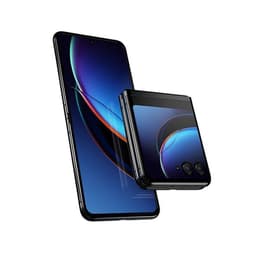
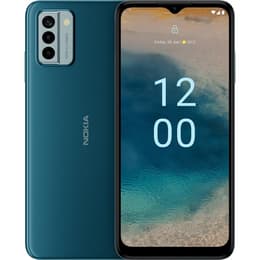
The Motorola Razr 40 Ultra (released June 2023) and the Nokia G22 (released February 2023) are both smartphones, but they cater to distinct user preferences. The Razr 40 Ultra stands out with its innovative foldable design and dual high-refresh-rate OLED displays, offering a compact form factor when closed. In contrast, the Nokia G22 is a traditional slab-style phone, emphasizing user repairability and extended battery life. Both devices run on the Android operating system, providing access to a wide ecosystem of applications and services.

Scores

Durability

When considering the longevity of these devices, their release timelines and design philosophies present different practical lifespans.

  • Release and Software Support: The Motorola Razr 40 Ultra, launched in June 2023, typically receives software updates for a period of several years, ensuring access to newer Android features and security patches. The Nokia G22, released in February 2023, is committed to two years of Android version updates and three years of monthly security updates, which is competitive for its category but less extensive than some premium devices.
  • Physical Durability: The Razr 40 Ultra features an IP52 splash-resistant rating, a 7000-series aluminum frame, and a stainless steel hinge, with its cover screen protected by Gorilla Glass Victus. While its hinge has been praised for durability by long-term users, some bend tests have raised concerns about the cover screen's resilience under unusual pressure. The Nokia G22 offers IP52 splash and dust resistance and uses Corning Gorilla Glass 3 for its display. A key differentiator for the G22 is its design for user repairability, with components like the battery and screen designed to be easily replaceable with basic tools, promoting a longer practical life through maintenance.
  • Expected Practical Lifespan: Users prioritizing cutting-edge features and a compact, foldable design might find the Razr 40 Ultra's premium build and software support appealing for a few years. Those who value the ability to perform their own repairs and prefer a device that can be maintained over a longer period, even with more modest software update commitments, might find the Nokia G22 a more suitable choice for extended practical use.

Release year

2023

2023

Compatible with latest Update

Yes

No

Operating system

Android

Android

Foldable

Yes

No

Performance

The performance capabilities of the Motorola Razr 40 Ultra and the Nokia G22 are tailored for different user expectations and daily tasks.

  • Processing Power: The Motorola Razr 40 Ultra is equipped with a powerful current-generation processor, enabling it to handle demanding applications, intensive multitasking, and graphic-heavy gaming smoothly and efficiently. This results in quick app loading times and a highly responsive user experience. The Nokia G22, on the other hand, features a processor designed for everyday tasks, which can feel sluggish with noticeable pauses when opening more demanding applications or navigating the system.
  • Memory and Storage: The Razr 40 Ultra comes with ample RAM, typically 8GB or 12GB, paired with 256GB or 512GB of internal storage, providing significant space for apps and media without expandable storage options. The Nokia G22 offers 4GB of RAM and storage options of 64GB or 128GB, which can be expanded significantly up to 2TB via a microSD card, offering flexibility for users who need more storage for photos and videos.
  • Battery Behavior: The Razr 40 Ultra, with its 3800 mAh battery, generally provides a full day of use for most users, though heavy usage of the main display can lead to more frequent charging. The Nokia G22, featuring a larger 5050 mAh battery, is noted for its extended battery life, often lasting two to three days for light users, making it suitable for those who prioritize longevity between charges.

Memory (GB)

8 GB

4 GB

Screen quality

The display experiences offered by the Motorola Razr 40 Ultra and the Nokia G22 differ significantly, reflecting their distinct designs and target user needs.

  • Display Technology and Clarity: The Motorola Razr 40 Ultra features a 6.9-inch foldable pOLED LTPO main display with a high resolution, delivering deep blacks, vibrant colors, and sharp details. It also boasts a prominent 3.6-inch pOLED cover display that is highly functional for quick interactions. The Nokia G22 uses a 6.5-inch IPS LCD panel with an HD+ resolution, offering clear and vibrant visuals, though not as sharp or contrasted as an OLED display.
  • Refresh Rate and Brightness: The Razr 40 Ultra's main display offers a variable refresh rate up to 165 Hz, providing exceptionally smooth scrolling and responsiveness, with a peak brightness of 1400 nits for excellent outdoor visibility. Its cover display also has a high 144 Hz refresh rate. The Nokia G22 features a 90 Hz refresh rate, which makes scrolling feel more fluid than standard 60 Hz screens, and a typical brightness of 500 nits, which is generally sufficient for indoor use but may struggle in direct sunlight.
  • Viewing Experience: The Razr 40 Ultra's foldable design and large, high-quality displays are ideal for immersive media consumption and multitasking, with the cover screen adding unique utility. The Nokia G22 provides a solid viewing experience for everyday tasks, with its larger screen size suitable for general browsing and video playback.

Resolution

1080 x 2640

720 x 1600

Screen type

Foldable LTPO AMOLED

IPS LCD

Audiovisual

The camera systems on the Motorola Razr 40 Ultra and the Nokia G22 are designed with different photographic priorities in mind.

  • Rear Camera Capabilities: The Motorola Razr 40 Ultra features a dual-camera setup on the rear, consisting of a 12 MP main sensor with optical image stabilization (OIS) and a 13 MP ultrawide lens that also functions for macro photography. This configuration is capable of capturing detailed photos and offers versatility for different shooting scenarios. The Nokia G22 comes with a triple-camera system, including a 50 MP main sensor, complemented by 2 MP macro and 2 MP depth sensors. While the higher megapixel count on the main sensor can capture more detail in good lighting, the additional sensors are primarily for specific effects rather than broad photographic versatility.
  • Low-Light and Video Performance: The Razr 40 Ultra's camera system generally performs well in various lighting conditions, and it supports 4K UHD video recording at 60 frames per second, offering high-quality video capture. The Nokia G22's camera performs adequately in well-lit environments, but its low-light performance is more limited. It records video at 1080p resolution at 30 frames per second.
  • Front Camera and Audio: For selfies and video calls, the Razr 40 Ultra has a 32 MP front-facing camera. The Nokia G22 features an 8 MP front camera. In terms of audio, the Razr 40 Ultra includes stereo speakers with Dolby Atmos support, providing a more immersive sound experience for media. The Nokia G22 typically offers a mono speaker setup.

Main camera

12 megapixels

50 megapixels

Front camera

32 megapixels

8 megapixels

Miscellaneous

Beyond core specifications, several practical elements differentiate the Motorola Razr 40 Ultra and the Nokia G22, impacting daily usability and convenience.

  • Connectivity and Ports: The Motorola Razr 40 Ultra supports 5G connectivity, Wi-Fi 6E, and Bluetooth 5.3, offering faster wireless speeds and more reliable connections. It features a USB-C port for charging and data transfer but lacks a 3.5mm headphone jack. The Nokia G22 supports 4G LTE, Wi-Fi 5 (802.11ac), and Bluetooth 5.0. It includes a USB-C port and retains the traditional 3.5mm headphone jack, which is convenient for users with wired audio accessories.
  • Biometrics and Build: Both devices feature a side-mounted fingerprint sensor for secure unlocking. The Razr 40 Ultra also offers face unlock. The Razr 40 Ultra's dimensions are 170.83 x 73.95 x 6.99mm when open and 88.42 x 73.95 x 15.1mm when folded, weighing around 184.5g to 188.5g. Its build materials include a 7000-series aluminum frame and Gorilla Glass Victus. The Nokia G22 measures 165 x 76.2 x 8.5mm and weighs approximately 195g to 196g, with a back made from 100% recycled plastic.
  • Additional Features: The Razr 40 Ultra supports dual SIM functionality (nano-SIM + eSIM). The Nokia G22 includes a microSD card slot for expandable storage up to 2TB, a feature absent in the Razr 40 Ultra.

Weight

1 oz

196 oz

Screen size (in)

6.9

6.5

Network

5G

4G

SIM card

Dual Physical SIM

Dual Physical SIM

Carrier compatibility

Unlocked

Unlocked

User feedback for the Motorola Razr 40 Ultra often praises its large, functional external display, which allows for many interactions without opening the phone, and its compact, stylish foldable design. Users appreciate the smooth performance for daily tasks and gaming. However, some criticisms include concerns about the battery life for heavy users and the camera performance not always matching other premium devices. The Nokia G22 is frequently lauded for its exceptional battery life, often lasting multiple days on a single charge, and its unique focus on user repairability, making it a sustainable choice for those who prefer to maintain their devices. Common concerns revolve around its more modest processing power, which can lead to slower app loading, and a display that, while adequate, isn't as vibrant or sharp as higher-end alternatives.

Users prioritizing a compact, modern design with a highly interactive external display and robust performance for demanding applications may find the Motorola Razr 40 Ultra well-suited to their needs. Its advanced display technology and processing power make it ideal for those who enjoy multimedia and mobile gaming. Conversely, users who prioritize extended battery life, the ability to easily repair their device, and expandable storage will likely lean towards the Nokia G22. This device is particularly suitable for individuals seeking a practical, long-lasting smartphone for essential communication and media consumption, and for those who appreciate an eco-friendly alternative through quality-assured refurbished options.

See all articles

Our recent comparisons