
Motorola Edge 30 Pro vs Oppo Find X5 Pro 5G

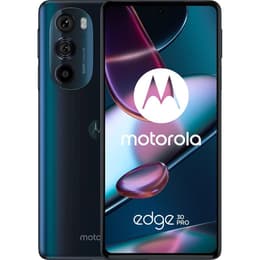
Motorola Edge 30 Pro
Starting at

Refurbished price:A$291.72

Versus A$2,709.00 new

See options
Oppo Find X5 Pro 5G
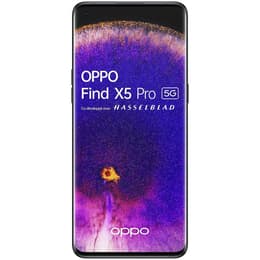
Oppo Find X5 Pro 5G
Starting at

Refurbished price:A$461.00

Versus A$2,708.00 new

See options

The Motorola Edge 30 Pro and the Oppo Find X5 Pro 5G, both released in February 2022, represent high-end Android smartphones designed to offer robust performance and advanced features. While they share the same core operating system, Android, they differentiate themselves through their unique approaches to display technology, camera systems, and overall design philosophy.

Scores

Durability

When considering the long-term usability of these devices, several factors contribute to their expected lifespan, including software support and physical resilience.

  • Release Timeline: Both devices were launched in February 2022, placing them in the same generation of smartphone technology. This means they began their software support cycles at roughly the same time.
  • Software Longevity: The Motorola Edge 30 Pro launched with Android 12 and is upgradable to Android 14, with Motorola typically providing 2-3 major Android updates and security patches. The Oppo Find X5 Pro 5G also launched with Android 12 (ColorOS 12.1) and Oppo generally offers 3 major Android updates and 4 years of security updates for its flagship devices. Users prioritizing the longest possible software support might find a slight edge with Oppo's stated update policy.
  • Physical Durability: The Motorola Edge 30 Pro features a glass front (Gorilla Glass 3) and a glass back (Gorilla Glass 5) with a plastic frame, offering IP52 splash resistance. The Oppo Find X5 Pro 5G, on the other hand, boasts a more robust build with Gorilla Glass Victus on the front, a ceramic or vegan leather back, an aluminum frame, and an IP68 rating for dust and water resistance, suggesting a higher degree of protection against environmental elements. [7, 13, 14, 23, 32]

Release year

2022

2022

Operating system

Android

Android

Foldable

No

No

Performance

Both smartphones are equipped with powerful internal components designed to handle demanding applications and multitasking with ease.

  • Processing Power: Both the Motorola Edge 30 Pro and the Oppo Find X5 Pro 5G are powered by the same generation of high-performance processor. This allows them to manage intensive tasks such as advanced gaming, video editing, and running multiple applications simultaneously without significant slowdowns. [1, 2, 3, 7, 8, 12, 13, 14, 15, 20, 21, 22, 23, 24, 25, 26, 27, 30, 32]
  • Memory and Storage: Both devices offer configurations with 8GB or 12GB of RAM, facilitating smooth transitions between apps and efficient background process management. Storage options range from 128GB to 512GB, utilizing fast UFS 3.1 storage technology, which contributes to quick app loading and file transfer speeds. [1, 2, 3, 4, 6, 7, 8, 9, 12, 13, 14, 15, 22, 23, 28, 30, 32]
  • Battery Behavior: The Motorola Edge 30 Pro houses a 4800 mAh battery, while the Oppo Find X5 Pro 5G comes with a larger 5000 mAh battery. In real-world usage, both are generally capable of lasting through a full day for moderate users. The Oppo Find X5 Pro 5G supports faster wired charging at 80W and 50W wireless charging, compared to the Motorola Edge 30 Pro's 68W wired and 15W wireless charging, meaning the Oppo device can replenish its battery more quickly. [1, 2, 3, 4, 7, 8, 9, 12, 14, 15, 16, 21, 23, 25, 30]

Memory (GB)

8 GB

12 GB

Screen quality

The visual experience on both devices is a key aspect, with each offering a high-quality display tailored for different preferences.

  • Display Technology and Resolution: The Motorola Edge 30 Pro features a 6.7-inch pOLED display with a 1080x2400 (FHD+) resolution. The Oppo Find X5 Pro 5G also has a 6.7-inch display, but it's an LTPO2 AMOLED panel with a higher 1440x3216 (QHD+) resolution, resulting in a sharper image with more detailed visuals. [1, 2, 3, 4, 5, 7, 8, 9, 11, 12, 13, 15, 17, 22, 23, 27, 30]
  • Refresh Rate and Smoothness: The Motorola Edge 30 Pro offers a high 144Hz refresh rate, providing exceptionally smooth scrolling and fluid animations. The Oppo Find X5 Pro 5G features an adaptive 120Hz refresh rate (LTPO 2.0), which can dynamically adjust from 1Hz to 120Hz based on content, balancing smoothness with power efficiency. [1, 5, 7, 8, 9, 12, 15, 17, 22, 27, 30]
  • Brightness and Clarity: Both displays support HDR10+ for enhanced contrast and vibrant colors. The Oppo Find X5 Pro 5G generally offers higher peak brightness, which can improve visibility in bright outdoor conditions. [1, 5, 7, 8, 12, 15, 17, 22, 27, 30]

Resolution

1080 x 2400

1440 x3216

Audiovisual

Both smartphones aim to deliver a versatile photography and videography experience, though they approach it with slightly different camera configurations and processing.

  • Rear Camera Systems: The Motorola Edge 30 Pro is equipped with a triple camera setup featuring a 50MP main sensor with optical image stabilization (OIS), a 50MP ultrawide sensor that also functions for macro shots, and a 2MP depth sensor. The Oppo Find X5 Pro 5G also has a triple rear camera system, including a 50MP main sensor with OIS, a 50MP ultrawide sensor, and a 13MP telephoto lens offering 2x optical zoom. The Oppo device benefits from its dedicated MariSilicon X NPU for image processing and a partnership with Hasselblad for color calibration. [1, 3, 4, 7, 8, 9, 10, 13, 14, 16, 17, 18, 20, 21, 23, 24, 30]
  • Photography Performance: Both phones are capable of capturing detailed images in good lighting. The Motorola Edge 30 Pro's ultrawide camera also serving as a macro lens offers versatility. The Oppo Find X5 Pro 5G's dedicated telephoto lens provides optical zoom capabilities, which can be advantageous for distant subjects. Its MariSilicon X NPU is designed to enhance low-light video and overall image quality. [1, 4, 7, 8, 10, 13, 14, 18, 20, 21, 23, 24, 30]
  • Video Recording: The Motorola Edge 30 Pro supports 8K video recording at 24fps and 4K at 30/60fps. The Oppo Find X5 Pro 5G records up to 4K at 30/60fps, with its NPU specifically designed to improve 4K AI Night Video. [1, 7, 8, 10, 13, 16, 17, 21, 24, 30]
  • Front Camera: The Motorola Edge 30 Pro features a high-resolution 60MP front camera, while the Oppo Find X5 Pro 5G has a 32MP front camera. Both are suitable for clear selfies and video calls. [1, 3, 4, 7, 8, 9, 10, 13, 14, 16, 17, 18, 24]

Miscellaneous

Beyond the core specifications, several other features contribute to the overall user experience and practical utility of these smartphones.

  • Connectivity and Ports: Both devices offer comprehensive connectivity, including 5G, Wi-Fi 6E, and Bluetooth 5.2, ensuring fast and reliable wireless connections. They both utilize a USB-C port for charging and data transfer, with the Motorola Edge 30 Pro supporting USB 3.1 with DisplayPort 1.4 for external display output. Neither phone includes a traditional 3.5mm headphone jack. [1, 2, 4, 6, 7, 8, 9, 14, 15, 16, 17, 21, 22, 32]
  • Biometric Security: The Motorola Edge 30 Pro incorporates a side-mounted fingerprint sensor for secure unlocking. The Oppo Find X5 Pro 5G features an in-display fingerprint sensor, offering a seamless unlocking experience by touching the screen. Both also support face recognition. [1, 12, 14, 22, 23, 27]
  • Design and Handling: The Motorola Edge 30 Pro weighs 196g and has dimensions of 163.1 x 75.9 x 8.8 mm. The Oppo Find X5 Pro 5G is slightly heavier at 218g and measures 163.7 x 73.9 x 8.5 mm. The Oppo's ceramic or vegan leather back and aluminum frame contribute to a more premium feel and potentially better grip compared to the Motorola's glass and plastic construction. [1, 2, 4, 7, 8, 9, 12, 13, 15, 17, 23, 32]
  • Audio Experience: Both smartphones feature stereo speakers and support Dolby Atmos, providing an immersive audio experience for media consumption. [1, 22, 23]

Weight

196 oz

218 oz

Screen size (in)

6,7

6,7

Network

5G

5G

SIM card

Dual Physical SIM

Physical SIM + eSIM

Carrier compatibility

Unlocked

Unlocked

The Motorola Edge 30 Pro and the Oppo Find X5 Pro 5G are both capable flagship smartphones from 2022, offering powerful performance and advanced features. User feedback often highlights the Motorola Edge 30 Pro's smooth 144Hz display and its near-stock Android experience as significant advantages. Some users appreciate its competitive camera setup, particularly the high-resolution front camera and the versatile ultrawide/macro lens. Criticisms sometimes point to its IP52 splash resistance being less robust than some competitors and its battery life, while decent, not always standing out in its class. [1, 5, 7, 13, 21, 22, 24, 32]

The Oppo Find X5 Pro 5G is frequently praised for its stunning QHD+ LTPO2 AMOLED display, which offers exceptional clarity and adaptive refresh rates for both smooth visuals and power efficiency. Its camera system, enhanced by the MariSilicon X NPU and Hasselblad collaboration, often receives positive remarks for its image processing and low-light video capabilities. The faster charging speeds and the more premium, IP68-rated build materials are also commonly cited as strong points. Some users have noted that its software, ColorOS, while feature-rich, might not appeal to those who prefer a simpler Android interface, and its weight is slightly higher. [4, 8, 12, 14, 15, 16, 17, 18, 20, 23, 25, 26, 27, 30]

Users prioritizing a very high refresh rate display and a clean Android experience may find the Motorola Edge 30 Pro well-suited to their needs. Those who value a sharper, more adaptive display, a more advanced camera system with optical zoom, faster charging, and a higher level of dust and water resistance might lean towards the Oppo Find X5 Pro 5G. Both devices offer a compelling experience, and choosing between them often comes down to these specific preferences. For those considering an eco-friendly alternative, both models are available as quality-assured refurbished options, providing a sustainable choice for acquiring high-performance technology.


See all articles

Our recent comparisons