
Motorola Edge 30 Neo vs Oppo Find X5 Pro 5G

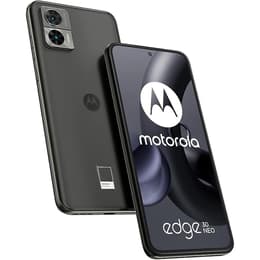
Motorola Edge 30 Neo
Starting at

Refurbished price:A$306.00

Versus A$414.00 new

See options
Oppo Find X5 Pro 5G
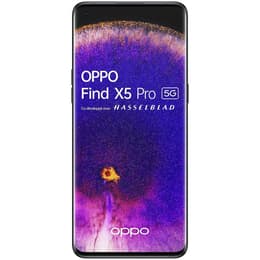
Oppo Find X5 Pro 5G
Starting at

Refurbished price:A$461.00

Versus A$2,708.00 new

See options

The Motorola Edge 30 Neo, released in September 2022, and the Oppo Find X5 Pro 5G, launched in February 2022, are both Android smartphones that offer distinct user experiences. While the Edge 30 Neo focuses on a compact design and a balanced feature set, the Find X5 Pro 5G aims for a premium experience with advanced camera capabilities and high-end performance. Both devices run on the Android operating system, providing access to a wide ecosystem of applications and services.

Scores

Durability

The longevity of a smartphone is influenced by its build quality, software support, and the availability of replacement parts.

  • Software Updates: The Motorola Edge 30 Neo launched with Android 12 and received its final official Android update to Android 14 in March 2024, indicating a software support period of approximately two years for major OS upgrades. It may continue to receive security patches beyond this. In contrast, the Oppo Find X5 Pro 5G, also launched with Android 12, has a longer projected software lifespan, with official updates available up to Android 16 as of January 2026. This suggests a more extended period of major OS support for the Oppo device.
  • Build Materials: The Motorola Edge 30 Neo features a glass front with a plastic frame and plastic back, contributing to its lighter weight. The Oppo Find X5 Pro 5G, on the other hand, utilizes a more robust construction with a glass front (Gorilla Glass Victus), an aluminum frame, and a ceramic or eco-leather back, which is noted for being twice as strong as glass and offering better heat dissipation.
  • Water and Dust Resistance: The Edge 30 Neo carries an IP52 rating, offering protection against limited dust ingress and splashing water. The Find X5 Pro 5G boasts a higher IP68 rating, signifying more comprehensive protection against dust and immersion in water.

Release year

2022

2022

Operating system

Android

Android

Foldable

No

No

Performance

Performance in daily use is determined by the internal components and how efficiently the software utilizes them for various tasks.

  • Processing Power: The Motorola Edge 30 Neo is equipped with a processor that handles everyday applications and general multitasking smoothly. Users report it is suitable for undemanding games, though graphically intensive titles may require lower settings. The Oppo Find X5 Pro 5G features a more powerful processor, designed for demanding applications, intensive multitasking, and high-fidelity gaming without significant slowdowns.
  • Memory and Storage: The Edge 30 Neo typically comes with 6GB or 8GB of RAM and 128GB or 256GB of internal storage. The Find X5 Pro 5G offers higher configurations, usually with 8GB or 12GB of RAM and 256GB or 512GB of storage, providing more headroom for heavy users and extensive media libraries.
  • Battery Performance and Charging: The Motorola Edge 30 Neo has a 4020 mAh battery, which generally provides a full day of moderate use, with some users reporting up to a day and a half. It supports 68W wired fast charging and 5W wireless charging. The Oppo Find X5 Pro 5G features a larger 5000 mAh battery, capable of lasting a full day even with heavy use. It supports significantly faster 80W wired charging and 50W wireless charging, allowing for very quick recharges.

Memory (GB)

8 GB

12 GB

Screen quality

The display is a primary interface for smartphone interaction, and its quality significantly impacts the user experience.

  • Display Technology and Size: The Motorola Edge 30 Neo features a 6.28-inch P-OLED display, offering vibrant colors and deep blacks. The Oppo Find X5 Pro 5G has a larger 6.7-inch LTPO2 AMOLED display, which also provides rich colors and deep contrast.
  • Resolution and Clarity: The Edge 30 Neo has a resolution of 1080 x 2400 pixels, resulting in a clear and sharp image for its size. The Find X5 Pro 5G offers a higher resolution of 1440 x 3216 pixels, providing even finer detail and clarity on its larger screen.
  • Refresh Rate and Brightness: Both devices feature a 120Hz refresh rate, contributing to smooth scrolling and a responsive feel. Both also offer a peak brightness of 1300 nits, ensuring good visibility even in bright outdoor conditions. The Find X5 Pro 5G's LTPO2 technology allows its refresh rate to adapt dynamically, which can contribute to battery efficiency.

Resolution

1080 x 2400

1440 x3216

Audiovisual

Camera capabilities are a key differentiator, influencing the quality of photos and videos captured in various conditions.

  • Rear Camera System: The Motorola Edge 30 Neo includes a dual-camera setup with a 64 MP main sensor with optical image stabilization (OIS) and a 13 MP ultrawide sensor. The Oppo Find X5 Pro 5G features a more comprehensive triple-camera system, including two 50 MP sensors (main with OIS and ultrawide) and a 13 MP telephoto lens with 2x optical zoom.
  • Photography Performance: The Edge 30 Neo's main camera performs well in good lighting conditions, producing images with decent detail and accurate colors. Its ultrawide camera is noted as above average for its segment. However, low-light performance and video quality are less impressive. The Find X5 Pro 5G, with its dedicated imaging processor (MariSilicon X NPU) and advanced sensors, offers improved low-light photography and video capabilities, including 4K AI Night Video.
  • Front Camera: Both smartphones are equipped with a 32 MP front-facing camera, suitable for selfies and video calls.
  • Audio Experience: The Edge 30 Neo features dual stereo speakers with Dolby Atmos enhancement, providing good volume, though some users find the overall sound quality to be average. The Find X5 Pro 5G also offers stereo speakers, which are capable of producing sound with decent depth for casual listening.

Miscellaneous

Beyond core specifications, several practical features and design elements contribute to the overall user experience.

  • Connectivity: Both devices support 5G connectivity for faster mobile data speeds. The Motorola Edge 30 Neo supports Wi-Fi 802.11 a/b/g/n/ac and Bluetooth 5.1. The Oppo Find X5 Pro 5G offers more advanced connectivity with Wi-Fi 802.11 a/b/g/n/ac/6e and Bluetooth 5.2.
  • Ports and Sensors: Both phones utilize a USB-C port for charging and data transfer, with the Find X5 Pro 5G featuring the faster USB-C 3.1 standard compared to the Edge 30 Neo's USB-C 2.0. Neither device includes a traditional 3.5mm headphone jack. Both incorporate an under-display fingerprint sensor for secure unlocking.
  • Design and Handling: The Motorola Edge 30 Neo is a relatively compact and lightweight device, weighing 155g and measuring 152.9 x 71.2 x 7.8 mm, making it comfortable for one-handed use. The Oppo Find X5 Pro 5G is larger and heavier at 218g and dimensions of 163.7 x 73.9 x 8.5 mm, offering a more substantial feel. The Find X5 Pro 5G's ceramic back is designed to reduce fingerprints and offers a unique aesthetic.
  • Operating System Interface: The Edge 30 Neo runs Motorola's My UX interface, which is known for its near-stock Android experience with minimal bloatware and useful gestures. The Find X5 Pro 5G uses ColorOS, which offers a customizable experience with additional features and a refreshed aesthetic.

Weight

155 oz

218 oz

Screen size (in)

6.28

6,7

Network

5G

5G

SIM card

Dual Physical SIM

Physical SIM + eSIM

Carrier compatibility

Unlocked

Unlocked

The Motorola Edge 30 Neo and the Oppo Find X5 Pro 5G cater to different user priorities, each excelling in distinct areas. User feedback for the Edge 30 Neo often praises its compact size, vibrant display, and fast charging capabilities, making it a practical choice for everyday use. However, some users note its performance for demanding tasks and low-light camera capabilities as areas where it doesn't stand out.

Conversely, the Oppo Find X5 Pro 5G receives acclaim for its powerful performance, exceptional display quality, and advanced camera system, particularly its low-light video capabilities. Its fast charging, both wired and wireless, is also a frequently highlighted positive. Criticisms sometimes point to its larger size and weight, which might not appeal to users preferring a more compact device.

Users prioritizing a lightweight, more manageable device for general daily tasks, social media, and moderate gaming, along with a clean Android experience, may find the Motorola Edge 30 Neo well-suited to their needs. Its balanced features and efficient charging make it a reliable companion. For those who require top-tier performance for intensive applications, high-fidelity gaming, and advanced photography and videography, especially in challenging lighting conditions, the Oppo Find X5 Pro 5G presents a compelling option. Its robust build and extended software support also contribute to a longer-term investment.

Both devices are available as quality-assured refurbished options, providing an eco-friendly alternative for consumers looking to make informed and sustainable choices.


See all articles

Our recent comparisons