
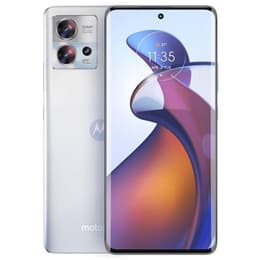
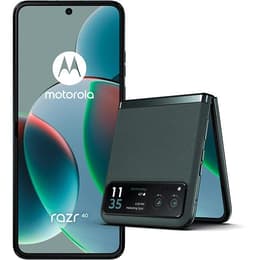

Motorola Edge 30 Fusion vs Motorola Razr 40

Motorola Edge 30 Fusion
Starting at

Refurbished price:A$257.46

Versus A$1,352.00 new

See options
Motorola Razr 40
Motorola Razr 40
See options

The Motorola Edge 30 Fusion, released in September 2022, and the Motorola Razr 40, launched in June 2023, represent distinct approaches to smartphone design and functionality. While the Edge 30 Fusion offers a traditional, sleek slab form factor, the Razr 40 introduces a foldable clamshell design, providing a compact experience when closed. Both devices run on the Android operating system, offering a clean software experience with Motorola's enhancements.

Scores

Durability

When considering the long-term usability of these devices, their release timelines and software support policies are key factors.

  • Release and Software Support: The Motorola Edge 30 Fusion, launched in September 2022, typically receives 2-3 years of Android OS updates and 3-4 years of security updates. The Motorola Razr 40, released in June 2023, benefits from a more extended commitment, with a promise of three major Android OS upgrades (up to Android 16) and four years of bi-monthly security updates, with Android 15 already rolling out in early 2025.
  • Practical Lifespan: Users prioritizing the latest software features for a longer duration may find the Razr 40's update policy more appealing, extending its practical lifespan in terms of software compatibility. The Edge 30 Fusion, while still capable, will see its software support conclude sooner.
  • Repairability: The Razr 40, being a foldable device, presents a more complex repair process, receiving a repairability score of 4 out of 10 from iFixit due to the use of strong adhesives and intricate internal components. Traditional slab phones like the Edge 30 Fusion generally offer a more straightforward repair experience, though a specific score was not readily available.

Release year

2022

2023

Compatible with latest Update

Yes

Yes

Operating system

Android

Android

Foldable

No

Yes

Performance

The performance of both smartphones caters to different user expectations, influenced by their internal components and design.

  • Everyday Responsiveness: The Edge 30 Fusion, equipped with a powerful processor from late 2021, handles demanding applications, multitasking, and graphic-intensive games with smooth responsiveness. The Razr 40 features a capable processor designed for efficient performance in a foldable form factor, providing a fluid experience for daily tasks and moderate gaming.
  • Storage and Multitasking: Both devices offer configurations with 8GB of RAM, ensuring competent multitasking capabilities. The Edge 30 Fusion typically comes with 128GB or 256GB of UFS 3.1 storage, offering fast data access. The Razr 40 also provides 128GB or 256GB storage options, though it utilizes UFS 2.2, which is slightly slower than UFS 3.1.
  • Battery Behavior: The Edge 30 Fusion houses a 4400 mAh battery, which generally provides a full day of moderate use, though heavy usage, especially with the high refresh rate display, may require more frequent charging. The Razr 40 has a 4200 mAh battery, which, despite being slightly smaller, is optimized for its foldable design and can last a full day with typical usage, supporting both wired and wireless charging.

Memory (GB)

8 GB

8 GB

Screen quality

The display experience is a primary differentiator, with one offering a traditional expansive view and the other a unique foldable design.

  • Main Display Technology: The Edge 30 Fusion features a 6.55-inch pOLED 'Endless Edge' display, providing vibrant colors, deep blacks, and excellent contrast. The Razr 40 boasts a larger 6.9-inch foldable LTPO AMOLED main display, also delivering rich colors and deep blacks, with the added benefit of folding in half.
  • Resolution and Smoothness: Both phones offer Full HD+ resolutions (2400x1080 for Edge 30 Fusion, 1080x2640 for Razr 40), ensuring sharp visuals. Both also feature a high 144Hz refresh rate, contributing to smooth scrolling and fluid animations.
  • Brightness and External Screen: The Edge 30 Fusion can reach a peak brightness of 1100 nits, offering good visibility outdoors. The Razr 40's main display can achieve a peak brightness of 1400 nits, enhancing outdoor readability. A key feature of the Razr 40 is its 1.5-inch external AMOLED cover display, useful for quick notifications, time, and basic interactions without opening the phone.

Resolution

1080 x 2400

1080 x 2640

Screen type

P-OLED

Foldable LTPO AMOLED

Audiovisual

Both devices offer versatile camera systems, though their strengths and capabilities vary.

  • Rear Camera System: The Edge 30 Fusion includes a 50MP main camera with optical image stabilization (OIS), a 13MP ultrawide lens that doubles as a macro camera, and a 2MP depth sensor. The Razr 40 features a 64MP main camera with OIS, Phase Detection Autofocus (PDAF), and Laser AF, alongside a 13MP ultrawide camera with autofocus that also supports macro photography.
  • Photography Performance: The Edge 30 Fusion's main camera captures detailed and color-accurate photos in good lighting, with decent low-light performance thanks to OIS. The Razr 40's main camera also produces good images with realistic colors in well-lit conditions, and OIS assists in low-light scenarios, though some users note occasional dullness in certain lighting.
  • Video and Selfie Capabilities: The Edge 30 Fusion can record video up to 8K resolution with its main camera and 4K with its ultrawide and 32MP front camera. The Razr 40 supports 4K video recording at 30fps for both its main and 32MP front cameras, with electronic stabilization helping to keep footage smooth. Both devices offer stereo speakers for media consumption.

Main camera

50 megapixels

64 megapixels

Front camera

32 megapixels

32 megapixels

Miscellaneous

Beyond core features, several practical elements contribute to the overall user experience of these smartphones.

  • Design and Handling: The Edge 30 Fusion presents a slim (7.45mm) and lightweight (175g) profile with curved glass front and back, and a metal frame, offering a premium in-hand feel. The Razr 40, when unfolded, is also slim (7.35mm) but folds down to a compact size (15.8mm thick), weighing 188.6g, featuring a vegan leather finish on its back for grip and personality.
  • Connectivity and Ports: Both devices support 5G connectivity and modern Wi-Fi standards, including Wi-Fi 6E, ensuring fast wireless data transfer. They both utilize a USB-C port for charging and data, though the Edge 30 Fusion supports USB 3.1, offering faster data speeds compared to the Razr 40's USB 2.0.
  • Security and Durability: Both phones include an in-display fingerprint sensor (Edge 30 Fusion) or a side-mounted fingerprint sensor (Razr 40) and face unlock for secure access. Both also feature an IP52 water-repellent rating, providing protection against splashes and light rain. The Edge 30 Fusion uses Gorilla Glass 5 for screen protection, while the Razr 40's external display is protected by Gorilla Glass Victus.

Weight

168 oz

189 oz

Screen size (in)

6,55

6,9

Network

5G

5G

SIM card

Dual Physical SIM

Dual Physical SIM + eSIM

Carrier compatibility

Unlocked

Unlocked

The Motorola Edge 30 Fusion and Motorola Razr 40 cater to different preferences within the smartphone market, each offering a distinct set of advantages.

Users often praise the Edge 30 Fusion for its sleek design, vibrant pOLED display with a high refresh rate, and capable performance for everyday tasks and gaming. Its camera system is generally considered solid for its category, especially the main sensor. Some common criticisms include its battery life, which, while decent, may not always last heavy users a full day, and the absence of wireless charging.

The Razr 40, on the other hand, is frequently lauded for its unique foldable form factor, offering portability and a nostalgic flip phone experience. Its main display is highly regarded for its quality and smoothness, and the external cover screen provides convenient access to notifications. Users appreciate its improved software update policy and the inclusion of wireless charging. However, some users note that its performance, while adequate for most, is not as robust as some non-folding alternatives in its class, and the camera performance can be inconsistent in challenging lighting conditions. The repairability of foldable phones is also a consideration.

Users prioritizing a traditional, high-performance smartphone with a premium design and a focus on display quality may find the Motorola Edge 30 Fusion well-suited to their needs. Its strong processor and fast charging make it a reliable daily driver. Conversely, users who value a compact, stylish device with the novelty and practicality of a foldable screen, along with a longer software support commitment, may lean towards the Motorola Razr 40. It offers a unique blend of form and function for those seeking a different smartphone experience. Both devices are available as quality-assured refurbished options, providing an eco-friendly alternative for consumers.


See all articles

Our recent comparisons

