
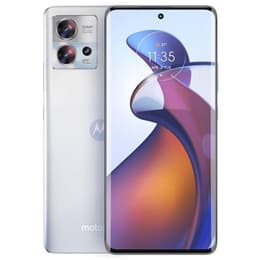
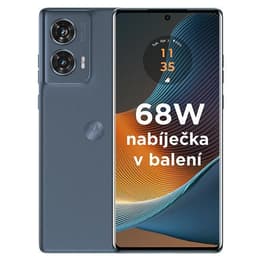

Motorola Edge 30 Fusion vs Motorola Edge 50 Fusion

Motorola Edge 30 Fusion
Starting at

Refurbished price:A$257.46

Versus A$1,352.00 new

See options
Motorola Edge 50 Fusion
See options

The Motorola Edge 30 Fusion, released in September 2022, and the Motorola Edge 50 Fusion, launched in April/May 2024, are both smartphones from Motorola's Edge series. While they share a similar design philosophy, the Edge 50 Fusion introduces updates in its internal components, software, and durability features. Both devices operate on the Android platform, offering a user experience that is close to stock Android with Motorola's customisations.

Scores

Durability

When considering the longevity of these devices, several factors come into play, primarily their release timelines and software support.

  • Release Timeline: The Motorola Edge 30 Fusion was released in September 2022, making it an older model compared to the Motorola Edge 50 Fusion, which launched in April/May 2024. This difference in release date directly impacts the expected duration of software updates.
  • Software Longevity: The Edge 50 Fusion launched with Android 14 and is expected to receive 3 years of Android OS updates and 4 years of security updates. The Edge 30 Fusion, having launched with Android 12, will naturally have a shorter remaining update cycle.
  • Physical Durability: The Edge 50 Fusion features an IP68 rating, indicating robust dust and water resistance, capable of submersion in up to 1.5 meters of water for 30 minutes. The Edge 30 Fusion has an IP52 rating, offering protection against dust and splashing water. Both devices utilise Corning Gorilla Glass 5 for screen protection.

Release year

2022

2024

Compatible with latest Update

Yes

Yes

Operating system

Android

Android

Foldable

No

No

Performance

The performance of these two smartphones is influenced by their respective processors and memory configurations, affecting how smoothly they handle daily tasks and demanding applications.

  • Processing Power: The Motorola Edge 30 Fusion is equipped with a processor that was considered a flagship-tier chip at its release, enabling it to handle intensive applications and multitasking with ease. The Motorola Edge 50 Fusion features a newer, mid-range processor designed for efficient performance in everyday use and moderate gaming.
  • Multitasking and Responsiveness: Both devices offer configurations with ample RAM, up to 12GB, which contributes to smooth multitasking and app switching. Users of the Edge 30 Fusion have reported a very smooth day-to-day experience due to its powerful processor and optimised software. The Edge 50 Fusion is also described as smooth and responsive for daily tasks, though it may show some limitations with highly demanding games or heavy multitasking.
  • Storage Options: Both models are available with various internal storage capacities, typically ranging from 128GB to 512GB, providing sufficient space for applications, media, and files. Neither device supports expandable storage via a microSD card.

Memory (GB)

8 GB

12 GB

Screen quality

Both smartphones offer high-quality displays, but there are subtle differences in their size, brightness, and overall visual experience.

  • Display Technology and Size: Both the Edge 30 Fusion and Edge 50 Fusion feature pOLED displays, known for deep blacks and vibrant colors. The Edge 30 Fusion has a 6.55-inch screen, while the Edge 50 Fusion offers a slightly larger 6.7-inch display.
  • Resolution and Refresh Rate: Both devices provide a Full HD+ resolution (1080x2400 pixels), ensuring sharp visuals for typical viewing distances. They also share a high 144Hz refresh rate, which results in very smooth scrolling and fluid animations.
  • Brightness and Color: The Edge 50 Fusion boasts a higher peak brightness of 1600 nits, compared to the Edge 30 Fusion's 1100 nits, which can improve outdoor visibility. The Edge 50 Fusion also supports 10-bit color depth and 100% DCI-P3 wide color gamut, contributing to a richer and more accurate color reproduction.

Resolution

1080 x 2400

1080 x 2400

Screen type

P-OLED

P-OLED

Audiovisual

The camera systems on both Motorola Edge Fusion models are designed to capture detailed images and videos, with some distinctions in their sensor technology and video capabilities.

  • Rear Camera System: Both phones feature a dual-camera setup on the rear, with a 50MP main sensor and a 13MP ultrawide lens. The Edge 30 Fusion includes an additional 2MP depth sensor. The Edge 50 Fusion's main camera uses a newer Sony LYT-700C sensor, which can contribute to improved image quality, especially in challenging lighting conditions. Both main cameras include Optical Image Stabilisation (OIS) for clearer photos and more stable videos.
  • Photography Performance: Users report that the Edge 30 Fusion's main camera produces detailed images with good color reproduction, performing well in various lighting. The ultrawide camera on both models can also function as a macro lens for close-up shots. The Edge 50 Fusion's camera is noted for its capable main sensor and good performance in most lighting, with its selfie camera also receiving positive remarks for clarity.
  • Video Recording: The Edge 30 Fusion offers video recording up to 8K resolution at 30 frames per second on its main camera, and 4K on its ultrawide and front cameras. The Edge 50 Fusion supports 4K video recording at 30 frames per second for both its main and front cameras.

Main camera

50 megapixels

50 megapixels

Front camera

32 megapixels

32 megapixels

Miscellaneous

Beyond the core specifications, several practical features and design elements differentiate these two Motorola Edge Fusion smartphones.

  • Connectivity and Ports: Both devices support 5G connectivity, ensuring fast mobile data speeds. They also feature USB-C ports for charging and data transfer. The Edge 30 Fusion specifies USB 3.1, while the Edge 50 Fusion also includes NFC for contactless payments.
  • Audio and Sensors: Both models incorporate an in-display fingerprint sensor for secure unlocking. The Edge 50 Fusion features a stereo speaker system with Dolby Atmos support for an enhanced audio experience.
  • Design and Handling: The Edge 30 Fusion measures 7.45mm in thickness and weighs 175g, offering a slim and lightweight profile. The Edge 50 Fusion is slightly thicker at 7.9mm but maintains a similar weight of around 175g, also designed for comfortable one-handed use. Both devices feature curved displays and premium-feeling materials, with the Edge 50 Fusion offering vegan leather options.

Weight

168 oz

175 oz

Screen size (in)

6,55

6.7

Network

5G

5G

SIM card

Dual Physical SIM

Dual Physical SIM

Carrier compatibility

Unlocked

Unlocked

The Motorola Edge 30 Fusion and Edge 50 Fusion cater to slightly different user priorities, reflecting their respective release years and technological advancements. Users frequently praise the Edge 30 Fusion for its strong performance, smooth display, and premium build quality, especially considering its position in the market at the time of its release. Some common criticisms included its IP52 rating and the presence of a less impactful depth sensor.

The newer Edge 50 Fusion is often lauded for its excellent battery life, vibrant display, and significantly improved IP68 water and dust resistance. While its processor is a newer generation mid-range chip, some users note it might not match the raw power of older flagship-tier processors in very demanding scenarios. Its camera system, particularly the main sensor, also receives positive feedback for its capabilities.

Users prioritizing raw processing power for intensive tasks and who appreciate a slightly more compact form factor might lean towards the Motorola Edge 30 Fusion. Conversely, those who value extended software support, superior water and dust resistance, a larger battery, and a slightly bigger display will find the Motorola Edge 50 Fusion better suited to their needs. Both devices represent solid choices within their segments, and opting for a quality-assured refurbished option can provide an eco-friendly alternative for either model.
See all articles

Our recent comparisons
