

Compare models

iPhone 17 Pro vs Motorola Razr 40

  • 1-year warranty
  • Free standard shipping
  • Free 30-day returns
iPhone 17 Pro
Starting at

Refurbished price:A$1,591.20

Versus A$1,899.00 new

See options
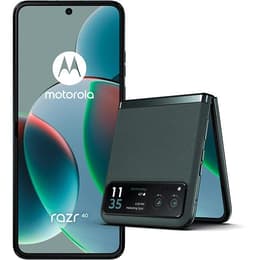
Motorola Razr 40
Starting at

Refurbished price:A$624.00

Versus A$1,983.00 new

See options

Differences at a glance

The iPhone 17 Pro (2025) and the Motorola Razr 40 (2023) represent two entirely different approaches to modern smartphone design, contrasting a traditional candy-bar flagship with a clamshell foldable device. While the iPhone prioritizes robust raw processing capability and an advanced multi-lens camera array inside a rigid metal body, the Motorola Razr 40 focuses on a flexible inner display and a compact folding footprint that fits easily into small pockets. Operating on iOS and Android respectively, these devices cater to users looking for distinct physical form factors combined with very different everyday user experiences.

Available Models

Colour

Storage (GB)

Scores

Durability

When evaluating structural longevity and software support, these two models follow distinct timelines reflecting their respective release years and manufacturer policies.

  • Software longevity: The iPhone 17 Pro benefits from an extended multi-year software update schedule typical of recent flagship hardware, whereas the Motorola Razr 40 provides a standard lifecycle aligned with its 2023 launch window.
  • Hardware durability: The iPhone utilizes reinforced glass protection on both sides combined with a rigid unibody frame, while the Motorola Razr 40 relies on a folding inner screen mechanism that requires gentle handling around the hinge over years of repeated folding.
  • Repairability expectations: Both handsets feature sealed internal components that typically require professional assistance for major hardware repairs, though standard component replacements remain manageable through authorized service channels.

Release year

2025

2023

Compatible with latest Update

Yes

Yes

Operating system

iOS

Android

Foldable

No

Yes

Performance

Daily responsiveness and multitasking capabilities vary significantly based on internal hardware optimization and memory configuration across both platforms.

  • System responsiveness: Both devices handle standard daily tasks, web browsing, and social media navigation smoothly, though the iPhone 17 Pro provides extra performance headroom for heavy 3D gaming and demanding creative applications.
  • Multitasking behavior: Generous system memory allocations on both handsets allow multiple background apps to remain active without aggressive reloading, keeping workflow transitions fluid.
  • Battery behavior: The iPhone 17 Pro delivers consistent all-day power efficiency under heavy usage profiles, while the Motorola Razr 40's smaller battery capacity requires more regular recharging for users who keep their screens active throughout the day.

Screen quality

Display technology defines the primary visual interaction for each device, showcasing distinct engineering choices in form and flexibility.

  • Display technology: The iPhone 17 Pro features a rigid, high-clarity OLED panel with deep contrast levels, whereas the Motorola Razr 40 employs a flexible plastic-substrate OLED panel that folds down the middle.
  • Outdoor visibility: High peak brightness capabilities on the iPhone 17 Pro ensure clear legibility under direct sunlight, while the Motorola Razr 40 performs adequately under standard daylight conditions.
  • Refresh rate and motion: Both screens support high refresh rates that deliver fluid scrolling through menus and web pages, though the iPhone features adaptive scaling to optimize battery consumption.

Resolution

2622x1206

1080 x 2640

Screen type

Super Retina XDR

Foldable LTPO AMOLED

Audiovisual

Optics and media playback capabilities cater to different photography habits and content consumption preferences.

  • Camera systems: The iPhone 17 Pro incorporates a versatile triple-lens array capable of high-resolution wide, ultra-wide, and telephoto framing, while the Motorola Razr 40 uses a simpler dual-rear configuration supplemented by high-resolution selfie sensors.
  • Low-light and video capture: Image processing on the iPhone 17 Pro excels in challenging low-light environments and offers extensive professional video recording features, whereas the Motorola Razr 40 handles casual snapshots and video calls reliably.
  • Audio output: Stereo speaker configurations on both models deliver clear sound for hands-free calls and casual media streaming, with balanced output across mid and high frequencies.

Main camera

48 megapixels

64 megapixels

Front camera

18 megapixels

32 megapixels

Miscellaneous

Practical everyday features, connectivity standards, and physical handling characteristics shape how each phone integrates into daily routines.

  • Connectivity standards: Both smartphones support modern 5G networks, fast Wi-Fi protocols, and Bluetooth pairing for wireless accessories and audio devices.
  • Physical handling: The iPhone 17 Pro offers a traditional, solid-feeling rectangular grip in the hand, whereas the Motorola Razr 40 folds into a compact square shape that takes up minimal space in pockets or small bags.
  • Authentication and ports: The iPhone relies on secure facial recognition, while the Motorola utilizes a side-mounted fingerprint sensor embedded in the power button, with both utilizing standard reversible charging ports.

Weight

206 oz

189 oz

Screen size (in)

6.3

6.9

Network

5G

5G

SIM card

eSIM

Dual Physical SIM

Carrier compatibility

Unlocked

Unlocked

Connector

USB-C

USB-C

What the community thinks

User feedback from online communities highlights distinct viewpoints for each model. Owners of the iPhone 17 Pro frequently praise its dependable battery longevity, robust build quality, and versatile multi-lens camera system, though some note the device feels heavy during extended one-handed use. Conversely, users of the Motorola Razr 40 highlight the convenience of its folding design, compact pocket footprint, and useful external cover screen, while noting that hinge maintenance and battery endurance under heavy workloads require mindfulness.

When deciding between these options, users prioritizing a compact folding footprint and unique form factor may prefer the Motorola Razr 40, while users prioritizing raw processing power, long-term software updates, and comprehensive camera flexibility will lean toward the iPhone 17 Pro. For shoppers seeking a sustainable choice, exploring a quality-assured refurbished option provides a reliable, eco-friendly alternative to purchasing brand-new hardware.

Our recent comparisons