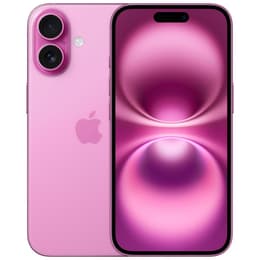
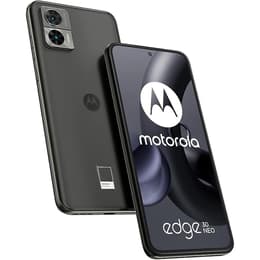

iPhone 16 vs Motorola Edge 30 Neo

iPhone 16
iPhone 16
Starting at

Refurbished price:A$952.00

Versus A$1,399.00 new

See options
Motorola Edge 30 Neo
Starting at

Refurbished price:A$306.00

Versus A$414.00 new

See options

Ratings

The iPhone 16, released in September 2024, and the Motorola Edge 30 Neo, launched in September 2022, represent distinct approaches to smartphone design and functionality. While both are smartphones, they cater to different user expectations, primarily differing in their operating system ecosystems and their respective release timelines. The iPhone 16 operates on Apple's iOS, known for its integrated services and long-term software support, whereas the Motorola Edge 30 Neo runs on Android, offering a more open and customizable experience. These differences extend to their core specifications and overall user experience.

Scores

Durability

When considering the longevity of these devices, their release dates and manufacturer support policies are key factors. The iPhone 16, being a more recent release from late 2024, benefits from Apple's extended software update cycle, typically spanning five to seven years from its launch. The Motorola Edge 30 Neo, released two years prior, has a shorter expected software support window, with Motorola generally providing two major Android OS updates and three years of security patches.

  • Software Updates: The iPhone 16, having launched with iOS 18 and currently running iOS 26.4.1 as of April 2026, is expected to receive major OS updates for several more years, ensuring access to the latest features and security enhancements. The Motorola Edge 30 Neo, having launched with Android 12, likely received updates up to Android 14, with security updates potentially concluding soon.
  • Physical Durability: The iPhone 16 features a Ceramic Shield front, offering enhanced scratch resistance, and boasts an IP68 rating for significant dust and water resistance, capable of submersion up to 6 meters for 30 minutes. The Motorola Edge 30 Neo carries an IP52 rating, indicating splash and dust resistance, which provides protection against light exposure to water.
  • Repairability: While specific repairability scores can vary, both devices are designed with components that can be replaced by authorized service providers, contributing to their practical lifespan. Users seeking to extend the life of their devices might consider quality-assured refurbished options for either model.

Release year

2024

2022

Compatible with latest Update

Yes

Yes

Foldable

No

No

Performance

The performance of a smartphone is largely dictated by its internal processing capabilities and how efficiently it manages tasks. The iPhone 16 and Motorola Edge 30 Neo offer different levels of responsiveness and power for daily use.

  • Processing Power: The iPhone 16 is equipped with a current-generation processor designed for demanding applications and efficient multitasking, featuring a multi-core CPU and an advanced graphics processing unit. This hardware is optimized for artificial intelligence tasks and delivers smooth performance across various applications and games. The Motorola Edge 30 Neo utilizes a mid-range processor that capably handles everyday tasks, web browsing, and moderate gaming, providing a responsive experience for general use.
  • Multitasking and Responsiveness: The iPhone 16's architecture, including its memory subsystem, allows for seamless app switching and fluid navigation, even with multiple applications running simultaneously. The Motorola Edge 30 Neo, while capable of multitasking, may exhibit slightly longer loading times for very intensive applications compared to the iPhone 16.
  • Battery Efficiency: The iPhone 16 incorporates an energy-efficient processor and optimized software, contributing to an all-day battery life for many users, with up to 22 hours of offline video playback. The Motorola Edge 30 Neo features a 4020 mAh battery, supporting a full day of moderate use, and includes 68W wired fast charging and 5W wireless charging capabilities for quick power replenishment.

Memory (GB)

8 GB

8 GB

Screen quality

The visual experience on a smartphone is heavily influenced by its display technology, resolution, and brightness. Both devices offer vibrant screens, but with distinct characteristics.

  • Display Technology and Clarity: The iPhone 16 features a 6.1-inch Super Retina XDR OLED display, providing deep blacks, vibrant colors, and a sharp resolution of 2556x1179 pixels at approximately 460 pixels per inch (ppi). The Motorola Edge 30 Neo comes with a 6.28-inch pOLED display, offering a resolution of 1080x2400 pixels (FHD+) at 419 ppi, delivering clear and colorful visuals.
  • Brightness and Outdoor Visibility: The iPhone 16's display can reach a peak outdoor brightness of 2000 nits, ensuring excellent readability even in direct sunlight. The Motorola Edge 30 Neo's pOLED screen provides ample brightness for comfortable viewing in most indoor and outdoor conditions.
  • Refresh Rate and Smoothness: The iPhone 16 maintains a standard 60Hz refresh rate, offering a consistent visual experience. In contrast, the Motorola Edge 30 Neo features a 120Hz refresh rate, which results in smoother scrolling and more fluid animations, particularly noticeable during gaming or fast-paced content consumption.

Resolution

1179 x 2556

1080 x 2400

Screen type

Super Retina XDR OLED

P-OLED

Audiovisual

Camera capabilities are a significant consideration for many users, and both the iPhone 16 and Motorola Edge 30 Neo offer distinct photographic and videographic experiences.

  • Rear Camera System: The iPhone 16 is equipped with an advanced dual-camera system, including a 48MP Fusion Main camera with optical image stabilization (OIS) and a 12MP Ultra Wide camera with a 120-degree field of view. It supports super-high-resolution photos and, for the first time on a standard iPhone, macro photography. The Motorola Edge 30 Neo features a dual-camera setup with a 64MP main sensor with OIS and a 13MP ultrawide lens that also functions for macro shots.
  • Photography Performance: The iPhone 16 excels in computational photography, offering features like Photonic Engine and Smart HDR 5 for detailed and well-exposed images across various lighting conditions, including improved low-light performance. The Motorola Edge 30 Neo delivers capable everyday photography, with its main sensor capturing clear images, and the ultrawide lens adding versatility for wider scenes and close-up macro shots.
  • Video Recording and Audio: The iPhone 16 supports high-quality video recording, including spatial video capture, and features a new Camera Control button for enhanced photographic control. The Motorola Edge 30 Neo records videos up to 1080p and includes dual stereo speakers with Dolby Atmos enhancement for an immersive audio experience.

Main camera

48 megapixels

64 megapixels

Front camera

12 megapixels

32 megapixels

Miscellaneous

Beyond the core features, several practical elements contribute to the overall user experience and differentiate these two smartphones.

  • Connectivity and Ports: The iPhone 16 supports the latest Wi-Fi 7 standard, Bluetooth 5.3, and 5G connectivity, along with a versatile USB-C port for charging and data transfer. The Motorola Edge 30 Neo offers 5G connectivity, dual-band Wi-Fi, and Bluetooth 5.1, also featuring a USB-C port. It does not include a 3.5mm headphone jack.
  • Biometric Security and Design: The iPhone 16 relies on Face ID for secure facial recognition. Its design incorporates an aluminum frame and a Ceramic Shield front. The Motorola Edge 30 Neo includes an under-display fingerprint sensor and face unlock for security, presented in a compact and lightweight design with a polished metal frame.
  • Dimensions and Handling: The iPhone 16 measures 147.6 x 71.6 x 7.8 mm and weighs 170 grams, offering a balanced feel in hand. The Motorola Edge 30 Neo is slightly larger but lighter at 152.9 x 71.2 x 7.8 mm and 155 grams, contributing to its portability.

Weight

170 oz

155 oz

Screen size (in)

6.1

6.28

Network

5G

5G

SIM card

Physical SIM + eSIM

Dual Physical SIM

Carrier compatibility

Unlocked

Unlocked

The iPhone 16 and Motorola Edge 30 Neo cater to different user priorities, reflecting their respective ecosystems and design philosophies. Users often praise the iPhone 16 for its robust software support, powerful processing capabilities, and advanced camera system, particularly its ability to capture high-resolution photos and spatial video. Some users, however, note its 60Hz display refresh rate as a point of comparison to devices offering higher rates.

The Motorola Edge 30 Neo is frequently lauded for its compact form factor, vibrant 120Hz pOLED display, and efficient fast charging. Users appreciate its smooth visual experience and the inclusion of wireless charging. A common consideration for this model is its shorter software update commitment compared to some competitors.

Users prioritizing a device with a longer software lifespan, cutting-edge processing for demanding tasks, and a highly capable camera system with advanced computational photography features may find the iPhone 16 well-suited to their needs. Its integrated ecosystem and strong durability features also appeal to those seeking a premium and long-lasting device. Conversely, individuals who value a smoother display experience with a higher refresh rate, a compact and lightweight design, and rapid charging capabilities might lean towards the Motorola Edge 30 Neo. This device is also a strong contender for users who prefer the Android operating system's customization options.

Both models are available as quality-assured refurbished options, providing an eco-friendly alternative for consumers looking to make informed and sustainable choices.

See all articles

Our recent comparisons