

Compare models
iPhone 15 Plus vs Motorola Edge 30 Fusion
- 1-year warranty
- Free standard shipping
- Free 30-day returns
Differences at a glance
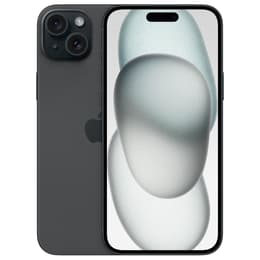
The iPhone 15 Plus, released in September 2023, and the Motorola Edge 30 Fusion, launched in September 2022, are smartphones designed for different user ecosystems. While the iPhone 15 Plus operates on Apple's iOS, the Motorola Edge 30 Fusion runs on Android, offering distinct user experiences. Key differentiators include their display refresh rates, camera philosophies, and overall design approaches.
Available Models
Colour
Storage (GB)
Scores
Durability
When considering the longevity of these devices, several factors come into play, including software support, physical resilience, and the practical lifespan for everyday use.
- Software Updates: The iPhone 15 Plus, being an Apple device, typically receives major iOS updates for approximately five to six years from its release, extending its software relevance well into the future. The Motorola Edge 30 Fusion launched with Android 12 and is upgradable to Android 14, generally receiving fewer major OS updates compared to its Apple counterpart, which can impact its long-term feature set and security support.
- Physical Durability: The iPhone 15 Plus features a Ceramic Shield front cover and an aluminum frame, contributing to its robust build and IP68 rating for dust and water resistance, allowing submersion up to 6 meters for 30 minutes. The Motorola Edge 30 Fusion utilizes Corning Gorilla Glass 5 on both its front and back, paired with an aluminum frame, and offers splash and dust resistance, though it lacks an official IP rating for water immersion.
- Practical Lifespan: Users can expect both devices to perform reliably for several years. The iPhone 15 Plus benefits from Apple's extended software support, potentially offering a longer period of optimal performance and compatibility with new applications. The Motorola Edge 30 Fusion, while well-built, may see its software experience age more rapidly due to a shorter update cycle.
Release year
2023
2022
Compatible with latest Update
Yes
Yes
Operating system
iOS
Android
Foldable
No
No
Performance
The performance of a smartphone is crucial for daily tasks, from navigating apps to engaging in demanding activities like gaming. Both devices offer capable hardware, but their approaches to processing power differ.
- System Responsiveness: The iPhone 15 Plus is equipped with a current-generation processor, enabling smooth navigation, rapid app loading, and efficient multitasking. This hardware ensures that demanding applications and graphics-intensive games run without significant slowdowns. The Motorola Edge 30 Fusion features a powerful processor from a previous generation, which still handles everyday tasks and most applications with considerable speed and fluidity.
- Multitasking and Storage: The iPhone 15 Plus comes with 6GB of RAM, which facilitates effective multitasking and keeps multiple applications active in the background. Storage options range from 128GB to 512GB. The Motorola Edge 30 Fusion offers 8GB or 12GB of RAM, providing ample capacity for extensive multitasking and managing numerous open applications. Its storage options also span from 128GB to 512GB, utilizing UFS 3.1 technology for fast data access, though it does not support expandable storage.
- Battery Behavior: The iPhone 15 Plus is known for its excellent battery longevity, often lasting more than a full day of heavy use and offering up to 26 hours of video playback. The Motorola Edge 30 Fusion, with its 4400 mAh battery, provides decent battery life, typically lasting a full day with moderate usage, though heavy use, especially with the high refresh rate display, may require more frequent charging.
Screen quality
The display is a primary interface for smartphone interaction, and both models offer vibrant viewing experiences with distinct characteristics.
- Display Technology and Clarity: The iPhone 15 Plus features a 6.7-inch Super Retina XDR OLED display, providing deep blacks, vibrant colors, and sharp detail with a resolution of 2796x1290 pixels at 460 pixels per inch. The Motorola Edge 30 Fusion sports a 6.55-inch pOLED display with a resolution of 1080x2400 pixels, offering clear visuals and good color reproduction.
- Brightness and Refresh Rate: The iPhone 15 Plus achieves a typical brightness of 1000 nits and a peak outdoor brightness of 2000 nits, ensuring excellent visibility even in bright sunlight. It operates at a standard 60Hz refresh rate. The Motorola Edge 30 Fusion boasts a higher 144Hz refresh rate, which contributes to smoother scrolling and more fluid animations, alongside a peak brightness of 1100 nits, providing good outdoor visibility.
- Viewing Experience: The iPhone 15 Plus integrates the Dynamic Island, a dynamic area around the front camera that displays alerts and background activities, enhancing the interactive experience. The Motorola Edge 30 Fusion's display is curved on the sides, offering an immersive, edge-to-edge viewing experience.
Resolution
1290 x 2796
1080 x 2400
Screen type
Super Retina XDR OLED
P-OLED
Audiovisual
Camera capabilities are a significant consideration for many users, and both devices provide robust systems for capturing photos and videos.
- Rear Camera System: The iPhone 15 Plus features a dual-camera setup with a 48MP main sensor (f/1.6) that uses pixel binning for detailed 24MP photos and offers 2x optical-quality zoom via sensor crop. It also includes a 12MP ultra-wide camera (f/2.4). The Motorola Edge 30 Fusion has a triple-camera system, comprising a 50MP main sensor (f/1.8) with optical image stabilization (OIS), a 13MP ultra-wide lens that doubles as a macro camera, and a 2MP depth sensor.
- Photography Performance: The iPhone 15 Plus delivers bright, detailed, and color-accurate images, with improvements in low-light performance over its predecessor. The Motorola Edge 30 Fusion's main camera captures rich detail and good color reproduction, performing well in various lighting conditions, including decent low-light shots.
- Video Recording and Front Camera: Both phones offer strong video capabilities. The iPhone 15 Plus records 4K video at up to 60 frames per second and includes Cinematic mode for 4K@30fps. Its front camera is a 12MP sensor with autofocus. The Motorola Edge 30 Fusion can record up to 8K video at 30fps and 4K at 30fps with HDR10. It features a 32MP front-facing camera with autofocus, capable of capturing detailed selfies.
Main camera
48 megapixels
50 megapixels
Front camera
12 megapixels
32 megapixels
Miscellaneous
Beyond core features, several practical elements contribute to the overall user experience and daily convenience of these smartphones.
- Connectivity and Ports: Both devices support 5G connectivity for fast mobile data. The iPhone 15 Plus includes Wi-Fi 6 and Bluetooth 5.3, and notably, it features a USB-C 2.0 port for charging and data transfer. The Motorola Edge 30 Fusion also supports Wi-Fi 6 and Bluetooth 5.2, and comes with a USB-C 3.1 port, offering potentially faster data transfer speeds than the iPhone's USB-C 2.0.
- Biometrics and Sensors: The iPhone 15 Plus relies on Face ID for secure authentication and includes standard sensors like an accelerometer, gyroscope, and barometer. The Motorola Edge 30 Fusion features an optical in-display fingerprint sensor for biometric security, along with an accelerometer, gyroscope, and ambient light sensor.
- Design and Handling: The iPhone 15 Plus measures 160.9 x 77.8 x 7.8 mm and weighs 201 grams, featuring an aluminum design with a color-infused glass back. The Motorola Edge 30 Fusion is slightly more compact and lighter at 158.5 x 72 x 7.5 mm and 168-175 grams, with an aluminum frame and glass back, sometimes available with a vegan leather finish.
Weight
201 oz
168 oz
Screen size (in)
6.7
6,55
Network
5G
5G
SIM card
Physical SIM + eSIM
Dual Physical SIM
Carrier compatibility
Unlocked
Unlocked
What the community thinks
The iPhone 15 Plus and Motorola Edge 30 Fusion cater to different preferences, each excelling in specific areas. Users often praise the iPhone 15 Plus for its exceptional battery life, large and bright OLED display, and consistent camera performance, particularly its ability to capture detailed photos and high-quality video. Some common discussions around the iPhone 15 Plus include its 60Hz refresh rate, which some users accustomed to higher refresh rates might notice, and the absence of a dedicated telephoto lens found in Pro models.
The Motorola Edge 30 Fusion is frequently lauded for its high 144Hz refresh rate pOLED display, offering a very smooth visual experience, its fast wired charging capabilities, and its sleek design. User feedback sometimes points to its battery life being average, especially with the 144Hz display enabled, and the camera performance, while good, may not consistently match the top-tier flagships in all conditions.
Users prioritizing extended battery life, a highly integrated ecosystem, and long-term software support may find the iPhone 15 Plus well-suited to their needs. Conversely, individuals who value a very high refresh rate display, rapid wired charging, and the flexibility of the Android operating system might lean towards the Motorola Edge 30 Fusion. Both devices represent solid choices within their respective platforms, and for those seeking a more sustainable option, considering a quality-assured refurbished version of either model can be an eco-friendly alternative.