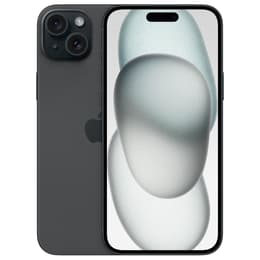


iPhone 15 Plus vs Motorola Moto E13

iPhone 15 Plus
iPhone 15 Plus
Starting at

Refurbished price:A$741.00

Versus A$1,399.00 new

See options
Motorola Moto E13
Motorola Moto E13
Starting at

Refurbished price:A$121.29

Versus A$244.00 new

See options

Ratings

The iPhone 15 Plus, released in September 2023, and the Motorola Moto E13, launched in early 2023, represent distinct approaches to smartphone design and functionality. While both devices offer a large screen experience, they cater to different user expectations through their respective operating systems and hardware capabilities. The iPhone 15 Plus operates on Apple's iOS, known for its integrated ecosystem, whereas the Moto E13 runs on Android 13 Go Edition, a streamlined version of Android designed for efficient performance on more modest hardware. The primary differentiators lie in their display technology, processing power, and camera systems.

Scores

Durability

When considering the practical lifespan of these devices, several factors come into play, including software support, physical durability, and repairability.

  • Release Timeline and Age: The iPhone 15 Plus was released in September 2023, while the Motorola Moto E13 was launched in January 2023. This means the iPhone 15 Plus is a slightly newer device.
  • OS Support Duration: Apple typically provides iOS updates for its devices for approximately 5-6 years from their release, suggesting the iPhone 15 Plus will receive updates well into the late 2020s. The Moto E13, running Android 13 Go Edition, generally receives fewer and less frequent major OS updates compared to premium Android devices, though security updates may continue for a period.
  • Durability Features: The iPhone 15 Plus features a Ceramic Shield front cover and an aluminum design with a color-infused glass back, offering IP68 water and dust resistance. The Moto E13 has a plastic build and an IP52 rating, providing protection against dust and splashes but not full submersion.

Release year

2023

2023

Compatible with latest Update

Yes

No

Operating system

iOS

Android

Foldable

No

No

Performance

The performance of a smartphone is largely determined by its internal components, influencing how smoothly applications run, how quickly tasks are completed, and the overall responsiveness of the system.

  • Processing Capabilities: The iPhone 15 Plus is equipped with a powerful current-generation processor, featuring a 6-core CPU and a 5-core GPU, designed to handle demanding applications, complex multitasking, and graphically intensive games with ease. The Moto E13 uses a processor with an octa-core CPU and a Mali-G57 MP1 GPU, which is suitable for everyday tasks and lighter applications, but may experience slowdowns with multiple apps running simultaneously or with more demanding games.
  • Multitasking and Storage: The iPhone 15 Plus typically comes with ample RAM, contributing to smooth transitions between applications and efficient multitasking. It offers storage options up to 512GB. The Moto E13 is available with various RAM configurations, including 2GB, 4GB, and 8GB, and offers internal storage up to 128GB, which can be expanded using a microSD card.
  • Battery Behavior: The iPhone 15 Plus houses a 4383 mAh battery, providing extended usage, with users often reporting it lasting through a full day of heavy use and sometimes longer. The Moto E13 features a 5000 mAh battery, which, combined with its less demanding hardware and optimized Android Go Edition, also offers good endurance, often lasting an entire day with moderate use and potentially two days with lighter usage.

Memory (GB)

6 GB

4 GB

Screen quality

The display is a primary interface for smartphone interaction, and its quality significantly impacts the viewing experience for various content types.

  • Display Technology and Clarity: The iPhone 15 Plus features a 6.7-inch Super Retina XDR OLED display, offering deep blacks, vibrant colors, and a high resolution of 2796x1290 pixels at 460 pixels per inch (ppi). The Moto E13 has a 6.5-inch IPS LCD screen with a resolution of 720x1600 pixels (HD+) and a pixel density of 270 ppi.
  • Brightness and Refresh Rate: The iPhone 15 Plus can reach a typical brightness of 1000 nits and a peak outdoor brightness of 2000 nits, ensuring excellent visibility even in bright sunlight. Both devices feature a standard 60Hz refresh rate, which provides a smooth experience for general navigation and video playback.
  • Unique Display Features: The iPhone 15 Plus incorporates the Dynamic Island, an interactive area around the front camera that displays alerts and live activities. The Moto E13 offers a straightforward display experience without specialized interactive elements.

Resolution

1290 x 2796

720 x 1600

Screen type

Super Retina XDR OLED

IPS LCD

Audiovisual

Camera capabilities are a key consideration for many users, influencing the quality of photos and videos captured in various conditions.

  • Rear Camera System: The iPhone 15 Plus features an advanced dual-camera system, including a 48MP main camera with a wide f/1.6 aperture and sensor-shift optical image stabilization, capable of producing detailed 24MP photos and offering a 2x telephoto option through sensor cropping. It also has a 12MP ultra-wide camera with a 120-degree field of view. The Moto E13 is equipped with a single 13MP main camera with an f/2.2 aperture.
  • Photography Features and Performance: The iPhone 15 Plus includes features like Photonic Engine, Deep Fusion, Smart HDR 5, Night mode, and next-generation portraits with Focus and Depth Control, enhancing image quality across different lighting conditions. Users report improved low-light performance and the ability to turn regular photos into portraits after capture. The Moto E13's camera is suitable for everyday photography, though colors may appear less vibrant and low-light performance is more basic.
  • Video Recording and Front Camera: Both devices can record video at 1080p at 30 frames per second (fps), but the iPhone 15 Plus supports 4K video recording at up to 60fps, including Cinematic mode and Action mode for stabilized footage. The iPhone 15 Plus has a 12MP TrueDepth front camera with autofocus, while the Moto E13 has a 5MP front camera.

Main camera

48 megapixels

13 megapixels

Front camera

12 megapixels

5 megapixels

Miscellaneous

Beyond core performance and display, various practical features and design elements contribute to the overall user experience.

  • Connectivity Standards: The iPhone 15 Plus supports 5G cellular connectivity, Wi-Fi 6E, and Bluetooth 5.3, offering fast wireless speeds and efficient connections. The Moto E13 supports 4G LTE, Wi-Fi 5 (802.11 a/b/g/n/ac), and Bluetooth 5.0.
  • Ports and Biometrics: The iPhone 15 Plus features a USB-C port for charging and data transfer, and relies on Face ID for secure facial recognition. The Moto E13 also uses a USB-C port for charging and includes a 3.5mm headphone jack, but it lacks a fingerprint sensor, relying instead on software-based face unlock or traditional PIN/pattern security.
  • Design and Handling: The iPhone 15 Plus has an aluminum frame with a Ceramic Shield front and color-infused glass back, weighing 201 grams. The Moto E13 has a plastic body, weighing 179.5 grams, making it slightly lighter.

Weight

201 oz

179 oz

Screen size (in)

6.7

6.5

Network

5G

4G

SIM card

Physical SIM + eSIM

Dual Physical SIM

Carrier compatibility

Unlocked

Unlocked

Connector

USB-C (USB 2)

USB-C

The iPhone 15 Plus and Motorola Moto E13 cater to different segments of the smartphone market, each excelling in areas important to their target users. The iPhone 15 Plus is frequently praised by users for its exceptional battery life, often lasting well over a day even with heavy use, and its vibrant, bright OLED display. Its camera system, with advanced features and a high-resolution main sensor, also receives positive feedback for its ability to capture detailed photos and videos. Common criticisms are less frequent for this model, but some users might note its 60Hz refresh rate as a point of comparison to higher-end devices.

The Motorola Moto E13 is often lauded for its impressive battery life, with its 5000 mAh capacity providing extended usage, sometimes up to two days on a single charge for casual users. Users also appreciate its clean Android Go Edition software experience and its functional design. However, frequent criticisms include its basic camera performance, which is considered suitable for casual shots but not for high-quality photography, and the absence of a fingerprint sensor. Its display, while large, offers a lower resolution compared to many other smartphones.

Users prioritizing a premium mobile experience with a powerful camera, a stunning display, and long-term software support will find the iPhone 15 Plus well-suited to their needs. Its robust performance handles demanding applications and multitasking effortlessly. Conversely, users who prioritize extended battery life, a large screen for basic media consumption, and a streamlined Android experience for essential tasks will find the Motorola Moto E13 a practical choice. It serves well as a device for communication, light browsing, and casual use without advanced features. Both devices are available as quality-assured refurbished options, providing an eco-friendly alternative for consumers.


See all articles

Our recent comparisons