iPhone 14 Plus vs Nokia G22

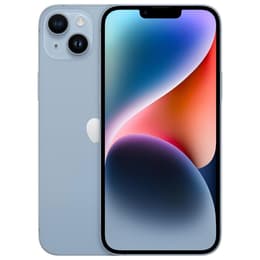
iPhone 14 Plus
iPhone 14 Plus
Starting at

Refurbished price:A$480.00

Versus A$1,249.00 new

See options
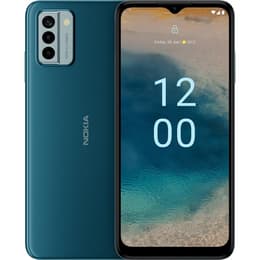
Nokia G22
Nokia G22
See options

The iPhone 14 Plus, released in October 2022, operates on Apple's iOS platform, offering a large display experience within the iPhone lineup. In contrast, the Nokia G22, launched in February 2023, runs on Android and distinguishes itself with a focus on user repairability. These devices cater to different user priorities, with the iPhone 14 Plus emphasizing performance and display quality, while the Nokia G22 highlights longevity through easy maintenance and extended battery life.

Scores

Durability

When considering the practical lifespan and durability, both devices offer distinct approaches to longevity.

  • Software Support: The iPhone 14 Plus benefits from Apple's extensive iOS update policy, typically receiving major software updates for five to six years from its release, ensuring prolonged access to new features and security patches. The Nokia G22, while offering a commitment to updates, provides two years of Android OS upgrades and three years of monthly security updates, which is competitive for its segment but shorter than the iPhone's typical support window.
  • Physical Durability: The iPhone 14 Plus features a Ceramic Shield front cover and a glass back with an aluminum design, along with an IP68 rating for dust and water resistance, offering robust protection against everyday elements. The Nokia G22 comes with Corning Gorilla Glass 3 for screen protection and an IP52 rating, indicating resistance to dust and splashes.
  • Repairability: A key differentiator for the Nokia G22 is its QuickFix design, which allows users to easily replace components like the battery, display, and charging port with readily available parts and guides from iFixit. This contrasts with the iPhone 14 Plus, which, while having improved repairability compared to older models, generally requires specialized tools and expertise for component replacement.

Release year

2022

2023

Compatible with latest Update

Yes

No

Operating system

iOS

Android

Foldable

No

No

Performance

The performance capabilities of the iPhone 14 Plus and Nokia G22 reflect their different design philosophies and target user experiences.

  • Processing Power: The iPhone 14 Plus is equipped with a powerful processor, enabling smooth operation across demanding applications, complex multitasking, and graphically intensive games. Users can expect rapid app loading and fluid navigation. The Nokia G22, powered by its processor, handles everyday tasks and lighter applications effectively, though it may exhibit slower performance when running more intensive apps or during heavy multitasking.
  • Memory and Storage: The iPhone 14 Plus comes with 6GB of RAM and offers internal storage options of 128GB, 256GB, and 512GB, providing ample space and efficient multitasking. The Nokia G22 typically features 4GB of RAM (with some variants offering 6GB) and storage options of 64GB or 128GB, with the added flexibility of expandable storage via a microSD card slot.
  • Battery Behavior: The iPhone 14 Plus is known for its excellent battery longevity, with its 4325 mAh battery often providing over a full day of heavy use and impressive screen-on times. The Nokia G22, with its larger 5050 mAh battery, is designed to offer extended usage, with some users reporting up to two or even three days of battery life under lighter usage patterns.

Memory (GB)

6 GB

4 GB

Screen quality

The visual experience on these two smartphones differs significantly due to their display technologies and specifications.

  • Display Technology and Resolution: The iPhone 14 Plus features a 6.7-inch Super Retina XDR OLED display, delivering deep blacks, high contrast, and vibrant colors. It boasts a resolution of 2778 by 1284 pixels, resulting in a sharp 458 pixels per inch (ppi). The Nokia G22 utilizes a 6.5-inch IPS LCD panel with a resolution of 720 by 1600 pixels, offering a pixel density of approximately 270 ppi.
  • Refresh Rate and Brightness: The iPhone 14 Plus has a standard 60Hz refresh rate, which provides a consistent visual experience. Its display can reach a typical brightness of 800 nits and a peak brightness of 1200 nits for HDR content, ensuring good visibility even in bright conditions. The Nokia G22 offers a smoother scrolling experience with its 90Hz refresh rate and a typical brightness of 500 nits, which is generally sufficient for indoor use and adequate outdoors.
  • Viewing Experience: The iPhone 14 Plus provides a premium viewing experience with its high-resolution OLED panel, ideal for consuming high-quality video content and detailed images. The Nokia G22's display, while offering a smoother feel due to the higher refresh rate, provides a clear and vibrant viewing experience suitable for general browsing and media consumption, though with less detail and contrast compared to an OLED screen.

Resolution

1284 x 2778

720 x 1600

Screen type

Super Retina XDR OLED

IPS LCD

Audiovisual

The camera systems on the iPhone 14 Plus and Nokia G22 are designed for different levels of photographic capability and user expectations.

  • Rear Camera System: The iPhone 14 Plus features a dual-camera setup on the rear, consisting of a 12MP main camera with a wide f/1.5 aperture and sensor-shift optical image stabilization, alongside a 12MP ultra-wide camera with a 120-degree field of view. This system is enhanced by Apple's Photonic Engine, which significantly improves low-light performance. The Nokia G22 is equipped with a triple camera array, including a 50MP main sensor with an f/1.8 aperture, complemented by 2MP macro and 2MP depth sensors.
  • Photography Performance: The iPhone 14 Plus excels in capturing detailed and color-accurate photos in various lighting conditions, with strong performance in low-light scenarios. Its advanced image processing contributes to consistent and high-quality results. The Nokia G22's 50MP main camera can produce good images in well-lit environments, but its performance in challenging low-light conditions is less robust.
  • Video Recording and Front Camera: For video, the iPhone 14 Plus supports 4K Dolby Vision recording at up to 60 frames per second, offering cinematic quality and advanced stabilization features. It also has a 12MP TrueDepth front camera capable of high-quality selfies and video calls. The Nokia G22 records video at 1080p resolution at 30 frames per second and includes an 8MP front-facing camera for selfies and video calls.

Main camera

12 megapixels

50 megapixels

Front camera

12 megapixels

8 megapixels

Miscellaneous

Beyond core features, several practical elements differentiate the user experience between these two devices.

  • Connectivity and Ports: The iPhone 14 Plus supports 5G cellular connectivity, Wi-Fi 6, and Bluetooth 5.3, ensuring fast and reliable wireless connections. It uses Apple's proprietary Lightning port for charging and data transfer. The Nokia G22 supports 4G LTE, Wi-Fi 5, and Bluetooth 5.0. It features a USB-C port for charging and data, and notably includes a 3.5mm headphone jack, which is absent on the iPhone.
  • Biometrics and Sensors: The iPhone 14 Plus relies on Face ID for secure authentication and includes a range of sensors for features like Crash Detection. The Nokia G22 incorporates a side-mounted fingerprint sensor for unlocking and security.
  • Design and Handling: The iPhone 14 Plus has an aluminum frame and glass back, weighing 203 grams and measuring 160.8 x 78.1 x 7.8 mm. The Nokia G22 features a plastic frame and a back cover made from 100% recycled plastic, weighing 196 grams and measuring 165 x 76.2 x 8.5 mm. Its design emphasizes user repairability.

Weight

203 oz

196 oz

Screen size (in)

6,7

6.5

Network

5G

4G

SIM card

Physical SIM + eSIM

Dual Physical SIM

Carrier compatibility

Unlocked

Unlocked

User feedback often highlights the iPhone 14 Plus for its exceptional battery life, robust performance, and high-quality camera system, making it a strong contender for users who prioritize these aspects. Some common observations include its smooth software experience and reliable ecosystem. However, some users note the 60Hz display as a point of comparison to other devices in its category, and the continued use of the Lightning port is sometimes mentioned.

The Nokia G22 is frequently praised for its innovative focus on user repairability, allowing individuals to easily replace key components, which contributes to its perceived longevity. Its extended battery life is also a significant positive, often lasting multiple days for typical use. Conversely, common criticisms revolve around its less powerful performance, which can lead to slower app loading and less fluid multitasking, and its lower-resolution display. The shorter software update commitment compared to some competitors is also a consideration for long-term users.

Users prioritizing a powerful and consistently smooth experience with a premium camera and long-term software support may find the iPhone 14 Plus well-suited to their needs. Conversely, individuals who value the ability to repair their own device, desire maximum battery life, and prefer expandable storage and a headphone jack will likely lean towards the Nokia G22. Both devices offer compelling features for different user profiles, and considering a quality-assured refurbished option can be a sustainable choice for either model.

See all articles

Our recent comparisons