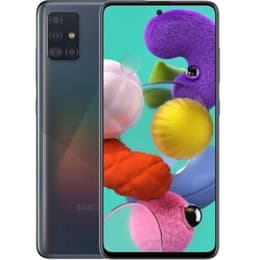
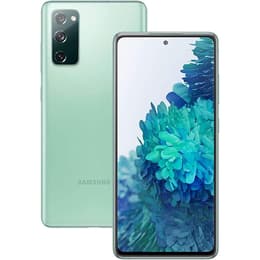

Galaxy A51 vs Galaxy S20 FE

Galaxy A51
Galaxy A51
Starting at

Refurbished price:A$196.16

Versus A$592.00 new

See options
Galaxy S20 FE
Galaxy S20 FE
Starting at

Refurbished price:A$268.29

Versus A$578.00 new

See options

Ratings

The Samsung Galaxy A51, released in December 2019, and the Samsung Galaxy S20 FE (Fan Edition), launched in October 2020, are both Android-based smartphones from Samsung. While the A51 was positioned as a strong contender in the mid-range segment, the S20 FE aimed to bring flagship-level features to a broader audience. The primary distinctions between these two devices lie in their overall performance capabilities and display refresh rates, alongside differences in camera systems and build features.

Scores

Durability

When considering the long-term usability of these devices, several factors come into play, including their release timelines, software support, and physical durability.

  • Release Timeline and Software Support: The Galaxy A51 was initially released in December 2019 for its 4G variant, with a 5G version following in April 2020. The Galaxy S20 FE arrived later in October 2020. Both devices originally ran on Android 10. Samsung committed to providing three generations of Android OS updates and four years of security updates for the A51, a notable commitment for a mid-range device. The S20 FE, being a newer device, is also expected to receive updates for at least Android 13, suggesting it will likely benefit from software support for a slightly longer duration due to its later launch.
  • Repairability and Build: The Galaxy A51 has a repairability score of approximately 6.5 out of 10, indicating that while some components like the battery and screen can be replaced, the presence of many small parts and adhesive can make repairs challenging for an average person. The Galaxy S20 FE generally scores higher, around 7.5 out of 10 for repairability, suggesting it might be somewhat easier to service. Both phones utilize adhesive for their back covers and batteries, requiring heat for disassembly. The 4G variant of the A51 features a plastic back and frame, while its 5G versions incorporate an aluminum frame with a plastic back. The S20 FE uses a plastic back combined with an aluminum frame. Both displays are protected by Gorilla Glass 3.
  • Water and Dust Resistance: A significant difference in durability is the S20 FE's IP68 rating, meaning it offers substantial protection against dust and can withstand immersion in water up to 1.5 meters for 30 minutes. The Galaxy A51, however, does not carry an official water resistance rating.

Release year

2019

2020

Compatible with latest Update

No

No

Operating system

Android

Android

Foldable

No

No

Performance

The performance of a smartphone is largely determined by its internal components, impacting everything from app responsiveness to multitasking capabilities and battery endurance.

  • Processing Power and Responsiveness: The Galaxy A51 is equipped with a mid-range processor, which handles everyday tasks adequately. However, some users have reported that it can experience lag, particularly when opening the camera application or engaging in extensive multitasking. In contrast, the Galaxy S20 FE features a more powerful processor, designed to deliver a smoother and more responsive user experience, especially with demanding applications and graphics-intensive games. Users generally report a fluid experience with the S20 FE, noting a lack of crashes.
  • Storage and RAM: Both devices typically offer 128GB of internal storage, with the option for expansion via a microSD card. The A51 also had a 64GB option, while the S20 FE was available with up to 256GB. For RAM, the A51 commonly comes with 4GB, 6GB, or 8GB, while the S20 FE is generally found with 6GB or 8GB. The higher RAM configurations in the S20 FE can provide a noticeable advantage for users who frequently switch between multiple applications or engage in heavy multitasking.
  • Battery Life and Charging: The Galaxy A51 houses a 4000 mAh battery, while the Galaxy S20 FE is equipped with a larger 4500 mAh battery. In terms of charging, the S20 FE supports faster wired charging at 25W, compared to the A51's 15W. Additionally, the S20 FE offers wireless charging and even reverse wireless charging capabilities, features absent on the A51. User experiences with battery life vary; some A51 users report needing to charge their device more frequently, while S20 FE users often find it can last a full day of heavy use, though some report it struggling to last a full day with intensive usage.

Memory (GB)

6 GB

6 GB

Screen quality

The visual experience on a smartphone is heavily influenced by its display technology, resolution, and refresh rate.

  • Display Technology and Clarity: Both the Galaxy A51 and the Galaxy S20 FE feature 6.5-inch Super AMOLED displays, known for their vibrant colors and deep blacks. Both screens also share a 1080x2400 pixel resolution, resulting in a pixel density of approximately 405 pixels per inch (PPI), which provides clear and sharp visuals for typical viewing distances.
  • Refresh Rate and Smoothness: A key differentiator between the two models is the display refresh rate. The Galaxy A51 features a standard 60Hz refresh rate. In contrast, the Galaxy S20 FE boasts a 120Hz refresh rate, which results in noticeably smoother scrolling, more fluid animations, and a more responsive feel during interactions, particularly beneficial for gaming and fast-paced content.
  • Brightness and Protection: While both displays offer good visual quality, some S20 FE users have noted that its brightness might not be optimal for outdoor visibility in direct sunlight. Both devices utilize Corning Gorilla Glass 3 for screen protection, offering a degree of resistance against scratches and minor impacts.

Resolution

1080 x 2400

1080 x 2400

Screen type

Super AMOLED

Super AMOLED

Audiovisual

The camera systems on both the Galaxy A51 and S20 FE offer distinct capabilities for capturing photos and videos, catering to different user preferences.

  • Rear Camera Systems: The Galaxy A51 features a quad-camera setup on its rear, comprising a 48-megapixel main sensor, a 12-megapixel ultrawide lens, a 5-megapixel macro lens, and a 5-megapixel depth sensor. The Galaxy S20 FE, on the other hand, comes with a triple-camera array, which includes a 12-megapixel main sensor with optical image stabilization (OIS), a 12-megapixel ultrawide lens, and an 8-megapixel telephoto lens capable of 3x optical zoom.
  • Photography and Video Quality: Despite the A51 having a higher megapixel count on its main sensor, the S20 FE generally delivers better overall image quality, benefiting from superior sensors, optical image stabilization, and optimized processing. The S20 FE's larger main sensor also contributes to better low-light performance. The A51's main camera produces good images with saturated colors and sharpness, but its lack of OIS can sometimes lead to slightly blurry photos. For video recording, the A51 can capture footage up to 4K at 30 frames per second (fps). The S20 FE offers more advanced video capabilities, recording up to 4K at 60fps. Both devices feature 32-megapixel front-facing cameras that can record 4K video. However, some S20 FE users have noted that its front camera's software processing can result in softer images.
  • Audio Experience: The Galaxy A51 includes a 3.5mm headphone jack, a feature absent on the S20 FE. For media consumption, the S20 FE offers stereo speakers with Dolby Atmos support, providing a more immersive audio experience. The A51 has a single bottom-firing speaker.

Main camera

48 megapixels

12 megapixels

Front camera

32 megapixels

32 megapixels

Miscellaneous

Beyond core performance and display, several practical elements contribute to the overall user experience of these smartphones.

  • Connectivity and Ports: The Galaxy A51 is available in both 4G and 5G variants, while the Galaxy S20 FE also offers 5G connectivity in its respective models. The S20 FE supports Wi-Fi 6, offering potentially faster and more stable wireless connections compared to the A51's Wi-Fi 5. Both devices include Bluetooth 5.0 and NFC for wireless communication and mobile payments. For physical connections, both smartphones utilize a USB-C port for charging and data transfer. A notable difference is the presence of a 3.5mm headphone jack on the Galaxy A51, a feature not found on the Galaxy S20 FE.
  • Sensors and Biometrics: Both devices incorporate in-display fingerprint sensors for secure unlocking and authentication.
  • Physical Design and Handling: The Galaxy A51 (4G variant) weighs approximately 172 grams and has a thickness of 7.9mm. The Galaxy S20 FE is slightly heavier at around 190 grams and marginally thicker at 8.4mm. The A51's lighter weight and slimmer profile might contribute to a more comfortable one-handed grip for some users. The build materials also differ; the A51 4G has a plastic back and frame, while the S20 FE features a plastic back with an aluminum frame, which can offer a more robust feel.

Weight

172 oz

190 oz

Screen size (in)

6.5

6.5

Network

4G

4G

SIM card

Physical SIM

Physical SIM

Carrier compatibility

Unlocked

Unlocked

The Samsung Galaxy A51 and Galaxy S20 FE cater to slightly different user needs, reflecting their original market positions. User feedback for the Galaxy A51 often praises its vibrant Super AMOLED display and its decent camera capabilities for its segment, along with Samsung's commitment to software updates for a mid-range device. However, common criticisms include occasional performance lag, reported Bluetooth connectivity issues, and battery life that may not consistently last a full day for heavy users.

The Galaxy S20 FE, on the other hand, is frequently lauded for its significantly more powerful performance, the smooth experience provided by its 120Hz display, a capable camera system featuring optical image stabilization and optical zoom, and its IP68 water and dust resistance. Points of concern for the S20 FE sometimes include its plastic back, which some users feel is less premium, and occasional reports of the front camera's software processing producing softer images. Some users have also reported issues with the USB-C charging port.

Users prioritizing a balanced device for everyday tasks, media consumption, and who value the inclusion of a traditional headphone jack, may find the Galaxy A51 well-suited to their needs. Conversely, individuals who require smoother performance for demanding applications and gaming, a high refresh rate display, enhanced camera features with optical zoom and stabilization, and robust water resistance, may lean towards the Galaxy S20 FE. Both models, particularly when considering a quality-assured refurbished option, represent a sustainable choice for consumers looking to extend the life cycle of electronic products.


See all articles

Our recent comparisons