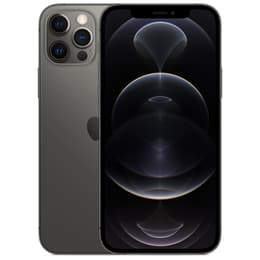

iPhone 12 Pro vs Nokia X30

iPhone 12 Pro
iPhone 12 Pro
Starting at

Refurbished price:A$411.00

Versus A$1,119.00 new

See options
Nokia X30
Nokia X30
Starting at

Refurbished price:A$298.00

Versus A$965.00 new

See options

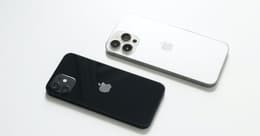
The iPhone 12 Pro (2020) and the Nokia X30 (2022) are distinct smartphones, each offering a different user experience rooted in their respective operating systems and design philosophies. While the iPhone 12 Pro, running iOS, emphasizes a powerful processing unit and advanced camera capabilities, the Android-based Nokia X30 focuses on a smooth display and a commitment to sustainable manufacturing.

Scores

Durability

When considering the practical lifespan of these devices, their release timelines and software support play a significant role.

  • Release Timeline and Software Support: The iPhone 12 Pro was released in October 2020, while the Nokia X30 launched in September 2022. Apple typically provides iOS updates for 5-6 years from a device's release, meaning the iPhone 12 Pro is currently running iOS 18.x and is likely nearing the end of its major OS update cycle. In contrast, Nokia promises three years of OS updates and security patches for the X30 from its 2022 release, suggesting continued support for a few more years.
  • Durability Features: The iPhone 12 Pro features a Ceramic Shield front cover and a stainless steel frame, contributing to its robust build and improved drop resistance. It also carries an IP68 rating for dust and water resistance. The Nokia X30 incorporates Corning Gorilla Glass Victus for screen protection and an aluminum frame made from recycled materials, alongside a plastic back. It has an IP67 rating, indicating good resistance to dust and water immersion.
  • Repairability: iFixit gave the iPhone 12 Pro a repairability score of 6 out of 10, noting that many components are modular and accessible, though proprietary screws and enhanced waterproofing can complicate repairs. Information on the Nokia X30's repairability score is less widely available, but its construction with recycled materials suggests a design philosophy that might consider longevity.

Release year

2020

2022

Compatible with latest Update

Yes

No

Operating system

iOS

Android

Foldable

No

No

Performance

The performance of these two smartphones is largely dictated by their internal components and how they handle daily tasks and demanding applications.

  • Processing Power: The iPhone 12 Pro is equipped with a powerful current-generation processor, which enables smooth handling of demanding applications, efficient multitasking, and responsive gaming experiences. Users generally report excellent system responsiveness. The Nokia X30 features a mid-range processor, which provides decent performance for everyday use and most applications. However, some users note that it might not offer the same long-term performance headroom for future demanding tasks compared to higher-end chipsets.
  • Memory and Storage: The iPhone 12 Pro comes with 6GB of RAM, which supports fluid multitasking and app switching. It offers storage options of 128GB, 256GB, and 512GB. The Nokia X30 is available with 6GB or 8GB of RAM, providing ample capacity for typical smartphone usage. Storage options include 128GB (UFS 2.2) and 256GB (UFS 3.0), with the latter offering faster data transfer speeds.
  • Battery Behavior: The iPhone 12 Pro has a 2815 mAh battery. User experiences with its battery life are mixed; while some find it sufficient for a full day of moderate use, heavy usage, especially with 5G connectivity or intensive gaming, can lead to more frequent charging. The Nokia X30 houses a larger 4200 mAh battery, which typically provides a full day of use and can extend to two days with lighter usage. It supports 33W fast charging.

Memory (GB)

6 GB

8 GB

Screen quality

The visual experience on both devices is shaped by their display technologies, resolution, and brightness capabilities.

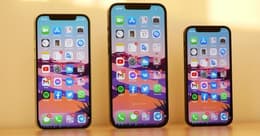
  • Display Technology and Resolution: The iPhone 12 Pro features a 6.1-inch Super Retina XDR OLED display, offering deep blacks, vibrant colors, and a high resolution of 2532x1170 pixels, resulting in a pixel density of 460 ppi. This provides a clear and detailed viewing experience. The Nokia X30 comes with a 6.43-inch AMOLED display, which also delivers rich colors and good contrast, with a resolution of 2400x1080 pixels and a pixel density of 409 ppi.
  • Brightness and Refresh Rate: The iPhone 12 Pro's display can reach 800 nits of typical brightness and up to 1200 nits for HDR content, ensuring good visibility even in bright conditions. It operates at a standard 60Hz refresh rate. The Nokia X30 offers a 90Hz refresh rate, which provides a smoother scrolling and viewing experience, especially noticeable during animations and gaming. Its typical brightness is around 400 nits, with a peak of 700 nits, though some users report difficulty with outdoor visibility in direct sunlight.
  • Viewing Experience: Both phones offer an immersive viewing experience due to their OLED/AMOLED panels. The iPhone 12 Pro's display supports HDR and has a wide color gamut, making it well-suited for media consumption. The Nokia X30's 90Hz refresh rate enhances the fluidity of daily interactions, though its color accuracy might require adjustment out of the box.

Resolution

1170 x 2532

1080 x 2400

Screen type

Super Retina XDR OLED

AMOLED

Audiovisual

Both smartphones offer capable camera systems, but they approach photography and videography with different strengths and features.

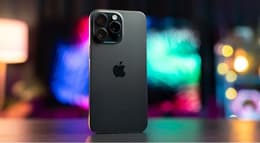
  • Rear Camera System: The iPhone 12 Pro boasts a versatile triple 12-megapixel camera system on the rear, comprising a wide (f/1.6), ultra-wide (f/2.4), and a telephoto (f/2.0) lens with 2x optical zoom. It also includes a LiDAR scanner, which assists with faster autofocus in low-light conditions and enhances augmented reality experiences. The Nokia X30 features a dual-camera setup with a 50-megapixel main sensor (f/1.8, with Optical Image Stabilization) and a 13-megapixel ultra-wide lens (f/2.4).
  • Photography Performance: The iPhone 12 Pro delivers strong performance in various lighting conditions, with good detail, dynamic range, and improved low-light capabilities, including Night Mode on both wide and ultra-wide lenses. It also supports Apple ProRAW for more editing flexibility. The Nokia X30's 50MP main camera performs well in daylight, though color reproduction can sometimes be inconsistent. Its Night Mode 2.0 and Dark Vision features are praised for delivering surprisingly good low-light photos for its category.
  • Video Recording and Audio: The iPhone 12 Pro excels in video recording, capable of capturing Dolby Vision HDR video in 4K at up to 60 frames per second. This provides professional-grade video quality. The Nokia X30 records video at a maximum of 1080p at 30 or 60 frames per second, lacking 4K capability. Both devices offer decent microphone quality for calls and recordings, and their speaker output is suitable for media consumption, though the Nokia X30 has a single bottom-firing speaker.

Main camera

12 megapixels

50 megapixels

Front camera

12 megapixels

16 megapixels

Miscellaneous

Beyond core performance, several practical elements contribute to the overall user experience of these smartphones.

  • Connectivity and Ports: Both the iPhone 12 Pro and Nokia X30 support 5G connectivity, enabling faster mobile data speeds. They also feature Wi-Fi 6 for improved wireless network performance and Bluetooth 5.0 (iPhone 12 Pro) or 5.1 (Nokia X30) for connecting accessories. The iPhone 12 Pro uses Apple's proprietary Lightning port for charging and data transfer. The Nokia X30, on the other hand, utilizes a more universal USB-C 2.0 port. The Nokia X30 notably lacks a 3.5mm headphone jack.
  • Biometric Security and Sensors: The iPhone 12 Pro relies on Face ID for secure facial recognition. It also includes a LiDAR scanner, which, in addition to camera functions, can enhance augmented reality applications. The Nokia X30 features an optical in-display fingerprint sensor for biometric authentication. Both devices include standard sensors like accelerometers, gyroscopes, and compasses.
  • Design and Build: The iPhone 12 Pro has a premium feel with its stainless steel frame and flat edges, weighing 189 grams. The Nokia X30, weighing 185 grams, is constructed with an aluminum frame (made from 100% recycled aluminum) and a plastic back (65% recycled plastic), aligning with an eco-friendly design philosophy. Its dimensions are 158.9 x 73.9 x 8 mm, making it slightly taller and wider but also thinner than the iPhone 12 Pro (146.7 x 71.5 x 7.4 mm).

Weight

187 oz

185 oz

Screen size (in)

6.1

6.43

Network

5G

5G

SIM card

Physical SIM + eSIM

Dual Physical SIM

Carrier compatibility

Unlocked

Unlocked

User sentiment for the iPhone 12 Pro often highlights its robust build quality, the fluidity of the iOS experience, and its capable camera system, particularly for video recording and low-light photography. Common criticisms sometimes point to its battery life, especially with heavy 5G use, and the potential for the Ceramic Shield to scratch despite its drop resistance. For the Nokia X30, users frequently praise its vibrant 90Hz AMOLED display, reliable battery life, and the commitment to software updates and sustainable materials. Some concerns include the mid-range processor's long-term performance and the absence of 4K video recording.

Users prioritizing a powerful and consistently smooth operating system with advanced video capabilities and a premium build may find the iPhone 12 Pro well-suited to their needs. Its strong processing power and comprehensive camera system make it a solid choice for those engaged in creative tasks or who value a highly integrated ecosystem. Conversely, individuals who prefer the Android operating system, prioritize a smoother display refresh rate, and value extended software support from a newer device might lean towards the Nokia X30. Its focus on sustainable materials also makes it an appealing option for environmentally conscious consumers. Both devices offer distinct advantages, catering to different user preferences and priorities. For those seeking quality-assured refurbished options, both models are available, providing an eco-friendly alternative to new purchases.
See all articles

Our recent comparisons