
iPhone 12 Pro vs iPhone SE (2020)

iPhone 12 Pro
iPhone 12 Pro
Starting at

Refurbished price:A$411.00

Versus A$1,119.00 new

See options
iPhone SE (2020)
iPhone SE (2020)
Starting at

Refurbished price:A$108.00

Versus A$529.00 new

See options

Ratings

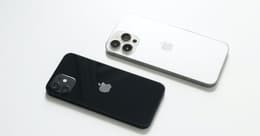
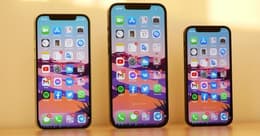
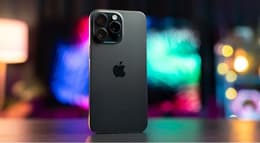
The iPhone 12 Pro, released in October 2020, and the iPhone SE (2nd generation), launched in April 2020, represent distinct approaches within Apple's smartphone lineup. While both operate on the iOS platform, the iPhone 12 Pro offers a more advanced feature set, including a sophisticated camera system and a modern display, catering to users seeking premium capabilities. The iPhone SE 2020, conversely, provides a compact form factor with a familiar design and robust internal performance, appealing to those who prefer a traditional iPhone experience.

Scores

Durability

When considering the longevity of these devices, both the iPhone 12 Pro and the iPhone SE 2020 benefit from Apple's extended software support, ensuring they remain functional and secure for several years. However, differences in their build and initial release timelines can influence their practical lifespan.

  • Release Timeline: The iPhone SE 2020 was released in April 2020 [2, 3, 5], while the iPhone 12 Pro followed in October 2020 [1, 4]. This six-month difference means the iPhone 12 Pro will likely receive software updates for a slightly longer period, extending its functional life by approximately one additional year. Both devices are expected to receive iOS updates for approximately 5-6 years from their respective release dates [10, 2].
  • Build Materials and Durability: The iPhone 12 Pro features a Ceramic Shield front cover and a stainless steel frame, contributing to enhanced drop performance and overall structural rigidity [1, 18, 22, 28, 30, 39]. It also boasts an IP68 rating for water and dust resistance, allowing submersion up to 6 meters for 30 minutes [1]. The iPhone SE 2020, built with an aluminum frame and glass front and back, has an IP67 rating, protecting against submersion up to 1 meter for 30 minutes [3, 20, 32, 40]. While both offer good protection against everyday hazards, the iPhone 12 Pro's materials provide a slight edge in resilience against impacts.
  • Repairability: Both models are designed with repairability in mind, though the specific components and their ease of replacement can vary. User reports suggest that while the iPhone 12 Pro's Ceramic Shield improves drop resistance, its scratch resistance is comparable to other glass phones [18, 22, 28]. The iPhone SE 2020's design, sharing similarities with older iPhone models, may offer more straightforward screen replacements due to its construction [32, 40].

Release year

2020

2020

Compatible with latest Update

Yes

Yes

Operating system

iOS

iOS

Foldable

No

No

Performance

The performance of a smartphone is largely dictated by its internal processing capabilities, which influence everything from app loading times to multitasking efficiency and gaming experiences. Both devices offer capable performance for their respective generations, but the iPhone 12 Pro integrates a more advanced system.

  • Everyday Responsiveness: The iPhone 12 Pro is equipped with a newer generation processor, which provides a noticeable boost in speed and efficiency for demanding applications and complex tasks [1, 4]. This translates to quicker app launches, smoother transitions, and more fluid overall system navigation. The iPhone SE 2020, while still very capable, uses the processor from the previous flagship generation, offering strong performance for daily use, but with slightly less headroom for future, more intensive applications [2, 3, 6].
  • Multitasking and Gaming: For users who frequently switch between multiple applications or engage in graphically intensive mobile gaming, the iPhone 12 Pro's more powerful processor and greater amount of internal memory allow for a more seamless experience. It can handle heavier workloads and maintain higher frame rates in games more consistently. The iPhone SE 2020 performs well with most current games and apps, but may show limitations when pushing the device with several demanding processes simultaneously.
  • Storage Options: The iPhone 12 Pro starts with a base storage of 128GB, with options extending to 256GB and 512GB, providing ample space for media, apps, and documents [1, 4]. The iPhone SE 2020 offers configurations starting at 64GB, with 128GB and 256GB options available, which might be a consideration for users with extensive storage needs [3, 6, 15, 29].

Memory (GB)

6 GB

3 GB

Screen quality

The display is a primary interface for smartphone interaction, and the visual experience can differ significantly between the two models due to their underlying technologies and specifications.

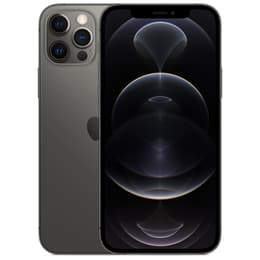
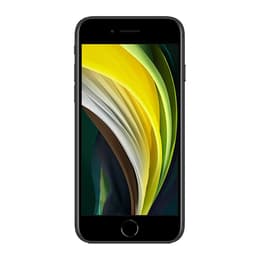
  • Display Technology and Clarity: The iPhone 12 Pro features a 6.1-inch Super Retina XDR OLED display, which delivers deep blacks, high contrast, and vibrant colors [1, 7, 9, 16, 17]. Its resolution of 2532x1170 pixels at 460 ppi results in sharp and detailed visuals [1, 16]. In contrast, the iPhone SE 2020 uses a 4.7-inch Retina HD IPS LCD display with a resolution of 1334x750 pixels at 326 ppi [3, 6, 8, 15, 34]. While the LCD offers good color accuracy, it cannot match the contrast and true black levels of an OLED panel.
  • Brightness and Outdoor Visibility: The iPhone 12 Pro's display can reach a typical brightness of 800 nits and a peak HDR brightness of 1200 nits, making it highly visible even in bright outdoor conditions and excellent for HDR content [7, 16, 17]. The iPhone SE 2020 has a typical brightness of 625 nits, which is sufficient for most indoor and outdoor scenarios but may struggle more under direct sunlight [3, 8].
  • Screen Size and User Experience: The iPhone 12 Pro's larger 6.1-inch edge-to-edge display provides a more immersive viewing experience for videos, gaming, and browsing [1, 9]. The iPhone SE 2020's 4.7-inch screen, coupled with its traditional bezels and Touch ID button, offers a more compact and one-handed friendly design, preferred by users who value portability and a classic feel [3, 6, 19, 29, 37].

Resolution

1170 x 2532

750 x 1334

Screen type

Super Retina XDR OLED

Retina IPS LCD

Audiovisual

Photography and videography capabilities are key differentiators, with the iPhone 12 Pro offering a more versatile and advanced camera system compared to the iPhone SE 2020.

  • Rear Camera System: The iPhone 12 Pro boasts a triple 12MP camera system, including Ultra Wide, Wide, and Telephoto lenses, providing greater flexibility for various shooting scenarios [7, 9, 21, 23]. It features a wider aperture on its main lens (f/1.6) for improved low-light performance and includes a LiDAR Scanner for faster autofocus in low light and enhanced Night mode portraits [7, 21, 33, 38]. The iPhone SE 2020 features a single 12MP wide camera with an f/1.8 aperture [6, 11, 15, 24, 29]. While it supports Portrait mode for people and Smart HDR, it lacks the versatility of multiple lenses and dedicated Night mode for general photography [11, 31, 35, 43].
  • Video Recording: The iPhone 12 Pro supports HDR video recording with Dolby Vision up to 60 frames per second, offering superior dynamic range and color depth for video content [7, 21, 26, 33]. It also benefits from improved video stabilization. The iPhone SE 2020 can record 4K video up to 60 frames per second and includes optical image stabilization, but its HDR video capabilities are not as advanced as the 12 Pro [6, 11, 24, 31, 35, 43].
  • Front Camera and Audio: Both devices feature capable front-facing cameras for selfies and video calls. The iPhone 12 Pro has a 12MP front camera, while the iPhone SE 2020 has a 7MP front camera, both supporting Portrait mode for people [7, 12, 29, 35]. For audio, both offer stereo speakers and good microphone quality for calls and recordings, though the 12 Pro may offer a slightly richer media consumption experience due to its overall premium build.

Main camera

12 megapixels

12 megapixels

Front camera

12 megapixels

7 megapixels

Miscellaneous

Beyond core performance and display, several practical features and design elements contribute to the overall user experience and differentiate these two iPhone models.

  • Connectivity and Ports: The iPhone 12 Pro supports 5G cellular connectivity, offering faster download and upload speeds in supported areas, alongside Wi-Fi 6 for improved wireless performance [21]. The iPhone SE 2020 supports Gigabit LTE and Wi-Fi 6, providing fast and reliable internet access, but lacks 5G capabilities [29, 37]. Both devices utilize the Lightning port for charging and data transfer.
  • Biometric Authentication: A significant difference lies in their biometric security. The iPhone 12 Pro uses Face ID for secure facial recognition and unlocking [12]. The iPhone SE 2020 retains the traditional Home button with Touch ID, allowing for fingerprint authentication [27, 29, 34]. The choice between these depends on user preference for unlocking methods.
  • Design and Handling: The iPhone 12 Pro features a larger 6.1-inch display with a modern, flat-edged design and a stainless steel band, weighing 189 grams [4]. Its dimensions are 146.7 x 71.5 x 7.4 mm. The iPhone SE 2020, with its 4.7-inch display, maintains the classic iPhone design with rounded aluminum edges and a Home button, weighing 148 grams [3, 6, 19, 29, 37]. Its smaller dimensions of 138.4 x 67.3 x 7.3 mm make it more compact and easier for one-handed use [3, 6, 19, 29, 37].

Weight

187 oz

148 oz

Screen size (in)

6.1

4.7

Network

5G

4G

SIM card

Physical SIM + eSIM

Physical SIM + eSIM

Carrier compatibility

Unlocked

Unlocked

Connector

Lightning

Lightning

User sentiment for the iPhone 12 Pro often highlights its advanced camera system, particularly its low-light capabilities and versatile lenses, as well as the vibrant OLED display and premium build quality. Common praises also include its robust performance for demanding tasks and the inclusion of 5G connectivity. Some users, however, might find its size less convenient for one-handed use compared to smaller models.

The iPhone SE 2020 is frequently praised for its compact form factor, the familiarity and reliability of Touch ID, and its strong performance for everyday tasks, thanks to its capable processor. Users appreciate its traditional design and ease of handling. Criticisms sometimes point to its smaller, LCD display and less advanced camera system, especially in challenging lighting conditions, as well as the absence of 5G.

Users prioritizing a cutting-edge camera experience, a larger and more immersive display, and future-proof 5G connectivity may find the iPhone 12 Pro better suited to their needs. Its enhanced durability features also appeal to those seeking a more resilient device. Conversely, users who value a compact design, the convenience of Touch ID, and solid performance for daily smartphone use will likely lean towards the iPhone SE 2020. It offers a reliable and familiar experience in a smaller package.

For those looking to make an informed and sustainable choice, both models are available as quality-assured refurbished options, providing an eco-friendly alternative to purchasing new devices.
See all articles

Our recent comparisons