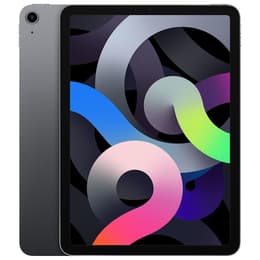
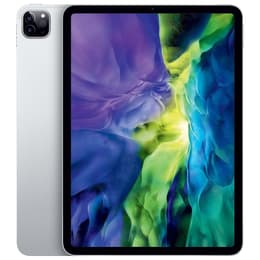
iPad Air 4 (2020, A14 series) vs iPad Pro (2020, A12 series)

iPad Air 4 (2020, A14 series)
Starting at

Refurbished price:A$500.00

Versus A$829.00 new

See options
iPad Pro (2020, A12 series)
Starting at

Refurbished price:A$753.00

Versus A$899.00 new

See options

Ratings

The iPad Air (4th generation), released in October 2020, and the iPad Pro (4th generation), launched in March 2020, represent two distinct tiers within Apple's tablet lineup from the same year. Both devices operate on iPadOS and share a modern, all-screen design, but they cater to different user needs through variations in display technology, camera systems, and internal processing capabilities. While the iPad Air 2020 offers a powerful experience for general use, the iPad Pro 2020 is designed for more demanding tasks and professional workflows.

Scores

Durability

When considering the practical lifespan of these tablets, several factors come into play, including their release timelines and ongoing software support.

  • Release Timeline: The iPad Pro 2020 was introduced earlier in the year, in March, while the iPad Air 2020 followed in October. This difference means the iPad Air 2020 may receive software updates for a slightly longer period, potentially extending its functional life by several months to a year.
  • Software Longevity: Both devices are expected to receive consistent iPadOS updates for several years, ensuring access to new features and security enhancements. The iPad Air 2020, being released later, benefits from a newer processor generation, which often translates to extended software support.
  • Repairability and Build: Both models feature a similar modern design with flat edges and are compatible with the same accessories, such as the second-generation Apple Pencil and Magic Keyboard. Their construction is robust, and repairability scores are generally comparable across Apple's tablet lineup, focusing on component replacement rather than easy user-serviceability.

Release year

2020

2020

Compatible with latest Update

Yes

Yes

Operating system

iPadOS

iPadOS

Minimum system requirements (iPadOS)

iPadOS 18

iPadOS 18

Performance

The performance of these two tablets is a key differentiator, influencing how smoothly they handle various applications and multitasking scenarios.

  • Processing Power: The iPad Air 2020 features a newer generation processor, which offers advancements in overall CPU performance and neural engine capabilities, beneficial for tasks involving artificial intelligence and machine learning. The iPad Pro 2020, on the other hand, is equipped with a processor known for its robust graphics performance, featuring more GPU cores, which can be advantageous for graphically intensive applications like advanced video editing or 3D rendering.
  • Multitasking and Responsiveness: The iPad Pro 2020 comes with 6GB of RAM across all configurations, providing more headroom for keeping multiple demanding applications open simultaneously without needing to reload. The iPad Air 2020 includes 4GB of RAM, which is sufficient for most everyday tasks and moderate multitasking.
  • Storage Options: The iPad Pro 2020 offers a wider range of storage capacities, starting at 128GB and going up to 1TB, providing ample space for large files, extensive media libraries, and professional projects. The iPad Air 2020 is available in 64GB and 256GB configurations, which are suitable for general use, cloud-dependent workflows, and users who manage their storage actively.

Memory (GB)

4 GB

6 GB

Processor

Apple A14 Bionic

Apple A12Z Bionic

Screen quality

The visual experience on these tablets is largely defined by their display technologies, with notable differences in smoothness and brightness.

  • Display Technology and Refresh Rate: Both devices feature Liquid Retina IPS LCD displays with similar pixel densities, ensuring sharp and clear visuals. However, a significant distinction is the iPad Pro 2020's ProMotion technology, which enables an adaptive refresh rate up to 120Hz, resulting in noticeably smoother scrolling, more fluid animations, and a more responsive experience, particularly with the Apple Pencil. The iPad Air 2020 has a standard 60Hz refresh rate.
  • Brightness and Clarity: The iPad Pro 2020 offers a higher peak brightness of 600 nits, compared to the iPad Air 2020's 500 nits. This extra brightness can improve visibility in brightly lit environments or outdoors. Both displays support True Tone for adaptive white balance and a wide P3 color gamut for accurate color reproduction.
  • Screen Size and Viewing Experience: The iPad Air 2020 features a 10.9-inch display, while the iPad Pro 2020 is available in 11-inch and 12.9-inch options. The slightly larger screen of the 11-inch iPad Pro and the significantly larger 12.9-inch model provide more screen real estate for content consumption, multitasking with split-view, and creative work.

Resolution

2360 x 1640

2388 x 1668

True Tone

Yes

Yes

Promotion

No

Yes

Screen type

Liquid Retina display

Liquid Retina display

Pixel density

264ppp

264ppp

Brightness

500 nits brightness

600 nits brightness max

Sound quality

Speakers

Stereo speakers

Four speaker audio

Audiovisual

While tablets are not typically primary photography devices, their camera systems offer capabilities for video calls, document scanning, and augmented reality applications.

  • Rear Camera System: The iPad Air 2020 is equipped with a single 12-megapixel wide-angle rear camera, capable of capturing detailed photos and 4K video. The iPad Pro 2020 features a more advanced dual-camera setup, including a 12-megapixel wide-angle lens and a 10-megapixel ultra-wide-angle lens, offering greater versatility for photography.
  • LiDAR Scanner and AR: A notable addition to the iPad Pro 2020 is the LiDAR Scanner, which enhances augmented reality (AR) experiences by accurately measuring depth and distance. This can be beneficial for AR applications, 3D scanning, and improving focus in low-light conditions. The iPad Air 2020 does not include a LiDAR Scanner.
  • Front Camera and Audio: Both tablets feature a 7-megapixel FaceTime HD front camera suitable for video calls. For audio, the iPad Pro 2020 boasts a quad-speaker system, delivering a richer and more immersive sound experience for media consumption, while the iPad Air 2020 has a stereo two-speaker setup.

Miscellaneous

Beyond core performance and display, several practical features contribute to the overall user experience and device utility.

  • Biometric Authentication: The iPad Air 2020 utilizes Touch ID, integrated into the top button, for secure authentication. The iPad Pro 2020 employs Face ID, using its TrueDepth camera system for facial recognition, which allows for seamless unlocking and authentication without needing to physically touch a sensor.
  • Connectivity and Ports: Both models feature a USB-C port for charging, data transfer, and connecting to various accessories. The iPad Pro 2020's USB-C port offers more advanced capabilities, including support for Thunderbolt/USB 4, enabling faster external storage connections and higher-resolution external display output. Both support Wi-Fi 6 and Bluetooth 5.0 for robust wireless connectivity.
  • Design and Accessories: Both tablets share a modern, industrial design with flat edges, making them compatible with the second-generation Apple Pencil and the Magic Keyboard. The iPad Air 2020 is available in a wider array of colors, offering more personalization options compared to the iPad Pro 2020's more traditional color palette.

Weight

460 oz

471 oz

Width

17.85 in

17.85 in

Height

24.76 in

24.76 in

Depth

0.61 in

0.59 in

Screen size (in)

10.9

11

Network

Wi-Fi + 4G

Wi-Fi

Carrier compatibility

Unlocked

Without SIM Port

Wi-Fi version

Wi-Fi 6 802.11ax

Wi-Fi 6 802.11ax

Bluetooth version

Bluetooth 5.0

Bluetooth 5.0

Face ID

No

Yes

Touch ID

Yes

No

Connector

USB Type-C

USB Type-C

Choosing between the iPad Air 2020 and the iPad Pro 2020 depends largely on individual priorities and intended use. Users frequently praise the iPad Air 2020 for bringing many premium features, such as the modern design and USB-C connectivity, to a broader audience. It is often seen as a highly capable device for general productivity, media consumption, and light creative tasks. Some users, however, note its 60Hz display as a point of difference compared to the smoother experience of the Pro models.

The iPad Pro 2020 is consistently lauded for its ProMotion display, offering a significantly smoother visual experience, and its enhanced graphical performance, making it a favorite among creative professionals and those who engage in demanding tasks like video editing, graphic design, or advanced augmented reality applications. Its more comprehensive camera system, including the LiDAR scanner, and the additional RAM are also frequently highlighted as benefits for professional workflows. A common consideration for some users might be whether they fully utilize these 'Pro' features.

Users prioritizing a fluid display, superior graphical performance, and advanced camera capabilities for professional or creative work will find the iPad Pro 2020 well-suited to their needs. Conversely, users seeking a powerful, modern tablet for everyday productivity, entertainment, and moderate creative tasks, who may not require the absolute highest-end features, will likely find the iPad Air 2020 to be an excellent fit. Both devices offer a quality-assured refurbished option, providing a sustainable choice for consumers.


See all articles

Our recent comparisons