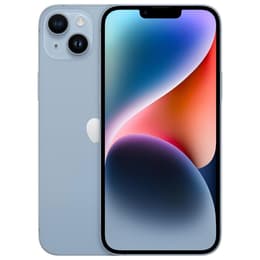
iPhone 14 Plus vs iPhone 16 Plus

iPhone 14 Plus
iPhone 14 Plus
Starting at

Refurbished price:A$480.00

Versus A$1,249.00 new

See options
iPhone 16 Plus
iPhone 16 Plus
Starting at

Refurbished price:A$946.00

Versus A$1,599.00 new

See options

Ratings

The iPhone 14 Plus, released in October 2022, and the iPhone 16 Plus, launched in September 2024, represent two generations of Apple's larger-screen standard smartphone line. While both devices offer a substantial display and a user-friendly iOS experience, the iPhone 16 Plus introduces advancements in processing power, camera capabilities, and additional features that reflect its newer release. Both operate on Apple's iOS platform, ensuring a consistent software ecosystem, though the newer model benefits from a longer period of future software support.

Scores

Durability

When considering the practical lifespan of these devices, several factors come into play, including their release timelines, software support, and physical durability.

  • Release Timeline: The iPhone 14 Plus was released in October 2022, making it an established device. The iPhone 16 Plus, having launched in September 2024, is a more recent addition to the lineup. This difference in release date directly impacts their expected software longevity.
  • OS Support: Apple typically provides major iOS updates for 5-6 years from a device's release. The iPhone 14 Plus, having launched with iOS 16, is expected to receive updates for several more years, likely up to iOS 21 or 22. The iPhone 16 Plus, launching with iOS 18, will benefit from an extended period of software support, potentially receiving updates for 6-7 years, extending its functional life further into the future.
  • Durability Features: Both models feature a Ceramic Shield front cover and an aluminum design, offering a degree of protection against drops and scratches. They also share an IP68 rating for water and dust resistance, meaning they can withstand submersion in up to 6 meters of water for 30 minutes. The iPhone 16 Plus introduces a color-infused glass back, which may offer subtle improvements in scratch resistance or aesthetic durability.

Release year

2022

2024

Compatible with latest Update

Yes

Yes

Foldable

No

No

Performance

The performance of a smartphone is central to its daily usability, influencing everything from app responsiveness to handling demanding tasks. Both the iPhone 14 Plus and iPhone 16 Plus deliver capable performance, but the newer model offers a notable step forward.

  • Processor Capabilities: The iPhone 14 Plus is equipped with a processor that handles everyday applications and multitasking smoothly, providing a responsive experience for most users. It capably runs graphics-intensive games and complex applications. The iPhone 16 Plus features a newer generation processor, which delivers a significant increase in processing power and efficiency. This translates to faster app loading times, smoother transitions between applications, and enhanced performance for more demanding tasks such as advanced photo and video editing, or running the latest high-fidelity mobile games.
  • Multitasking and Storage: The iPhone 14 Plus comes with 6GB of RAM, which is sufficient for managing multiple applications simultaneously without frequent reloads. It offers storage options of 128GB, 256GB, and 512GB. The iPhone 16 Plus increases the RAM to 8GB, providing more headroom for intensive multitasking and ensuring that more applications can remain active in the background. It also offers the same storage configurations, catering to various user needs for digital content.
  • Battery Behavior: The iPhone 14 Plus is recognized for its excellent battery life, often lasting a full day or more for many users, with up to 26 hours of video playback. The iPhone 16 Plus, despite some initial rumors of a smaller battery, has a larger typical battery capacity and benefits from a more efficient processor. This combination results in an even longer battery life, rated for up to 27 hours of video playback, providing extended usage between charges.

Memory (GB)

6 GB

8 GB

Screen quality

The display is a primary interface for any smartphone, and both the iPhone 14 Plus and iPhone 16 Plus offer large, vibrant screens, though with some key distinctions in their technology and features.

  • Display Technology and Size: Both devices feature a 6.7-inch Super Retina XDR OLED display, providing deep blacks, high contrast, and vibrant colors. This display size is well-suited for media consumption, gaming, and productivity tasks, offering ample screen real estate.
  • Resolution and Brightness: The iPhone 14 Plus has a resolution of 2778x1284 pixels at 458 pixels per inch (ppi), ensuring sharp text and clear images. It offers a typical brightness of 800 nits and a peak HDR brightness of 1200 nits, which is adequate for most indoor and outdoor viewing conditions. The iPhone 16 Plus slightly increases the resolution to 2796x1290 pixels at 460 ppi, offering a marginally sharper image. More significantly, it boasts a higher peak outdoor brightness of 2000 nits, improving visibility in bright sunlight.
  • Refresh Rate and Features: A notable difference lies in the refresh rate. The iPhone 14 Plus features a standard 60Hz refresh rate, which provides a smooth experience for general use. The iPhone 16 Plus also maintains a 60Hz refresh rate, which means users will not experience the ultra-smooth scrolling and responsiveness found on devices with higher refresh rates. However, the iPhone 16 Plus integrates the Dynamic Island, a dynamic area at the top of the display that adapts to show alerts, activities, and notifications, enhancing the interactive experience.

Resolution

1284 x 2778

1290 x 2796

Screen type

Super Retina XDR OLED

Super Retina XDR OLED

Audiovisual

Both the iPhone 14 Plus and iPhone 16 Plus are capable photographic tools, designed to capture high-quality images and videos in various conditions, with the newer model bringing significant enhancements.

  • Main Camera System: The iPhone 14 Plus features a dual 12MP camera system, comprising a main wide-angle lens with a f/1.5 aperture and sensor-shift optical image stabilization, and a 12MP ultra-wide lens with a f/2.4 aperture. This setup excels in capturing detailed photos with good low-light performance. The iPhone 16 Plus upgrades to an advanced dual-camera system with a 48MP Fusion Main camera (f/1.6 aperture, sensor-shift OIS) and a 12MP Ultra Wide camera (f/2.2 aperture, 120° field of view). The 48MP main sensor allows for super-high-resolution photos and enables a 2x telephoto option through sensor cropping, offering more versatility in framing shots.
  • Computational Photography and Video: Both models benefit from Apple's computational photography features like Photonic Engine, Deep Fusion, and Portrait mode. The iPhone 14 Plus includes Smart HDR 4 and Cinematic mode for video up to 4K HDR at 30fps, along with Action mode for stabilized video. The iPhone 16 Plus advances these capabilities with Smart HDR 5, next-generation portraits, and improved Cinematic mode. It also supports Spatial video recording, which is designed for immersive viewing on compatible devices, and an enhanced Action mode for smoother video capture.
  • Front Camera and Audio: Both phones feature a 12MP TrueDepth front camera with autofocus and a f/1.9 aperture, capable of capturing detailed selfies and supporting secure facial recognition. For audio, both offer stereo speakers for an immersive media consumption experience and clear microphone quality for calls and video recording.

Main camera

12 megapixels

48 megapixels

Front camera

12 megapixels

12 megapixels

Miscellaneous

Beyond core performance and display, several practical elements differentiate the user experience and connectivity options of these two iPhone models.

  • Connectivity Standards: The iPhone 14 Plus supports 5G cellular connectivity, Wi-Fi 6 (802.11ax), and Bluetooth 5.3, providing fast wireless data transfer and reliable connections for accessories. The iPhone 16 Plus steps up its wireless capabilities by supporting Wi-Fi 7 (802.11be) and Bluetooth 5.3, offering potentially faster and more stable Wi-Fi performance, especially in environments with compatible routers. Both maintain 5G cellular capabilities.
  • Charging Port and Physical Controls: A significant change is in the charging port. The iPhone 14 Plus uses Apple's proprietary Lightning port, with USB 2.0 data transfer speeds. The iPhone 16 Plus transitions to a USB-C port, aligning with broader industry standards and offering more universal compatibility with chargers and accessories, though still at USB 2.0 data transfer speeds for the standard models. The iPhone 16 Plus also introduces the customizable Action Button, previously found on Pro models, replacing the traditional mute switch and allowing users to quickly access various functions. It also adds a new Camera Control button for enhanced photography interaction.
  • Design and Sensors: Both devices share a similar overall form factor, featuring an aluminum frame and glass construction. The iPhone 14 Plus weighs 203 grams, while the iPhone 16 Plus is slightly lighter at 199 grams, and marginally narrower. Both incorporate Face ID for secure authentication and include standard sensors like accelerometers, gyroscopes, and barometers. Both also feature an Ultra Wideband chip for spatial awareness and Emergency SOS via satellite for critical situations.

Weight

203 oz

199 oz

Screen size (in)

6,7

6.7

Network

5G

5G

SIM card

Physical SIM + eSIM

Physical SIM + eSIM

Carrier compatibility

Unlocked

Unlocked

Connector

Lightning

USB-C (USB 2)

The iPhone 14 Plus and iPhone 16 Plus cater to users seeking a large-screen iPhone experience, but they appeal to slightly different priorities. The iPhone 14 Plus, praised by users for its exceptional battery life and robust performance for its generation, remains a solid choice for everyday tasks and media consumption. Common user sentiment highlights its reliable camera system and the immersive quality of its large OLED display. Some users, however, noted the 60Hz refresh rate as a point of comparison with other smartphones available at its release.

The iPhone 16 Plus builds upon this foundation, offering a more advanced and future-proof experience. Users appreciate its significantly upgraded processor, which provides a noticeable boost in speed and efficiency, particularly for demanding applications and the new Apple Intelligence features. The enhanced camera system, with its 48MP main sensor and spatial video capabilities, is another frequently lauded improvement. The inclusion of the Dynamic Island and the versatile Action Button also contribute to a more modern and interactive user experience. While it retains a 60Hz display, its increased brightness and overall system fluidity are often highlighted.

Users prioritizing extended software longevity, cutting-edge performance, and the latest camera innovations will find the iPhone 16 Plus well-suited to their needs. Its newer processor and additional features like the Action Button and USB-C port offer a more contemporary experience. Conversely, users who value a proven, reliable large-screen device with excellent battery life for general use, and who may not require the absolute latest in processing power or camera technology, may find the iPhone 14 Plus to be a practical option. Both models are available as quality-assured refurbished options, providing an eco-friendly alternative for consumers looking to make informed and sustainable choices.

See all articles

Our recent comparisons