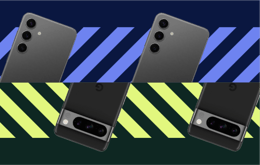


Compare models
Google Pixel 9 vs Google Pixel 9 Pro
- 1-year warranty
- Free standard shipping
- Free 30-day returns
Differences at a glance
The Google Pixel 9 and the Google Pixel 9 Pro represent flagship smartphone options released by Google in 2024. While both devices share identical physical dimensions and a 6.3-inch form factor, they cater to different expectations through variations in memory capacity, screen technology, and camera hardware.
Both models operate on the Android system and include deep integration with Google's artificial intelligence tools. Understanding how these features diverge helps users determine which device best aligns with their daily routines.
Available Models
Colour
Storage (GB)
Scores
Durability
Both smartphones share a modern hardware foundation designed to remain functional and secure for years of regular daily use.
- Software Support: Both models receive seven full years of operating system upgrades, security patches, and regular feature drops from their release date, ensuring equal long-term software relevance.
- Build Integrity: Featuring sturdy aluminum frames paired with durable glass protection on both the front and back, both devices achieve an IP68 dust and water resistance rating for reliable physical durability.
- Lifespan Expectations: Thanks to identical baseline build materials and long support windows, both units offer a comparable practical working lifespan under normal ownership conditions.
Release year
2024
2024
Compatible with latest Update
Yes
Yes
Operating system
Android
Android
Foldable
No
No
Performance
The internal hardware configurations create distinct experiences for handling everyday tasks, memory management, and power consumption.
- Multitasking and Memory: The standard model includes 12GB of RAM for routine app switching, while the Pro variant steps up to 16GB of RAM to better handle demanding background processes and intensive applications.
- Storage Selections: The base model provides options up to 256GB, whereas the Pro tier extends storage capacity up to 1TB alongside a 512GB tier for users managing extensive file libraries.
- System Responsiveness: Both devices handle standard web browsing, messaging, and media streaming smoothly, though heavier apps and gaming benefit from the additional memory headroom on the Pro edition.
Screen quality
Visual output differs primarily in panel technology, resolution depth, and variable refresh rate capabilities across both displays.
- Panel Technology: The standard device uses a high-resolution OLED screen, while the Pro version employs an advanced LTPO panel that scales its refresh rate down further to conserve battery during static tasks.
- Clarity and Sharpness: The Pro variant delivers a higher pixel density and resolution, offering slightly finer detail for text rendering and high-definition media consumption.
- Outdoor Visibility: Both panels achieve exceptional peak brightness levels, ensuring that content remains legible and vibrant even under direct sunlight.
Resolution
1080 x 2424
1280x2856
Screen type
OLED
LTPO OLED
Audiovisual
Photography and media recording capabilities form a major dividing line between the two smartphones, particularly regarding zoom and front-facing optics.
- Rear Camera Suite: While both feature reliable main and ultra-wide sensors, the Pro model adds a dedicated high-resolution periscope telephoto lens to support distant subjects without losing detail.
- Front-Facing Optics: The Pro version incorporates a higher-resolution ultra-wide selfie camera compared to the standard model, capturing wider group frames and sharper self-portraits.
- Video and Audio: Both units deliver stable 4K video recording with effective optical stabilization, alongside clear stereo speakers and microphone arrays suited for calls and media playback.
Main camera
50 megapixels
50 megapixels
Front camera
10.5 megapixels
42 megapixels
Miscellaneous
Physical handling, connectivity standards, and daily utilities remain largely uniform across both builds.
- Connectivity and Ports: Both models feature modern 5G connectivity, tri-band Wi-Fi support, Bluetooth capabilities, and a reversible USB-C port for charging and data transfer.
- Biometric Security: Secure authentication is handled by responsive under-display ultrasonic fingerprint sensors and facial recognition options on both devices.
- Handling and Weight: Weighing virtually the same at roughly 199 grams within an identical 6.3-inch frame, both phones offer a balanced, comfortable grip for one-handed operation.
Weight
198 oz
199 oz
Screen size (in)
6.3
6.3
Network
5G
5G
SIM card
Physical SIM + eSIM
Physical SIM + eSIM
Carrier compatibility
Unlocked
Unlocked
What the community thinks
When choosing between these two devices, user priorities dictate the ideal match. Users who prioritize expansive photography options, higher resolution panels, and maximum multitasking headroom will find the Google Pixel 9 Pro well-suited to their needs. Conversely, users who prefer a streamlined smartphone experience for everyday communication and media consumption without specialized zoom requirements may lean toward the standard Google Pixel 9. Both options offer a quality-assured refurbished option through platforms like Back Market, presenting an eco-friendly alternative for conscious buyers.
Ultimately, both models deliver capable software ecosystems and long update lifespans. Evaluating personal storage habits, camera usage, and memory requirements will guide you toward the right fit for your daily routine.