Compare models
iPhone 15 vs Motorola Edge 50 Fusion
- 1-year warranty
- Free standard shipping
- Free 30-day returns
Differences at a glance
The iPhone 15, released in September 2023, and the Motorola Edge 50 Fusion, launched in April 2024, are contemporary smartphones offering distinct experiences. The iPhone 15 operates on Apple's iOS, known for its integrated ecosystem, while the Motorola Edge 50 Fusion runs on Android, providing a more open and customizable platform. Key differentiators include their display technologies, camera approaches, and overall performance profiles, catering to different user preferences.
Available Models
Colour
Storage (GB)
Scores
Durability
Both devices offer robust build quality and protection against environmental elements.
- Release Timeline and Software Support: The iPhone 15, released in September 2023, is officially promised a minimum of five years of iOS updates, with expectations of receiving major iOS updates for approximately five to seven years and security updates for seven to eight years from its launch, ensuring a long period of software relevance. The Motorola Edge 50 Fusion, launched in April 2024, is expected to receive three major Android OS updates and four years of security updates, providing a solid lifespan for an Android device.
- Physical Resilience: The iPhone 15 features Ceramic Shield front cover glass and an IP68 rating for dust and water resistance, offering significant protection against everyday mishaps. The Motorola Edge 50 Fusion also boasts an IP68 rating and utilizes Corning Gorilla Glass 5 for its display, providing good scratch and drop resistance.
- Practical Lifespan: Users can expect both phones to remain functional and secure for several years. The iPhone 15's longer software support might appeal to those prioritizing maximum longevity, while the Edge 50 Fusion offers competitive durability for its class.
Release year
2023
2024
Compatible with latest Update
Yes
Yes
Operating system
iOS
Android
Foldable
No
No
Performance
These smartphones deliver different levels of processing power, impacting how they handle various tasks.
- Processing Capabilities: The iPhone 15 is equipped with a powerful current-generation processor that handles demanding applications, intensive gaming, and complex multitasking with ease, ensuring a consistently smooth and responsive user experience. The Motorola Edge 50 Fusion features a capable mid-range processor designed for efficient everyday use, smooth navigation, and moderate gaming, providing a balanced performance for most users.
- System Responsiveness: Users will find the iPhone 15 exceptionally fluid, with quick app launches and seamless transitions. The Edge 50 Fusion also offers a responsive experience for daily tasks, though it may exhibit slight differences in speed when running the most graphically intensive applications compared to the iPhone.
- Battery Behavior: The iPhone 15 generally provides reliable all-day battery life for typical usage patterns, with up to 20 hours of video playback. The Motorola Edge 50 Fusion, with its larger 5000 mAh battery capacity, often extends beyond a full day of use, making it suitable for users who require extended periods away from a charger.
Screen quality
The visual experience on these devices is shaped by their distinct display technologies and specifications.
- Display Technology and Clarity: The iPhone 15 features a 6.1-inch Super Retina XDR OLED display, delivering deep blacks, vibrant colors, and excellent contrast, with a 2556 x 1179 pixel resolution at 460 ppi that ensures sharp text and detailed images. The Motorola Edge 50 Fusion offers a larger 6.7-inch pOLED display, also providing rich colors and strong contrast, with a 2400 x 1080 pixel resolution at 395 ppi that keeps content clear and engaging.
- Brightness and Refresh Rate: The iPhone 15's display can reach higher peak brightness levels of up to 2000 nits outdoors, making it exceptionally visible even in direct sunlight. It operates at a standard 60Hz refresh rate. The Edge 50 Fusion, while having a slightly lower peak brightness of 1600 nits, compensates with a higher 144Hz refresh rate, resulting in noticeably smoother scrolling and more fluid animations, which can enhance the overall user interaction.
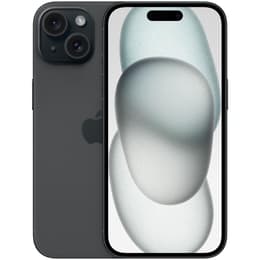
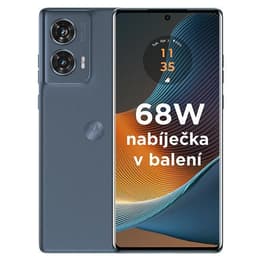
- Viewing Experience: The iPhone 15 incorporates the Dynamic Island, a dynamic area around the front camera that displays alerts and live activities. The Motorola Edge 50 Fusion features a curved display, which can offer an immersive viewing experience, especially for media consumption.
Resolution
1179 x 2556
1080 x 2400
Screen type
Super Retina XDR OLED
P-OLED
Audiovisual
Both phones offer distinct camera systems and audio experiences for capturing moments and consuming media.
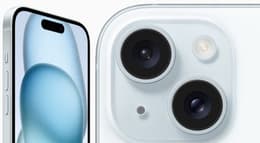
- Camera System Capabilities: The iPhone 15 features a dual-camera setup with a 48MP main sensor (f/1.6, with sensor-shift optical image stabilization) and a 12MP ultrawide lens (f/2.4), excelling in capturing detailed photos with natural color reproduction and strong low-light performance. The Motorola Edge 50 Fusion also has a dual-camera system, comprising a 50MP main sensor (f/1.8, with OIS) and a 13MP ultrawide lens (f/2.2) that doubles as a macro camera, offering versatility for different shooting scenarios.
- Photography and Video Quality: The iPhone 15 leverages advanced computational photography, including Photonic Engine and Smart HDR 5, for consistent image quality across various conditions, including improved portraits. Its video recording capabilities are robust, supporting up to 4K at 60 frames per second with cinematic mode features. The Edge 50 Fusion delivers good everyday photos, with its main sensor performing well in adequate lighting. It supports video recording up to 4K at 30 frames per second.
- Audio Experience: Both devices provide stereo speakers for an immersive audio experience during media playback. The iPhone 15 offers clear and balanced sound output. The Motorola Edge 50 Fusion also delivers a capable audio experience, suitable for general media consumption and calls.
Main camera
48 megapixels
50 megapixels
Front camera
12 megapixels
32 megapixels
Miscellaneous
Beyond core features, these devices present different practical elements that influence daily usability.
- Connectivity and Ports: Both smartphones support 5G connectivity for fast mobile data. The iPhone 15 features Wi-Fi 6 and Bluetooth 5.3, while the Motorola Edge 50 Fusion includes Wi-Fi 6E and Bluetooth 5.2. Both devices have transitioned to a USB-C port, offering universal compatibility with many modern accessories.
- Biometric Security: The iPhone 15 relies on Face ID for secure facial recognition, providing a convenient and robust unlocking method. The Motorola Edge 50 Fusion incorporates an in-display fingerprint sensor, offering another secure and quick way to unlock the device.
- Design and Handling: The iPhone 15 features an aluminum frame and a color-infused glass back, weighing approximately 171 grams. Its compact 6.1-inch form factor makes it comfortable for one-handed use. The Motorola Edge 50 Fusion, with its larger 6.7-inch display, comes in finishes like vegan leather or PMMA, weighing around 175-178 grams, offering a more expansive screen experience.
Weight
171 oz
175 oz
Screen size (in)
6.1
6.7
Network
5G
5G
SIM card
Physical SIM + eSIM
Dual Physical SIM
Carrier compatibility
Unlocked
Unlocked
Connector
USB-C (USB 2)
USB-C
What the community thinks
User feedback for the iPhone 15 often highlights its significant camera upgrades, the adoption of the versatile USB-C port, and the integration of the Dynamic Island into a non-Pro model, which users find enhances interaction. Some common criticisms include the retention of a 60Hz display, which some users feel is outdated compared to competitors, and the perception of incremental performance gains over its direct predecessor.
The Motorola Edge 50 Fusion is frequently praised for its large, fluid 144Hz OLED display, its impressive battery life that often lasts well over a day, and its clean Android software experience. Users also appreciate its IP68 water and dust resistance, a feature not always found in its category. Criticisms sometimes point to its camera performance, which, while capable, may not consistently match the output of higher-end flagships, and its mid-range processor, which might not satisfy the most demanding users.
Users prioritizing a highly integrated ecosystem, consistent camera performance, and long-term software support may find the iPhone 15 well-suited to their needs. Those who value a larger, high-refresh-rate display, extended battery life, and a customizable Android experience might lean toward the Motorola Edge 50 Fusion. Both devices offer compelling features, and considering a quality-assured refurbished option can be an eco-friendly alternative for either model.