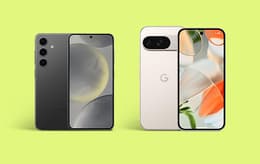
Google Pixel 9 Pro XL vs iPhone 13 Pro

Google Pixel 9 Pro XL
Starting at

Refurbished price:A$853.00

Versus A$1,849.00 new

See options
iPhone 13 Pro
iPhone 13 Pro
Starting at

Refurbished price:A$560.00

Versus A$1,539.00 new

See options

Ratings

The Google Pixel 9 Pro XL, released in August 2024, and the Apple iPhone 13 Pro, launched in September 2021, represent distinct approaches to high-end smartphone design and functionality. While both devices offer premium experiences, the Pixel 9 Pro XL emphasizes advanced artificial intelligence integration and a larger display, whereas the iPhone 13 Pro focuses on a refined ecosystem and robust performance within a slightly more compact form factor. Both operate on their respective proprietary operating systems, Android and iOS, offering different user interfaces and app ecosystems.

Scores

Durability

When considering the long-term usability of these devices, their release timelines and software support policies are key factors.

  • Software Longevity: The Google Pixel 9 Pro XL benefits from Google's commitment to seven years of operating system updates, extending its software support significantly into the future. The iPhone 13 Pro, released earlier, has received consistent iOS updates since its launch and is expected to continue receiving major software support for several more years, though likely for a shorter overall duration than the Pixel 9 Pro XL. [29]
  • Physical Durability: The Pixel 9 Pro XL features Gorilla Glass Victus 2 for screen protection and boasts an IP68 rating, indicating strong resistance to dust and water. [7, 23, 39] The iPhone 13 Pro also comes with an IP68 rating and features a Ceramic Shield front cover, designed for enhanced drop resistance. [20, 27, 31, 33, 34] Both devices are built with robust materials, with the iPhone 13 Pro utilizing stainless steel sides. [30]
  • Repairability: The iPhone 13 Pro received a repairability score of 5 out of 10 from iFixit, noting that while display and battery replacements are prioritized, software limitations can complicate third-party repairs. [15, 18, 22, 26, 36] Information regarding the Pixel 9 Pro XL's repairability is less detailed, but modern smartphone designs often present similar challenges.

Release year

2024

2021

Compatible with latest Update

Yes

Yes

Operating system

Android

iOS

Foldable

No

No

Performance

Both smartphones are engineered to deliver smooth and responsive performance for a variety of tasks, though they achieve this through different hardware architectures.

  • Processing Power: The Google Pixel 9 Pro XL is powered by Google's Tensor G4 chipset, which is specifically optimized for on-device artificial intelligence tasks, enabling faster processing for features like real-time language translation and advanced photo editing. [7, 23] The iPhone 13 Pro utilizes Apple's A15 Bionic chip, known for its efficient handling of demanding applications and graphics-intensive games. [1, 14]
  • Multitasking and Storage: The Pixel 9 Pro XL comes with 16GB of RAM, providing ample capacity for extensive multitasking and running numerous applications simultaneously without slowdowns. [7, 9, 23] The iPhone 13 Pro features 6GB of RAM, which, combined with iOS's memory management, allows for fluid navigation and app switching. [4, 5, 8] Both devices offer a range of storage options, from 128GB up to 1TB, catering to different user needs for app installations, media, and documents. [4, 7, 9, 27, 28]
  • Battery Performance: The Pixel 9 Pro XL is equipped with a 5,060mAh battery, supporting extended usage throughout the day and offering 37W fast charging capabilities. [9, 28, 37] The iPhone 13 Pro has a 3095 mAh battery, which, coupled with the efficiency of its processor and operating system, provides reliable battery life for most users, with fast charging also supported. [4, 5, 8, 34]

Memory (GB)

16 GB

6 GB

Screen quality

The visual experience on both devices is a highlight, with each offering a high-quality display tailored to different preferences.

  • Display Technology and Size: The Google Pixel 9 Pro XL features a larger 6.8-inch QHD+ OLED display, providing an expansive canvas for content consumption and productivity. [7, 9, 23] The iPhone 13 Pro sports a 6.1-inch Super Retina XDR OLED display, offering a more compact viewing area while maintaining high visual fidelity. [1, 2, 6, 13, 17, 34]
  • Brightness and Clarity: The Pixel 9 Pro XL's display boasts an impressive peak brightness of 3,000 nits, ensuring excellent visibility even in bright outdoor conditions. [7, 9, 23, 37, 39] The iPhone 13 Pro's display reaches a typical brightness of 1,000 nits and a peak of 1,200 nits for HDR content, delivering vibrant and clear visuals. [1, 2] Both screens offer high resolutions, resulting in sharp text and detailed images. [1, 2, 7, 9]
  • Smoothness and Responsiveness: Both devices incorporate high refresh rate technologies for a smoother user experience. The Pixel 9 Pro XL features a 120Hz refresh rate, contributing to fluid scrolling and responsive interactions. [9] The iPhone 13 Pro includes ProMotion technology, offering an adaptive refresh rate that can scale from 10Hz to 120Hz, optimizing for both smoothness and power efficiency. [1, 2, 13]

Resolution

1344 x 2992

1170 x 2532

Screen type

LTPO OLED

Super Retina XDR OLED

Audiovisual

Both smartphones offer advanced camera systems designed to capture high-quality photos and videos, though with differing specifications and computational photography strengths.

  • Rear Camera System: The Google Pixel 9 Pro XL features a triple-camera setup with a 50MP main sensor, a 48MP ultrawide lens, and a 48MP telephoto lens capable of 5x optical zoom. [7, 28, 39] This system is enhanced by Google's computational photography, known for its detail and color accuracy. The iPhone 13 Pro also has a triple 12MP camera system, comprising a wide, ultrawide, and telephoto lens with 3x optical zoom. [2, 3, 10, 12, 13, 34] Its larger sensors and apertures contribute to strong low-light performance. [3, 12]
  • Front Camera and Video Capabilities: The Pixel 9 Pro XL includes a high-resolution 42MP front-facing camera with autofocus, designed for detailed selfies and video calls. [7, 23, 38, 39] It supports video recording up to 8K at 30fps and offers advanced video zoom features. [38, 39] The iPhone 13 Pro features a 12MP TrueDepth front camera and is capable of recording HDR video with Dolby Vision up to 4K at 60fps, along with Cinematic mode for depth-of-field effects. [2, 3, 12, 17, 34]
  • Specialized Features: The Pixel 9 Pro XL introduces AI-driven camera features like 'Add Me' for group photos and enhanced 'Video Boost' with cloud processing for improved video quality. [37, 38, 39] The iPhone 13 Pro offers features such as Night mode, Deep Fusion, Photographic Styles, and ProRes video recording for professional-grade video capture. [2, 3, 12]

Main camera

50 megapixels

12 megapixels

Front camera

42 megapixels

12 megapixels

Miscellaneous

Beyond core specifications, several practical elements contribute to the overall user experience of these devices.

  • Connectivity and Ports: Both the Pixel 9 Pro XL and iPhone 13 Pro support 5G connectivity for fast mobile data speeds and Wi-Fi 6 for efficient wireless networking. [3, 9, 19, 33, 34] The Pixel 9 Pro XL includes Satellite SOS for emergency communication in areas without cellular service. [37] The iPhone 13 Pro uses a Lightning port for charging and data transfer, while the Pixel 9 Pro XL, consistent with other modern Android devices, likely features a USB-C port. [19, 34] Neither device includes a traditional 3.5mm headphone jack. [19, 34]
  • Biometrics and Sensors: The Pixel 9 Pro XL incorporates an ultrasonic under-display fingerprint scanner for secure unlocking. [37, 38] The iPhone 13 Pro relies on Face ID, Apple's facial recognition system. [3] Both devices include a suite of sensors for navigation and user interaction, such as GPS, accelerometers, and gyroscopes. [2, 4, 34]
  • Design and Handling: The Pixel 9 Pro XL has dimensions of 162.8 x 76.6 x 8.5mm and weighs 221g, offering a substantial feel in hand due to its larger size. [9, 28] The iPhone 13 Pro is more compact at 146.7 x 71.5 x 7.65mm and weighs 204g, making it easier for one-handed use for some users. [2, 4, 6, 16, 25, 34] The Pixel 9 Pro XL features a matte glass back and polished metal sides, while the iPhone 13 Pro uses a matte glass finish on the back and stainless steel bands. [23, 30]

Weight

221 oz

203 oz

Screen size (in)

6.8

6,1

Network

5G

5G

SIM card

Physical SIM + eSIM

Physical SIM + eSIM

Carrier compatibility

Unlocked

Unlocked

The Google Pixel 9 Pro XL and the iPhone 13 Pro cater to users with distinct priorities. Users frequently praise the iPhone 13 Pro for its consistent performance, robust camera system, and the seamless integration within the Apple ecosystem. [1, 3, 14] Its display, with ProMotion technology, is often highlighted for its smoothness and color accuracy. [1, 2, 13] However, some users have noted its repairability score is not the highest, and the Lightning port is becoming less common compared to USB-C. [15, 18, 22, 26, 36]

The Pixel 9 Pro XL, being a newer device, garners attention for its cutting-edge AI capabilities, extended software support, and a larger, exceptionally bright display. [7, 9, 23, 37, 39] Its high-megapixel cameras and advanced video features are also significant draws. [7, 28, 38, 39] Potential considerations for some users might include adapting to the Android ecosystem if coming from iOS, and the larger physical size of the device.

Users prioritizing the latest artificial intelligence features, a larger display, and long-term software updates may find the Google Pixel 9 Pro XL well-suited to their needs. Conversely, individuals who value a highly refined and established ecosystem, a slightly more compact design, and a proven camera system may lean towards the iPhone 13 Pro. Both devices offer compelling features, and for those seeking an eco-friendly, quality-assured option, considering refurbished models of either device can be a sustainable choice.


See all articles

Our recent comparisons