Google Pixel 8a vs Nokia G22

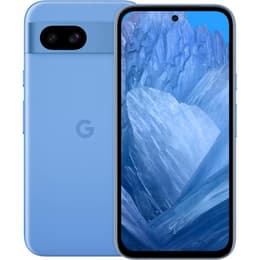
Google Pixel 8a
Google Pixel 8a
Starting at

Refurbished price:A$464.00

Versus A$938.69 new

See options
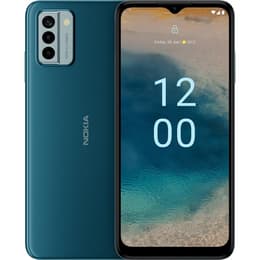
Nokia G22
Nokia G22
See options

The Google Pixel 8a (released May 2024) and the Nokia G22 (released February 2023) are both Android smartphones, yet they cater to different user priorities. The Pixel 8a emphasizes advanced software features, a vibrant display, and extended software support, while the Nokia G22 focuses on user repairability and a long-lasting battery. Both devices run on the Android operating system, offering access to a wide ecosystem of applications and services.

Scores

Durability

The longevity of a smartphone is influenced by its software support, physical durability, and ease of repair.

  • Software Updates: The Google Pixel 8a offers an extensive seven years of OS and security updates, ensuring the device remains current and secure until at least May 2031. In contrast, the Nokia G22 provides two major OS upgrades (up to Android 14) and three years of security updates, with support ending around April 2026.
  • Repairability: The Nokia G22 stands out with an 8 out of 10 repairability score, designed for users to easily replace components like the battery, screen, and charging port with readily available parts and guides from iFixit. The Pixel 8a, while part of a line generally rated higher for repairability than some competitors, has a lower individual repairability score of 4.5 out of 10 due to factors like strong adhesives and soldered components, making DIY repairs more challenging.
  • Physical Durability: The Pixel 8a features Corning Gorilla Glass 3 on its display and an IP67 rating for dust and water resistance, offering protection against immersion. The Nokia G22 also uses Corning Gorilla Glass 3 for screen protection and has an IP52 rating, indicating splash and dust resistance.

Release year

2024

2023

Compatible with latest Update

Yes

No

Operating system

Android

Android

Foldable

No

No

Performance

Performance differences between these two devices are notable, impacting how smoothly applications run and how efficiently tasks are handled.

  • Processing Power: The Google Pixel 8a is equipped with a more advanced processor, enabling it to handle demanding applications, complex multitasking, and graphics-intensive games with greater fluidity and responsiveness. Users generally report a snappy operation and smooth performance for daily use. The Nokia G22 utilizes a processor that is suitable for everyday tasks like browsing, social media, and light applications, but it may exhibit slower app loading and less fluid multitasking, with some users noting occasional lag.
  • Multitasking Capabilities: The Pixel 8a comes with 8GB of RAM, providing ample capacity for switching between multiple applications without significant slowdowns. The Nokia G22 typically offers 4GB or 6GB of RAM, which can be sufficient for moderate use but may lead to more frequent app reloads when many applications are open simultaneously.
  • Storage Options: The Pixel 8a offers internal storage options of 128GB or 256GB, which is not expandable. The Nokia G22 provides 64GB or 128GB of internal storage, with the added flexibility of expanding storage up to 2TB via a microSD card.

Memory (GB)

8 GB

4 GB

Screen quality

The visual experience on these smartphones differs significantly due to their display technologies and specifications.

  • Display Technology and Clarity: The Google Pixel 8a features a 6.1-inch OLED display with a Full HD+ resolution (2400 x 1080 pixels), delivering deep blacks, vibrant colors, and sharp image clarity. The Nokia G22 has a larger 6.5-inch IPS LCD panel with an HD+ resolution (1600 x 720 pixels), which provides good viewing angles but may not offer the same level of contrast or detail as an OLED screen.
  • Brightness and Refresh Rate: The Pixel 8a's display can reach a peak brightness of 2000 nits, making it highly visible even in bright outdoor conditions. It also supports a 120Hz refresh rate for smoother scrolling and more fluid animations. The Nokia G22 offers a typical brightness of 400 nits and a 90Hz refresh rate, which is an improvement over standard 60Hz displays but less bright and smooth than the Pixel 8a's screen.
  • Screen Size and Viewing: The Pixel 8a's 6.1-inch display offers a compact viewing experience, suitable for one-handed use. The Nokia G22's 6.5-inch display provides a larger canvas for media consumption and browsing, which some users may prefer for an immersive experience.

Resolution

1080 x 2400

720 x 1600

Screen type

OLED

IPS LCD

Audiovisual

The camera systems on these devices offer different capabilities for capturing photos and videos.

  • Rear Camera System: The Google Pixel 8a features a dual-camera setup with a 64 MP main sensor (f/1.9, with optical image stabilization) and a 13 MP ultrawide sensor (f/2.2, 120-degree field of view). The Nokia G22 comes with a triple-camera system, including a 50 MP main sensor (f/1.8), a 2 MP macro lens, and a 2 MP depth sensor.
  • Photography Performance: The Pixel 8a leverages Google's computational photography, known for producing detailed images with accurate colors and strong low-light performance, even with its dual-camera setup. The Nokia G22's camera performs well in good lighting conditions, but its low-light capabilities and overall image processing may not match the Pixel 8a's output.
  • Video Recording and Audio: The Pixel 8a supports 4K video recording at 30 or 60 frames per second, offering higher resolution and more detailed video capture. The Nokia G22 records video at 1080p resolution. Both phones include stereo speakers for media consumption, but the Pixel 8a generally offers a more refined audio experience. The Nokia G22 includes a 3.5mm headphone jack, which is absent on the Pixel 8a.

Main camera

64 megapixels

50 megapixels

Front camera

13 megapixels

8 megapixels

Miscellaneous

Beyond core specifications, several practical elements differentiate the user experience of these smartphones.

  • Connectivity and Ports: The Google Pixel 8a supports 5G connectivity, offering faster mobile data speeds where available, and uses a USB-C port for charging and data transfer. The Nokia G22 is limited to 4G connectivity but includes a 3.5mm headphone jack, a feature not present on the Pixel 8a. It also uses a USB-C port.
  • Biometric Security: The Pixel 8a features an in-display fingerprint sensor and face recognition for unlocking the device. Some users have reported mixed experiences with the in-display fingerprint sensor's reliability. The Nokia G22 uses a side-mounted fingerprint sensor, often integrated into the power button, and also offers face unlock.
  • Design and Handling: The Pixel 8a has a compact form factor, weighing 188g, with a plastic back and reinforced aluminum frame. The Nokia G22 is slightly larger and heavier at 196.2g, featuring a back cover made from 100% recycled plastic.

Weight

188 oz

196 oz

Screen size (in)

6.1

6.5

Network

5G

4G

SIM card

Physical SIM + eSIM

Dual Physical SIM

Carrier compatibility

Unlocked

Unlocked

User feedback for the Google Pixel 8a often praises its camera capabilities, smooth performance for daily tasks, and the long-term software support provided by Google. Common criticisms include mixed battery life experiences, slower charging speeds, and occasional reports of the device warming up during use. The Nokia G22 is frequently lauded for its user-friendly repairability, allowing owners to replace key components, and its potentially long battery life. However, users sometimes note its less powerful processor, which can lead to slower performance, and its more limited software update policy compared to the Pixel.

Users prioritizing a device with a highly capable camera, advanced software features, and an extended period of software updates will find the Google Pixel 8a well-suited to their needs. Its powerful processor and vibrant OLED display also make it a strong choice for those who engage in demanding applications or enjoy media consumption. Conversely, individuals who value the ability to perform their own repairs, prefer a larger screen, require expandable storage, or desire a traditional headphone jack may lean toward the Nokia G22. This device is also a practical option for those seeking a sustainable choice, especially when considering a quality-assured refurbished option, as its design supports a longer physical lifespan through repair. Ultimately, the decision rests on whether a premium software and camera experience or practical repairability and battery endurance are the primary considerations.

See all articles

Our recent comparisons