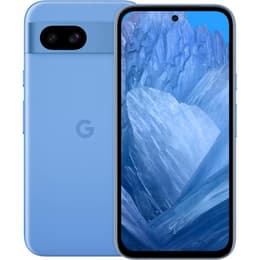
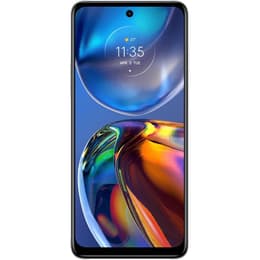

Google Pixel 8a vs Motorola Moto E32

Google Pixel 8a
Google Pixel 8a
Starting at

Refurbished price:A$464.00

Versus A$938.69 new

See options
Motorola Moto E32
Motorola Moto E32
See options

The Google Pixel 8A, released in May 2024, and the Motorola Moto E32, launched in May 2022, are both Android smartphones designed for different segments of the market. While the Pixel 8A offers a more advanced software experience and enhanced camera capabilities, the Moto E32 focuses on essential smartphone functions with a strong emphasis on battery longevity. Both devices run on the Android operating system, but they differ significantly in their update policies and overall feature sets.

Scores

Durability

The expected practical lifespan of a smartphone is influenced by its release timeline, software support, and physical resilience.

  • Software Longevity: The Google Pixel 8A stands out with a commitment to seven years of OS and security updates from its May 2024 release, ensuring extended software relevance and security. In contrast, the Motorola Moto E32, released in May 2022, launched with Android 11 and typically receives fewer major OS updates, limiting its long-term software support.
  • Physical Durability: The Pixel 8A features Corning Gorilla Glass 3 for screen protection and an IP67 rating for dust and water resistance, allowing submersion up to 1 meter for 30 minutes. The Moto E32 offers a water-repellent design with an IP52 rating, providing protection against splashes and dust, and some sources mention Panda Glass or Gorilla Glass for screen protection.
  • Repairability: The Pixel 8A is designed to be repairable, with genuine replacement parts available from third-party providers. Information on the repairability of the Moto E32 is less prominent, suggesting a more standard approach to repairs.

Release year

2024

2022

Compatible with latest Update

Yes

No

Operating system

Android

Android

Foldable

No

No

Performance

Performance in daily use is a key differentiator, impacting how smoothly applications run and how efficiently tasks are handled.

  • System Responsiveness: The Pixel 8A delivers a snappy and smooth user experience, handling demanding applications and multitasking with ease. Its processing power ensures quick app loading and fluid navigation. The Moto E32 provides sufficient performance for basic day-to-day tasks, but users may notice slower app loading and less fluid multitasking, especially with more intensive applications.
  • Battery Behavior: The Pixel 8A, equipped with a 4492mAh battery, is designed to comfortably last a full day for most users, with some reports indicating up to 35 hours of use with moderate screen-on time. The Moto E32 features a larger 5000mAh battery, often praised for its extended endurance, capable of lasting two to three days with light usage or a full day under heavier loads. Both support wired charging, with the Pixel 8A at 18W and the Moto E32 at 18W (some sources mention 10W). The Pixel 8A also supports 7.5W wireless charging.
  • Storage and Multitasking: The Pixel 8A offers 8GB of RAM and internal storage options of 128GB or 256GB, which is not expandable. This ample RAM contributes to its strong multitasking capabilities. The Moto E32 comes with 4GB of RAM and 64GB of internal storage, which can be expanded up to 1TB via a microSD card, offering flexibility for users who need more space for media and files.

Memory (GB)

8 GB

4 GB

Screen quality

The visual experience is largely defined by the display technology, resolution, and refresh rate of each device.

  • Display Technology and Clarity: The Pixel 8A features a 6.1-inch OLED display, providing deep blacks, vibrant colors, and excellent contrast with a resolution of 1080x2400 pixels (FHD+). The Moto E32 has a larger 6.5-inch IPS LCD screen with a resolution of 720x1600 pixels (HD+), offering a clear viewing experience suitable for everyday content consumption.
  • Brightness and Outdoor Visibility: The Pixel 8A's display can reach a peak brightness of 2000 nits (1400 nits HDR), making it easily visible even in bright outdoor conditions. The Moto E32's display offers a peak brightness of 500 nits, which is adequate for indoor use and most outdoor scenarios, though it may struggle in direct sunlight compared to the Pixel 8A.
  • Refresh Rate and Smoothness: The Pixel 8A boasts an adaptive refresh rate of 60-120Hz, resulting in very smooth scrolling and animations. The Moto E32 features a 90Hz refresh rate, which provides a noticeably smoother experience than standard 60Hz displays, enhancing general navigation and media playback.

Resolution

1080 x 2400

720 x 1600

Screen type

OLED

IPS LCD

Audiovisual

Camera capabilities are a significant factor for many users, influencing the quality of photos and videos captured.

  • Rear Camera System: The Pixel 8A features a dual-camera setup with a 64MP main sensor (with optical and electronic image stabilization) and a 13MP ultrawide lens. The Moto E32 typically comes with a triple-camera system, including a 16MP main sensor, a 2MP macro lens, and a 2MP depth sensor. Some regional variants of the Moto E32 may feature a 50MP main camera.
  • Photography Performance: The Pixel 8A is known for its strong computational photography, delivering consistently good point-and-shoot photos with balanced colors and effective low-light performance. It also includes AI-powered editing features like Magic Editor and Best Take. The Moto E32's camera system is suitable for everyday photography in good lighting conditions, offering decent results for its category, but it may not match the detail or low-light capabilities of the Pixel 8A.
  • Video Recording and Audio: The Pixel 8A supports 4K video recording at up to 60 frames per second, providing detailed and stable video capture. Its microphone quality is generally good for calls and recordings. The Moto E32 records video at 1080p at 30 frames per second. Both devices offer a loudspeaker experience, with the Pixel 8A featuring stereo speakers for a more immersive media consumption experience, while the Moto E32 typically has a single mono speaker.

Main camera

64 megapixels

16 megapixels

Front camera

13 megapixels

8 megapixels

Miscellaneous

Beyond core features, several practical elements contribute to the overall user experience and device utility.

  • Connectivity and Ports: The Pixel 8A supports 5G connectivity, Wi-Fi 6E, and Bluetooth 5.3, offering fast and modern wireless options. It features a USB-C port but lacks a 3.5mm headphone jack. The Moto E32 supports 4G LTE, Wi-Fi (802.11 b/g/n), and Bluetooth 5.0. It includes a USB-C port and retains a 3.5mm headphone jack, which can be convenient for wired audio accessories. Neither device supports NFC for contactless payments in all regions.
  • Biometric Security: The Pixel 8A incorporates an in-display fingerprint sensor and supports face unlock for convenient and secure access. The Moto E32 features a side-mounted fingerprint sensor and also offers face unlock.
  • Design and Handling: The Pixel 8A has dimensions of 152.1 x 72.7 x 8.9 mm and weighs 188g, featuring a plastic back with a recycled aluminum frame. Its more rounded corners contribute to a comfortable in-hand feel. The Moto E32 measures 164 x 75 x 8.5 mm and weighs 184g, with a glass front, plastic frame, and plastic back, offering a slim and manageable design.

Weight

188 oz

184 oz

Screen size (in)

6.1

6,5

Network

5G

4G

SIM card

Physical SIM + eSIM

Dual Physical SIM

Carrier compatibility

Unlocked

Unlocked

User feedback for the Google Pixel 8A frequently praises its exceptional camera performance, the long-term software support, and the integration of advanced AI features, making it a strong contender for those prioritizing a smart and capable device. Some common criticisms include its plastic back, the presence of noticeable bezels, and its IP67 water resistance rating being slightly lower than some premium alternatives.

For the Motorola Moto E32, users often highlight its impressive battery life, the inclusion of a 90Hz display at its segment, and a generally clean Android user interface as positive aspects. Conversely, frequent concerns revolve around its more modest processing power, which can lead to slower app performance, and the fact that it launched with an older Android version with limited update prospects.

Users prioritizing a device with a leading camera, extensive software support, and advanced AI capabilities will find the Google Pixel 8A well-suited to their needs. Its vibrant OLED display and smooth performance cater to those who engage with demanding applications and media. On the other hand, users who value extended battery life, expandable storage, and a straightforward smartphone experience for essential tasks may lean toward the Motorola Moto E32. Its larger screen and traditional headphone jack also appeal to those with specific media consumption habits.

Both devices offer distinct advantages, and considering a quality-assured refurbished option for either model can provide an eco-friendly alternative for consumers seeking to make informed and sustainable choices.


See all articles

Our recent comparisons