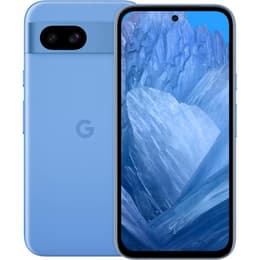
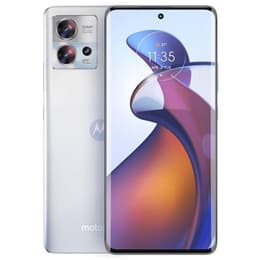

Google Pixel 8a vs Motorola Edge 30 Fusion

Google Pixel 8a
Google Pixel 8a
Starting at

Refurbished price:A$464.00

Versus A$938.69 new

See options
Motorola Edge 30 Fusion
Starting at

Refurbished price:A$257.46

Versus A$1,352.00 new

See options

The Google Pixel 8A, released in May 2024, and the Motorola Edge 30 Fusion, launched in September 2022, are both Android smartphones offering distinct experiences. While the Pixel 8A focuses on extended software support and advanced computational photography, the Edge 30 Fusion prioritizes a sleek design and a high refresh rate display. Both devices aim to provide a capable smartphone experience, but they cater to slightly different user preferences through their core features and design philosophies.

Scores

Durability

When considering the long-term usability of these devices, their release timelines and software support policies are key differentiators. The Google Pixel 8A, being a newer device, benefits from a significantly longer commitment to software updates, while the Motorola Edge 30 Fusion, released earlier, has a more traditional update cycle.

  • Software Longevity: The Google Pixel 8A is set to receive seven years of OS and security updates, extending its support until 2031. This provides an extended period of access to the latest Android features and security patches. In contrast, the Motorola Edge 30 Fusion, launched with Android 12, typically receives fewer major OS updates, meaning its software support will conclude sooner.
  • Physical Durability: The Pixel 8A features Corning Gorilla Glass 3 for screen protection and an IP67 rating for dust and water resistance, indicating good protection against immersion. The Motorola Edge 30 Fusion uses Corning Gorilla Glass 5 for its display and has an IP52 rating, offering basic splash and dust protection. The Edge 30 Fusion also incorporates an aluminum frame and glass back, contributing to its build quality.
  • Expected Lifespan: Users prioritizing the longest possible software support and security updates will find the Pixel 8A's extended commitment appealing. For those who upgrade more frequently or value a premium build with moderate software support, the Edge 30 Fusion remains a viable option.

Release year

2024

2022

Compatible with latest Update

Yes

Yes

Operating system

Android

Android

Foldable

No

No

Performance

Both smartphones deliver responsive performance for daily tasks, but they achieve this through different internal components, impacting how they handle demanding applications and multitasking.

  • Processing Power: The Google Pixel 8A is equipped with a current-generation processor designed by Google, which enables smooth navigation, efficient handling of multiple applications, and powers its advanced AI features. The Motorola Edge 30 Fusion utilizes a powerful processor from a previous generation, which still provides a fluid user experience for most applications and gaming.
  • Multitasking and Storage: Both devices typically come with 8GB of RAM, allowing for effective multitasking and app switching. The Pixel 8A offers storage options of 128GB or 256GB, with the larger capacity available in specific color variants. The Edge 30 Fusion provides more varied storage configurations, including 128GB, 256GB, and 512GB, utilizing UFS 3.1 storage for faster data access.
  • Battery Behavior: The Pixel 8A has a 4492 mAh battery, generally providing a full day of use for many users, with some reporting 7-9 hours of screen-on time depending on usage. The Edge 30 Fusion features a 4400 mAh battery, which also typically lasts through a moderate to heavy day of use, with some users reporting around 9 hours of screen-on time. The Edge 30 Fusion supports significantly faster wired charging at 68W, while the Pixel 8A supports 18W wired charging and 7.5W wireless charging.

Memory (GB)

8 GB

8 GB

Screen quality

The visual experience on both smartphones is delivered through vibrant OLED displays, though they differ in size, refresh rate capabilities, and peak brightness levels.

  • Display Technology and Clarity: Both the Pixel 8A and the Edge 30 Fusion feature OLED displays, known for deep blacks and vibrant colors. The Pixel 8A has a 6.1-inch OLED screen with a 2400x1080 pixel resolution, resulting in sharp images and text. The Edge 30 Fusion offers a slightly larger 6.55-inch pOLED display with the same 2400x1080 pixel resolution, providing an expansive viewing area.
  • Smoothness and Brightness: The Pixel 8A offers a dynamic 120Hz refresh rate, contributing to smooth scrolling and fluid animations. It can reach a peak brightness of up to 2000 nits, making it highly visible in bright outdoor conditions. The Edge 30 Fusion boasts an even higher 144Hz refresh rate, providing an exceptionally smooth visual experience. Its peak brightness is rated at up to 1100 nits, which is also suitable for outdoor use.
  • Design and Viewing: The Edge 30 Fusion features a curved display, which can offer an immersive viewing experience and contribute to a sleek aesthetic. The Pixel 8A has a flat display with slightly more noticeable bezels compared to some premium devices, but it remains a comfortable size for one-handed use.

Resolution

1080 x 2400

1080 x 2400

Screen type

OLED

P-OLED

Audiovisual

Both smartphones offer capable camera systems, but they approach photography with different strengths, particularly in terms of hardware configuration and software processing.

  • Rear Camera Systems: The Google Pixel 8A features a dual-camera setup with a 64MP main sensor (f/1.9 with OIS) and a 13MP ultrawide sensor (f/2.2 with a 120-degree field of view). It is well-regarded for its computational photography, producing natural colors and good dynamic range in various lighting conditions. The Motorola Edge 30 Fusion has a triple-camera system, including a 50MP main sensor (f/1.8 with OIS), a 13MP ultrawide sensor with macro capabilities, and a 2MP depth sensor. Its primary camera delivers solid performance, including good low-light results.
  • Front Camera and Video: For selfies, the Pixel 8A includes a 13MP ultrawide front camera. The Edge 30 Fusion offers a higher resolution 32MP front camera. Both devices are capable of recording 4K video, with the Edge 30 Fusion also supporting 8K video recording. The Pixel 8A's video stabilization is generally effective, though some users note a slightly artificial look compared to some competitors. The Edge 30 Fusion also provides good video stabilization.
  • Photography Experience: The Pixel 8A excels in consistent image quality across its lenses and benefits from Google's AI-powered features for photo editing. The Edge 30 Fusion offers a versatile camera setup with a dedicated macro option, though its image processing can sometimes be less natural than the Pixel.

Main camera

64 megapixels

50 megapixels

Front camera

13 megapixels

32 megapixels

Miscellaneous

Beyond core performance and display, several practical elements contribute to the overall user experience, including connectivity, physical design, and security features.

  • Connectivity and Ports: Both smartphones support 5G connectivity for fast mobile data. The Pixel 8A offers dual SIM functionality via a physical nano-SIM and an eSIM. The Edge 30 Fusion also supports dual nano-SIMs. Both devices utilize a USB-C port for charging and data transfer, but neither includes a traditional 3.5mm headphone jack.
  • Security and Audio: For biometric security, both phones feature in-display fingerprint sensors. The Pixel 8A and Edge 30 Fusion both come with stereo speakers, enhancing the audio experience for media consumption. The Edge 30 Fusion further benefits from Dolby Atmos support for an immersive sound profile.
  • Design and Handling: The Pixel 8A measures 152.1 x 72.7 x 8.9mm and weighs 188g, featuring a plastic back and rounded edges for a comfortable grip. The Edge 30 Fusion is slightly larger and thinner at 158.48 x 71.99 x 7.45mm and lighter at 175g, with an aluminum frame and glass back, giving it a more premium feel.

Weight

188 oz

168 oz

Screen size (in)

6.1

6,55

Network

5G

5G

SIM card

Physical SIM + eSIM

Dual Physical SIM

Carrier compatibility

Unlocked

Unlocked

The Google Pixel 8A and Motorola Edge 30 Fusion each present a compelling package, tailored to different user priorities. User feedback for the Pixel 8A often highlights its exceptional camera performance, consistent software experience, and the significant commitment to long-term updates. Many appreciate its compact size and the integration of Google's AI features. Some common criticisms include its charging speed and the presence of noticeable bezels around the display.

The Motorola Edge 30 Fusion is frequently praised for its sleek design, vibrant high refresh rate display, and fast wired charging capabilities. Users often commend its overall performance for daily tasks and gaming. However, some users have noted that its battery life, while generally good, might not consistently extend beyond a single day for heavy use, and its software update policy is not as extensive as the Pixel 8A's.

Users prioritizing an extended software lifespan, cutting-edge computational photography, and a compact form factor will find the Google Pixel 8A well-suited to their needs. Its long-term update promise makes it a sustainable choice for those who keep their devices for many years. Conversely, individuals who value a larger, curved display with a very high refresh rate, faster charging, and a more premium physical design might lean towards the Motorola Edge 30 Fusion. Both devices offer a quality-assured refurbished option, providing an eco-friendly alternative for consumers looking to make informed and sustainable choices.

See all articles

Our recent comparisons