
Google Pixel 8 vs Motorola Razr 40 Ultra

Google Pixel 8
Google Pixel 8
Starting at

Refurbished price:A$463.00

Versus A$1,245.00 new

See options
Motorola Razr 40 Ultra
See options

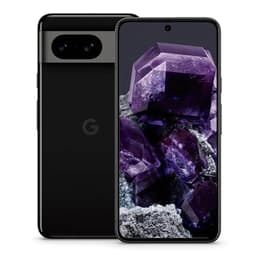
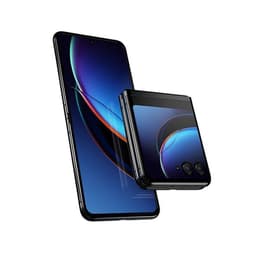
The Google Pixel 8 (released in October 2023) and the Motorola Razr 40 Ultra (released in June 2023) represent distinct approaches to modern smartphones. The Pixel 8 offers a traditional slab design with a strong focus on computational photography and long-term software support, running on Android. In contrast, the Razr 40 Ultra is a clamshell foldable device, prioritizing a compact form factor and a highly functional external display, also running on Android.

Scores

Durability

When considering the long-term usability of these devices, their release timelines and software support policies are key differentiators.

  • Software Longevity: The Google Pixel 8 offers an extensive seven years of OS, security, and Feature Drop updates, ensuring support until at least October 2030. This commitment provides a longer period of access to the latest Android features and security protections. The Motorola Razr 40 Ultra, on the other hand, is expected to receive three major Android OS upgrades and four years of bi-monthly security updates, typically extending its support to Android 16.
  • Physical Durability: The Pixel 8 features an IP68 rating for dust and water resistance, offering robust protection against environmental elements. Its repairability has been rated around 6-7 out of 10 by experts, indicating a moderate ease of repair for components like the screen, though battery replacement can be more challenging due to adhesives. The Razr 40 Ultra has an IP52 rating, making it splash-proof but not fully water-resistant. As a foldable, it introduces unique durability considerations, such as the resilience of the folding screen and its pre-installed screen protector, which some users report can develop hairline cracks over time.
  • Expected Lifespan: Users seeking the longest possible software support and robust environmental protection will find the Pixel 8 a more suitable option. The Razr 40 Ultra, while offering a unique form factor, has a shorter software support window and inherent durability considerations related to its foldable design.

Release year

2023

2023

Compatible with latest Update

Yes

Yes

Operating system

Android

Android

Foldable

No

Yes

Performance

The performance of both devices is tailored to their respective designs and user experiences, with different underlying hardware driving their capabilities.

  • Processing Power: The Google Pixel 8 is powered by a current-generation processor designed for efficiency and advanced artificial intelligence tasks, which contributes to smooth operation and responsive handling of demanding applications. The Motorola Razr 40 Ultra utilizes a processor known for strong performance in its release year, capable of handling everyday tasks and multitasking effectively.
  • Multitasking and Storage: Both devices typically offer 8GB of RAM, which is sufficient for most multitasking needs, allowing users to switch between applications without significant slowdowns. The Pixel 8 comes with 128GB or 256GB of storage, while the Razr 40 Ultra offers 256GB or 512GB options, providing ample space for apps, photos, and media.
  • Battery Behavior: The Pixel 8 features a 4575mAh battery, generally providing all-day power for moderate use, though heavy usage, especially with camera or navigation, may require a mid-day recharge. The Razr 40 Ultra has a 3800mAh battery, which, for a foldable, is noted by users to offer good all-day performance, particularly when utilizing its external display to reduce main screen usage.

Memory (GB)

8 GB

8 GB

Screen quality

The display experience on these two smartphones differs significantly due to their fundamental design philosophies.

  • Display Technology and Size: The Google Pixel 8 features a 6.2-inch OLED display, offering deep blacks and vibrant colors in a traditional smartphone form factor. The Motorola Razr 40 Ultra boasts a larger 6.9-inch pOLED main foldable display, providing an expansive viewing area when unfolded. Additionally, it features a highly functional 3.6-inch pOLED external display, which allows for interaction without opening the phone.
  • Resolution and Brightness: Both devices offer Full HD+ resolution, ensuring sharp and clear visuals for everyday content consumption. The Pixel 8's display can reach a peak brightness of 2000 nits, making it highly visible even in bright outdoor conditions. The Razr 40 Ultra's main display reaches a peak brightness of 1400 nits, which is also suitable for outdoor use.
  • Refresh Rate and Smoothness: The Pixel 8 features a variable refresh rate between 60Hz and 120Hz, contributing to smooth scrolling and a responsive user interface. The Razr 40 Ultra's main display offers an even higher refresh rate of up to 165Hz, providing an exceptionally fluid visual experience, especially noticeable in fast-paced content or gaming. Its external display also supports a high refresh rate of 144Hz.

Resolution

1080 x 2400

1080 x 2640

Screen type

OLED

Foldable LTPO AMOLED

Audiovisual

Both the Google Pixel 8 and the Motorola Razr 40 Ultra offer capable camera systems, though with different strengths and focuses.

  • Rear Camera System: The Google Pixel 8 features a dual-camera setup with a 50-megapixel main sensor and a 12-megapixel ultrawide sensor. It is known for its computational photography, delivering consistent, detailed photos with excellent dynamic range and color accuracy, particularly in various lighting conditions. The Motorola Razr 40 Ultra also has a dual rear camera system, comprising a 12-megapixel main sensor with a wide aperture and a 13-megapixel ultrawide sensor. Its main camera performs reasonably well for everyday shots, though its ultrawide lens offers a less expansive field of view compared to some competitors.
  • Photography Performance: The Pixel 8 excels in producing high-quality images straight out of the camera, with AI enhancements like Magic Eraser and improved low-light performance. While the Razr 40 Ultra's camera is competent for casual photography, it is generally not considered to be in the same class as traditional flagship smartphones for overall image quality, especially in challenging conditions.
  • Video and Selfie Capabilities: Both devices support 4K video recording. The Pixel 8 offers good video quality in well-lit environments, though low-light video can be a weaker point. Its front camera is 10.5-megapixel. The Razr 40 Ultra's 32-megapixel front camera is high-resolution, and its unique foldable design allows users to utilize the main rear cameras for high-quality selfies and vlogging, using the external display as a viewfinder.

Main camera

50 megapixels

12 megapixels

Front camera

10.5 megapixels

32 megapixels

Miscellaneous

Beyond core features, several practical elements contribute to the overall user experience of these devices.

  • Connectivity and Ports: Both smartphones support 5G connectivity for fast mobile data. The Pixel 8 includes Wi-Fi 7 and Bluetooth 5.3, along with a USB 3.2 Type-C port. The Razr 40 Ultra supports Wi-Fi 6 (ax) and Bluetooth 5.2, featuring a USB 2.0 Type-C port.
  • Biometric Security: The Pixel 8 offers an in-display fingerprint scanner and facial recognition for secure unlocking. The Razr 40 Ultra integrates a fingerprint reader into its power button and also supports facial recognition.
  • Design and Handling: The Pixel 8 is a compact and relatively lightweight slab phone, measuring 150.5 x 70.8 x 8.9mm and weighing 187 grams, making it comfortable for one-handed use. The Razr 40 Ultra's foldable design means it is compact when closed (88.42 x 73.95 x 15.1mm) and expands to a slim profile when open (170.83 x 73.95 x 6.99mm), weighing 188 grams. Its unique form factor allows it to fit into smaller pockets and offers a distinct tactile experience.

Weight

187 oz

1 oz

Screen size (in)

6.2

6.9

Network

5G

5G

SIM card

Physical SIM + eSIM

Dual Physical SIM

Carrier compatibility

Unlocked

Unlocked

The Google Pixel 8 and Motorola Razr 40 Ultra cater to different user preferences, each excelling in specific areas based on their design and feature sets.

Users frequently praise the Google Pixel 8 for its exceptional camera performance, consistently delivering high-quality photos with advanced computational photography and AI features. Its long-term software support, extending for seven years, is also a significant advantage, ensuring prolonged access to updates and security. However, some users have reported concerns regarding battery life under heavy usage, occasional heating, and software glitches.

The Motorola Razr 40 Ultra is widely acclaimed for its innovative foldable design and highly functional external display, which allows for significant interaction without opening the device. Its compact form factor when folded is a major draw for those prioritizing portability. User feedback often highlights the clean Android experience and the main display's high refresh rate. Criticisms sometimes point to the camera system not matching the performance of traditional flagships, potential durability concerns with the folding screen's protector, and occasional software lag or overheating.

Users prioritizing a top-tier camera experience, extended software longevity, and a robust, traditional smartphone design will find the Google Pixel 8 well-suited to their needs. Conversely, individuals who value a unique, compact, and stylish foldable form factor with a highly interactive external display may lean towards the Motorola Razr 40 Ultra. Both devices offer quality-assured refurbished options, providing an eco-friendly alternative for consumers.

See all articles

Our recent comparisons