

Compare models
Google Pixel 8 vs Google Pixel 9 Pro
- 1-year warranty
- Free standard shipping
- Free 30-day returns
Differences at a glance
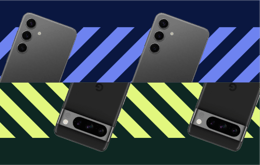
The Google Pixel 8 (2023) and Google Pixel 9 Pro (2024) represent two successive generations of Google's flagship smartphone ecosystem. While both devices deliver clean software experiences and polished hardware designs, the Pixel 9 Pro introduces a refined chassis, expanded memory capacity, and an extra telephoto camera lens that separates it from the standard Pixel 8.
Both smartphones run on the Android operating system with identical update timelines promised by the manufacturer, ensuring a consistent software environment across both models.
Available Models
Colour
Storage
Scores
Durability
When evaluating structural longevity and software support, both devices share identical long-term manufacturer commitments while differing slightly in physical build materials and launch timelines.
- Software Support Duration: Both models benefit from Google's extended update policy, providing seven years of full operating system upgrades, security patches, and feature drops from their respective release dates.
- Build and Repairability: The Pixel 8 utilizes Gorilla Glass Victus front and back panels, while the Pixel 9 Pro upgrades to Gorilla Glass Victus 2 for improved drop resistance, though both maintain standard industry repair scores and robust IP68 dust and water resistance ratings.
- Expected Lifespan: Thanks to identical software longevity commitments, both smartphones are well-equipped to remain secure and functional for many years of daily use.
Release year
2023
2024
Compatible with latest Update
Yes
Yes
Operating system
Android
Android
Foldable
No
No
Performance
Underneath the exterior, these devices handle everyday tasks and demanding software differently due to variations in internal hardware configurations and memory allocation.
- Multitasking and Memory: The Pixel 8 features 8GB of RAM, handling standard multi-app workflows reliably, whereas the Pixel 9 Pro doubles this capacity to 16GB, providing additional headroom for heavy background tasks and complex on-device processing.
- System Responsiveness: Both devices load everyday applications and transition between menus smoothly, though the newer processor generation in the Pixel 9 Pro yields shorter loading times in graphics-heavy games and demanding creative software.
- Battery Behavior: The Pixel 8 relies on a 4,575 mAh battery, while the Pixel 9 Pro houses a slightly larger 4,700 mAh cell, with both units comfortably sustaining standard daily use patterns before requiring a recharge.
Screen quality
Display engineering has progressed across these generations, offering variations in peak brightness, panel efficiency, and physical dimensions for media consumption.
- Display Technology: Both models utilize vibrant OLED panels with adaptive refresh rates scaling up to 120Hz, ensuring fluid scrolling through web pages and smooth animation rendering.
- Brightness and Outdoors: The Pixel 9 Pro achieves a higher peak outdoor brightness level compared to the Pixel 8, making text and images slightly more legible under direct sunlight.
- Size and Viewing Experience: The Pixel 8 features a compact 6.2-inch screen suited for single-handed navigation, while the Pixel 9 Pro offers a slightly larger 6.3-inch display with a denser resolution layout for sharper detail reproduction during video playback.
Resolution
1080 x 2400
1280x2856
Screen type
OLED
LTPO OLED
Audiovisual
Imaging capabilities represent one of the most distinct practical differences between these two models, particularly regarding zoom versatility and secondary sensor hardware.
- Camera Systems: The Pixel 8 features a dual-camera layout with a primary wide lens and an autofocus-enabled ultrawide lens, whereas the Pixel 9 Pro incorporates a versatile triple-camera array adding a dedicated telephoto lens with optical zoom capabilities.
- Photography and Video: Both phones capture clear everyday snapshots and reliable low-light images using image processing software, but the Pixel 9 Pro excels at distant subjects due to its optical zoom hardware.
- Media and Audio: Both models deliver clear stereo speaker output for podcasts and videos, alongside sensitive microphone arrays that capture clean audio during voice calls and video recordings.
Main camera
50 megapixels
50 megapixels
Front camera
10.5 megapixels
42 megapixels
Miscellaneous
Practical daily usability elements, including physical dimensions, biometric sensors, and connectivity standards, shape how each device feels in everyday handling.
- Handling and Dimensions: The Pixel 8 is lighter and more compact at 187 grams, while the Pixel 9 Pro weighs 199 grams and features flatter side rails that change the tactile grip in hand.
- Biometric Security: Both smartphones feature responsive in-display fingerprint sensors alongside reliable facial recognition technology for secure device unlocking.
- Connectivity: Both models support modern 5G networks, fast Wi-Fi standards, and Bluetooth, ensuring stable wireless connections for accessories and data transfer.
Weight
187 oz
199 oz
Screen size (in)
6.2
6.3
Network
5G
5G
SIM card
Physical SIM + eSIM
Physical SIM + eSIM
Carrier compatibility
Unlocked
Unlocked
What the community thinks
User discussions across community forums frequently praise the Google Pixel 8 for its lightweight footprint, highly manageable screen size, and reliable everyday performance that fulfills standard communication and browsing needs without unnecessary complexity. At the same time, contributors frequently highlight the Pixel 9 Pro for its expanded memory headroom, brighter display panel, and versatile zoom lens configuration that accommodates more advanced photography workflows.
Users prioritizing a lightweight, pocket-friendly device for everyday communication will find the Pixel 8 well-suited to their daily habits. Conversely, users prioritizing advanced camera zoom capabilities, higher multitasking capacity, and maximum screen brightness will lean toward the Pixel 9 Pro. For those seeking an eco-friendly, quality-assured alternative, opting for a quality-assured refurbished option through Back Market allows consumers to acquire either of these capable devices while supporting sustainable technology consumption.
Ultimately, both smartphones offer robust software longevity and consistent operating system experiences, leaving the final choice dependent entirely on individual hardware preferences and specific daily use requirements.