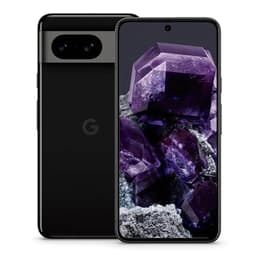
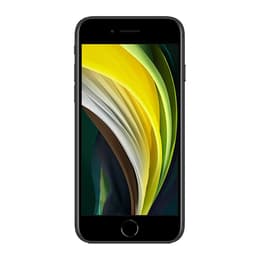

Google Pixel 8 vs iPhone SE (2020)

Google Pixel 8
Google Pixel 8
Starting at

Refurbished price:A$463.00

Versus A$1,245.00 new

See options
iPhone SE (2020)
iPhone SE (2020)
Starting at

Refurbished price:A$162.00

Versus A$529.00 new

See options

Ratings

The Google Pixel 8, released in October 2023, and the iPhone SE 2020, launched in April 2020, represent distinct approaches to smartphone design and functionality. While both devices offer a capable smartphone experience, they differ significantly in their operating systems, display technologies, and overall feature sets. The Pixel 8 runs on the Android platform, emphasizing advanced computational photography and a modern, full-screen design, whereas the iPhone SE 2020 operates on iOS, retaining a classic iPhone aesthetic with a physical home button.

Scores

Durability

The practical lifespan of a smartphone is heavily influenced by its release timeline and the duration of software support it receives.

  • Software Longevity: The Google Pixel 8, launched in October 2023, benefits from a commitment of seven years of OS and security updates, extending its software support until at least October 2030. This provides a significantly longer period of guaranteed updates compared to the iPhone SE 2020, which was released in April 2020 and typically receives iOS updates for about five to six years from its launch, likely concluding around 2025 or 2026.
  • Physical Durability: The Pixel 8 features Gorilla Glass Victus 2 on both its front and back, coupled with an aluminum frame and an IP68 rating for dust and water resistance, allowing submersion up to 1.5 meters for 30 minutes. The iPhone SE 2020 also uses glass on its front and back with an aluminum frame and carries an IP67 rating, protecting against dust and water immersion up to 1 meter for 30 minutes.
  • Repairability: While specific repairability scores can vary, both devices are designed with modern smartphone construction, meaning professional repair is generally recommended for significant damage. The longer software support of the Pixel 8 suggests a longer period during which the device will remain fully functional and secure.

Release year

2023

2020

Compatible with latest Update

Yes

Yes

Operating system

Android

iOS

Foldable

No

No

Performance

Performance in daily use is a key differentiator, impacting how smoothly applications run and how efficiently the device handles various tasks.

  • Processing Power: The Google Pixel 8 is equipped with a current-generation processor that handles demanding applications, complex multitasking, and graphics-intensive gaming with notable fluidity and responsiveness. The iPhone SE 2020, while featuring an older generation processor, still delivers a smooth experience for everyday tasks, general app usage, and casual gaming.
  • Multitasking and Storage: The Pixel 8 typically comes with 8GB of RAM, contributing to seamless multitasking and quick app switching. It offers storage options of 128GB or 256GB. The iPhone SE 2020 includes 3GB of RAM, which is sufficient for most users' multitasking needs, and is available with 64GB, 128GB, or 256GB of internal storage.
  • Battery Behavior: The Pixel 8 houses a 4575 mAh battery, which generally provides a full day of use for most users, though heavy usage might require a mid-day top-up. The iPhone SE 2020 has a smaller 1821 mAh battery, which often necessitates more frequent charging, especially for users who engage in extensive media consumption or gaming.

Memory (GB)

8 GB

3 GB

Screen quality

The display is the primary interface for smartphone interaction, and there are significant differences in the visual experience offered by these two models.

  • Display Technology and Size: The Google Pixel 8 features a 6.2-inch Actua OLED display, offering deep blacks, vibrant colors, and excellent contrast. In contrast, the iPhone SE 2020 comes with a smaller 4.7-inch Retina IPS LCD, which provides good color accuracy but cannot match the contrast levels of an OLED panel.
  • Resolution and Brightness: The Pixel 8 has a resolution of 1080 x 2400 pixels, resulting in sharp images and text, and can reach a peak brightness of up to 2000 nits, making it highly visible even in bright outdoor conditions. The iPhone SE 2020 has a resolution of 750 x 1334 pixels and a typical maximum brightness of 625 nits, which is adequate for most indoor and moderate outdoor use.
  • Refresh Rate: The Pixel 8 offers an adaptive refresh rate that can go up to 120Hz, providing a smoother scrolling experience and more fluid animations. The iPhone SE 2020 has a standard 60Hz refresh rate, which is consistent but less fluid than higher refresh rate displays.

Resolution

1080 x 2400

750 x 1334

Screen type

OLED

Retina IPS LCD

Audiovisual

Camera capabilities are a major consideration for many users, and both devices offer distinct photographic strengths.

  • Rear Camera System: The Google Pixel 8 features a dual-camera setup, including a 50MP main sensor with optical image stabilization (OIS) and a 12MP ultrawide lens with autofocus. This system excels in computational photography, delivering detailed images with strong low-light performance and advanced features. The iPhone SE 2020 has a single 12MP main camera with OIS, which is known for its reliable performance in good lighting and its ability to produce pleasing photos with Apple's image processing, including Portrait Mode for subjects.
  • Video Recording: Both smartphones are capable of recording 4K video at up to 60 frames per second, offering high-quality video capture. The Pixel 8 benefits from advanced video stabilization and features like Audio Magic Eraser for clearer audio. The iPhone SE 2020 also provides good video quality with cinematic video stabilization.
  • Front Camera and Audio: The Pixel 8 includes a 10.5MP front camera, suitable for clear selfies and video calls. The iPhone SE 2020 has a 7MP front camera that supports Portrait Mode. Both devices offer stereo speakers for an enhanced audio experience during media consumption.

Main camera

50 megapixels

12 megapixels

Front camera

10.5 megapixels

7 megapixels

Miscellaneous

Beyond core features, several practical elements contribute to the overall user experience and device utility.

  • Connectivity and Ports: The Google Pixel 8 supports 5G connectivity, Wi-Fi 7, and Bluetooth 5.3, offering faster wireless speeds and more efficient connections. It uses a USB-C 3.2 port for charging and data transfer. The iPhone SE 2020 supports 4G LTE, Wi-Fi 6, and Bluetooth 5.0, and features Apple's proprietary Lightning port.
  • Biometric Security: The Pixel 8 incorporates an under-display optical fingerprint sensor and Face Unlock for secure authentication. The iPhone SE 2020 relies on Touch ID, a front-mounted fingerprint sensor integrated into its physical home button.
  • Design and Handling: The Pixel 8 has a modern, nearly bezel-less design, measuring 150.5 x 70.8 x 8.9 mm and weighing 187g. The iPhone SE 2020 features a more compact and traditional design with larger bezels, measuring 138.4 x 67.3 x 7.3 mm and weighing 148g, making it lighter and easier for one-handed use for some users.

Weight

187 oz

148 oz

Screen size (in)

6.2

4.7

Network

5G

4G

SIM card

Physical SIM + eSIM

Physical SIM + eSIM

Carrier compatibility

Unlocked

Unlocked

Connector

USB-C

Lightning

The Google Pixel 8 and iPhone SE 2020 cater to different user preferences, reflecting their respective release timelines and design philosophies. The Pixel 8 is frequently praised for its exceptional camera capabilities, particularly its computational photography features, and its commitment to an extended period of software updates. Users also appreciate its vibrant, high-refresh-rate display and the clean Android experience. Some common criticisms, however, include reports of average battery life for heavy users and its larger form factor compared to more compact alternatives.

Conversely, the iPhone SE 2020 is often lauded for its compact size, making it a preferred choice for those who favor smaller devices and easy one-handed operation. Its familiar design, including the physical home button with Touch ID, appeals to users accustomed to older iPhone models. While its performance remains capable for most daily tasks, frequent criticisms revolve around its dated design, the limitations of its LCD screen compared to modern OLED panels, and its smaller battery capacity, which often requires more frequent charging.

Users prioritizing a cutting-edge camera system, a modern display with a high refresh rate, and the longest possible software support will find the Google Pixel 8 well-suited to their needs. Those who prefer a compact device, a physical home button, and the established iOS ecosystem for everyday tasks may lean toward the iPhone SE 2020. Both devices offer reliable performance within their respective ecosystems, and considering a quality-assured refurbished option for either model can be an eco-friendly alternative for making an informed choice.


See all articles

Our recent comparisons