
Google Pixel 8 Pro vs Motorola Edge 50

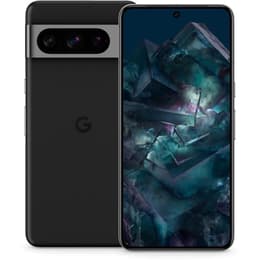
Google Pixel 8 Pro
Google Pixel 8 Pro
Starting at

Refurbished price:A$565.00

Versus A$1,859.00 new

See options
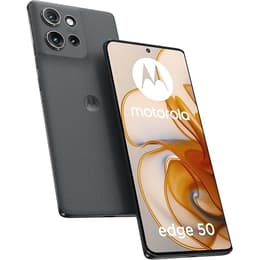
Motorola Edge 50
Motorola Edge 50
See options

The Google Pixel 8 Pro (2023) and the Motorola Edge 50 (2024) are contemporary smartphones offering distinct approaches to the Android experience. While the Pixel 8 Pro emphasizes advanced computational photography and long-term software support, the Motorola Edge 50 focuses on a balanced feature set with a sleek design and a clean software interface.

Scores

Durability

When considering the longevity of these devices, their release timelines and software support policies are key factors.

  • Release Timeline: The Google Pixel 8 Pro was released in October 2023, making it a slightly older device compared to the Motorola Edge 50, which launched in August 2024. This difference in release dates impacts their respective support windows.
  • Software Support: The Google Pixel 8 Pro offers an extensive seven years of Android OS upgrades, security updates, and Feature Drops, with support projected until 2030. This commitment provides a long practical lifespan for software functionality and security. For the Motorola Edge 50, information on software support varies; some sources indicate up to two major Android upgrades, while others suggest three years of OS updates and four years of security updates. There are also mentions of five years of OS updates for some Edge 50 series models, reflecting Motorola's evolving update policy.
  • Repairability: The Google Pixel 8 Pro has a repairability score of 4.0 out of 10, with challenges noted in accessing the battery and a soldered charging port. In contrast, the Motorola Edge 50 has a slightly higher repairability score of 5.0 out of 10, indicating that some components are more accessible, though strong adhesives can still complicate repairs.

Release year

2023

2024

Compatible with latest Update

Yes

Yes

Foldable

No

No

Performance

Both smartphones are designed to handle daily tasks efficiently, but they differ in their underlying hardware and performance characteristics.

  • Processing Power: The Google Pixel 8 Pro is equipped with a current-generation processor that provides fast and smooth performance for most smartphone tasks, with a particular focus on enhancing AI-powered features. This allows for quick app loading and fluid navigation. The Motorola Edge 50 features a processor that delivers very good performance for everyday use and light gaming.
  • Multitasking and Storage: The Pixel 8 Pro typically comes with 12GB of RAM, supporting robust multitasking and demanding applications. It offers storage options of 128GB or 256GB. The Motorola Edge 50 generally includes 8GB of RAM and 256GB of internal storage, which is suitable for managing multiple apps and storing a significant amount of data.
  • Battery Behavior: The Pixel 8 Pro houses a 5050 mAh battery, which generally provides reliable power for a full day of moderate use, though heavy usage may require more frequent charging. The Motorola Edge 50 has a 5000mAh battery, but user experiences suggest it may struggle to last a full day with heavy use, particularly during gaming. Both devices support fast charging, with the Pixel 8 Pro offering 30W wired charging and the Edge 50 supporting 68W wired charging and 15W wireless charging.

Memory (GB)

12 GB

12 GB

Screen quality

The visual experience on both devices is delivered through high-quality displays, each with its own strengths in technology and features.

  • Display Technology and Resolution: The Google Pixel 8 Pro features a 6.7-inch QHD+ LTPO OLED display with a resolution of 2992 x 1344 pixels, resulting in a sharp 489 pixels per inch. This display technology offers deep blacks and vibrant colors. The Motorola Edge 50 comes with a 6.7-inch P-OLED display, providing a resolution of 1220 x 2712 pixels (1.5K) at 446 pixels per inch.
  • Brightness and Refresh Rate: The Pixel 8 Pro's display can reach a peak brightness of up to 2,400 nits, ensuring excellent visibility even in bright outdoor conditions. It also features a variable refresh rate that can dynamically adjust from 1Hz to 120Hz, contributing to smooth scrolling and power efficiency. The Motorola Edge 50 offers a 120Hz refresh rate for smooth visuals and a peak brightness of 1600 nits, which is also suitable for outdoor use.
  • Protection: The Motorola Edge 50's display is protected by Gorilla Glass 5. The Pixel 8 Pro also incorporates durable display protection, contributing to its overall resilience.

Resolution

1344 x 2992

1220x2712

Audiovisual

Both smartphones offer capable camera systems, but they are optimized for different photographic strengths and user experiences.

  • Rear Camera Systems: The Google Pixel 8 Pro features a versatile triple-camera setup, including a 50MP primary sensor, a 48MP ultrawide lens, and a 48MP telephoto lens with 5x optical zoom. This configuration is praised for capturing detailed photos, offering an excellent night mode, and providing strong dynamic range. The Motorola Edge 50 also has a triple-camera system, typically comprising a 50MP main sensor, a 13MP ultrawide lens, and a 10MP telephoto lens. It is noted for producing good photos with rich colors and effective HDR.
  • Front Camera and Video: For selfies, the Pixel 8 Pro includes a 10.5MP front camera with autofocus. The Edge 50 features a 32MP front camera. In terms of video recording, the Pixel 8 Pro delivers good quality, though some users note that other flagship devices might have a slight edge. The Edge 50's video quality can be inconsistent, and its stabilization may not always be optimal.
  • Computational Photography and Audio: The Pixel 8 Pro heavily leverages AI for photo editing features like Magic Editor and Magic Eraser, allowing users to refine their images post-capture. Both devices offer stereo speakers, with the Motorola Edge 50 featuring Dolby Atmos support for an enhanced audio experience.

Front camera

10.5 megapixels

32 megapixels

Miscellaneous

Beyond core performance and display, several practical features and design elements differentiate these two devices.

  • Connectivity and Ports: Both phones support 5G connectivity. The Google Pixel 8 Pro includes modern Wi-Fi standards, while the Motorola Edge 50 supports Wi-Fi 6E for fast wireless connections. Both devices utilize a USB-C port for charging and data transfer.
  • Biometric Security and Sensors: Both smartphones incorporate in-display fingerprint sensors for secure unlocking. The Pixel 8 Pro also includes advanced AI-powered features like Call Screen and, notably, a temperature sensor.
  • Design and Build: The Google Pixel 8 Pro measures 162.6 x 76.5 x 8.8mm and weighs 213 grams, featuring a matte glass back that helps repel smudges. It has an IP68 rating for dust and water resistance. The Motorola Edge 50 is slightly lighter and more compact at 160.80 x 72.40 x 7.79mm and 180 grams, and it also boasts an IP68 rating for dust and water protection, along with a PU leather body.

Weight

213 oz

180 oz

Screen size (in)

6.7

6.7

Network

5G

5G

SIM card

Physical SIM + eSIM

Physical SIM

Carrier compatibility

Unlocked

Unlocked

The Google Pixel 8 Pro and the Motorola Edge 50 cater to different user priorities within the Android ecosystem. The Pixel 8 Pro is frequently praised for its exceptional camera capabilities, particularly its computational photography features and impressive night mode, making it a strong choice for users who prioritize photography and AI-driven enhancements. Its commitment to seven years of software updates is also a significant advantage for those seeking long-term device support and security.

On the other hand, the Motorola Edge 50 is often noted for its sleek design, vibrant display, and a clean Android experience. Users appreciate its fast charging capabilities and solid performance for everyday tasks. However, some users have noted that its battery life can be challenging under heavy use, and camera stabilization might be inconsistent.

Users who prioritize cutting-edge camera technology, extensive software longevity, and advanced AI features will find the Google Pixel 8 Pro well-suited to their needs. Those who value a stylish design, a smooth user interface, and fast charging for daily use may lean toward the Motorola Edge 50. Both devices offer quality-assured refurbished options, providing an eco-friendly alternative for consumers looking to make a sustainable choice.
See all articles

Our recent comparisons