
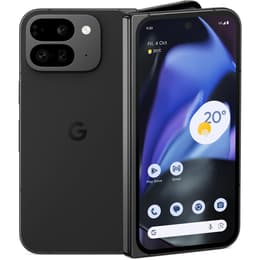

Google Pixel 8 Pro vs Google Pixel 9 Pro Fold

Google Pixel 8 Pro
Google Pixel 8 Pro
Starting at

Refurbished price:A$565.00

Versus A$1,859.00 new

See options
Google Pixel 9 Pro Fold
See options

Ratings

The Google Pixel 8 Pro, released in October 2023, is a traditional flagship smartphone, offering a premium experience in a familiar form factor. The Google Pixel 9 Pro Fold, launched in September 2024, represents Google's second-generation foldable device, combining a standard smartphone experience with a larger, flexible internal display. Both devices run on the Android operating system, but their distinct designs cater to different user preferences regarding screen size and portability.

Scores

Durability

When considering the longevity of these devices, both the Pixel 8 Pro and Pixel 9 Pro Fold benefit from Google's commitment to extended software support, though their release timelines create a slight difference in their overall lifespan.

  • Software Updates: The Pixel 8 Pro, released in October 2023, is guaranteed to receive seven years of Android OS upgrades, security updates, and Feature Drops, extending its support until at least October 2030. The Pixel 9 Pro Fold, released in September 2024, also receives seven years of updates, meaning it will be supported until at least August 2031.
  • Physical Durability: The Pixel 8 Pro features an IP68 rating for dust and water resistance, indicating it can withstand submersion in water up to 1.5 meters for 30 minutes. The Pixel 9 Pro Fold has an IPX8 rating, meaning it is water-resistant but lacks official dust protection, a common characteristic for foldable devices. Its foldable design introduces a hinge mechanism and a flexible inner screen, which present different durability considerations compared to a traditional slab phone. Both devices utilize Gorilla Glass Victus 2 for external screen protection.
  • Expected Lifespan: Both models are designed for long-term use, with their extensive software support ensuring they remain functional and secure for many years. The Pixel 9 Pro Fold's newer release date provides an additional year of guaranteed updates, potentially making it a slightly longer-lasting option in terms of software.

Release year

2023

2024

Compatible with latest Update

Yes

Yes

Foldable

No

Yes

Performance

The performance of both the Pixel 8 Pro and Pixel 9 Pro Fold is driven by Google's custom-designed processors, with the foldable model featuring a newer generation chip.

  • Processing Power: The Pixel 8 Pro is equipped with a processor that handles demanding applications and multitasking smoothly, providing a responsive user experience for everyday tasks and more intensive activities like gaming. The Pixel 9 Pro Fold features a newer generation processor, which offers enhanced efficiency and performance, contributing to smoother operation and potentially better handling of future software demands.
  • Multitasking and Responsiveness: Both devices offer ample RAM, with the Pixel 8 Pro typically featuring 12GB and the Pixel 9 Pro Fold often coming with 16GB, allowing for efficient multitasking and quick app switching. Users of the Pixel 9 Pro Fold have noted its fast performance across both its cover and internal displays, with smooth transitions between applications.
  • Battery Behavior: The Pixel 8 Pro houses a 5050 mAh battery, designed to provide a full day of use for many users. The Pixel 9 Pro Fold, despite having a slightly smaller 4650 mAh battery, has been reported by users to offer impressive battery life, often lasting through a full day with significant usage, attributed to the efficiency of its newer processor.

Memory (GB)

12 GB

16 GB

Screen quality

The display experience is a primary differentiator between these two Pixel devices, with the Pixel 9 Pro Fold offering a unique dual-screen setup.

  • Display Technology and Resolution: The Pixel 8 Pro features a 6.7-inch LTPO OLED display with a resolution of 2992 x 1344 pixels, providing sharp and vibrant visuals. The Pixel 9 Pro Fold utilizes OLED technology for both its cover and internal displays. The outer screen is typically 6.3 inches with a 2424 x 1080 pixel resolution, while the internal foldable screen measures 8.0 inches with a 2152 x 2076 pixel resolution, offering a larger canvas when unfolded.
  • Brightness and Refresh Rate: The Pixel 8 Pro's display can reach a peak brightness of 2400 nits, with an adaptive refresh rate ranging from 1Hz to 120Hz for smooth scrolling and power efficiency. The Pixel 9 Pro Fold's displays are also capable of high brightness, with both the outer and inner screens reaching up to 2700 nits peak brightness. The internal foldable display supports an adaptive refresh rate from 1Hz to 120Hz, while the outer display typically ranges from 60Hz to 120Hz.
  • Viewing Experience: The Pixel 8 Pro offers a consistent, high-quality viewing experience on its single, flat display. The Pixel 9 Pro Fold provides versatility, allowing users to choose between a compact smartphone experience on the cover screen or an expansive tablet-like view on the unfolded internal display, which is particularly beneficial for media consumption and productivity.

Resolution

1344 x 2992

2076 x 2152

Screen type

LTPO OLED

Foldable LTPO OLED

Audiovisual

Both Pixel devices are known for their advanced computational photography, delivering strong camera performance, though the Pixel 9 Pro Fold features some updated components.

  • Rear Camera System: The Pixel 8 Pro includes a triple-camera setup with a 50MP main sensor, a 48MP ultrawide lens, and a 48MP telephoto lens with 5x optical zoom. The Pixel 9 Pro Fold also features a triple-lens rear camera system, typically comprising a 48MP main camera, a 10.5MP ultrawide, and a 10.8MP telephoto lens with 5x optical zoom.
  • Photography Performance: Both phones excel in low-light conditions and everyday photography, leveraging Google's software processing for detailed and color-accurate images. The Pixel 8 Pro introduced a Pro mode for more manual controls and enhanced 50MP shooting on the main camera. The Pixel 9 Pro Fold's camera system, while capable of producing good results, has been noted by some users as an iterative update rather than a significant leap over its predecessor, with some suggesting the camera hardware is similar to the original Pixel Fold.
  • Video and Audio: Both devices support 4K video recording at up to 60 frames per second. The Pixel line generally offers good microphone quality for calls and recordings, and stereo speakers provide a decent media consumption experience. The Pixel 9 Pro Fold also offers features like dual-screen preview for photography.

Main camera

50 megapixels

48 megapixels

Front camera

10.5 megapixels

10 megapixels

Miscellaneous

Beyond core specifications, several practical elements differentiate the Pixel 8 Pro and Pixel 9 Pro Fold, impacting daily usability and form factor.

  • Connectivity and Ports: Both devices support modern connectivity standards, including 5G, Wi-Fi 7 (for Pixel 8 Pro), and recent Bluetooth versions. They both feature a USB-C port for charging and data transfer.
  • Biometric Security: Both the Pixel 8 Pro and Pixel 9 Pro Fold offer secure biometric authentication through face recognition and an under-display fingerprint sensor for the Pixel 8 Pro, and a side-mounted fingerprint sensor for the Pixel 9 Pro Fold.
  • Design and Handling: The Pixel 8 Pro is a traditional slab smartphone, measuring 162.6 x 76.5 x 8.8mm and weighing 213 grams. The Pixel 9 Pro Fold, when folded, is designed to feel more like a conventional smartphone, with dimensions of 155.2 x 77.1 x 10.5mm and a weight of 257g. When unfolded, it transforms into a larger, thinner device at 155.2 x 150.2 x 5.1mm. This foldable design offers a unique blend of portability and expanded screen real estate.

Weight

213 oz

257 oz

Screen size (in)

6.7

8.0

Network

5G

5G

SIM card

Physical SIM + eSIM

Physical SIM + eSIM

Carrier compatibility

Unlocked

Unlocked

User feedback for the Pixel 8 Pro often highlights its robust camera capabilities, consistent performance, and the extended software support as key strengths. Users appreciate the bright and smooth display, along with the AI-driven features that enhance the overall smartphone experience. Some common criticisms revolve around its battery life for very heavy users, though many find it sufficient, and the iterative nature of some hardware upgrades compared to previous generations.

For the Pixel 9 Pro Fold, users frequently praise its innovative foldable design, which offers the utility of a large tablet screen in a more portable form factor. The improved hinge mechanism and the quality of both the inner and outer displays are often cited as significant advantages. The battery life has also received positive remarks, with many finding it surprisingly good for a foldable device. However, some users have noted that while the camera system is capable, it may not represent as significant an upgrade as seen in the traditional Pixel flagship line, and the lack of official dust resistance is a consideration for some.

Users prioritizing a traditional, high-performance smartphone with a top-tier camera and long-term software support may find the Pixel 8 Pro well-suited to their needs. Its consistent performance and familiar form factor make it a reliable choice. Conversely, users who value an expansive screen for productivity, media consumption, or a unique device experience, and are comfortable with the distinct characteristics of a foldable phone, may lean toward the Pixel 9 Pro Fold. This device offers a versatile platform for those seeking both a smartphone and a tablet in one. Both devices offer quality-assured refurbished options, providing an eco-friendly alternative for consumers.


See all articles

Our recent comparisons