

Compare models

Galaxy Z Fold7 vs Google Pixel 7 Pro

  • 1-year warranty
  • Free standard shipping
  • Free 30-day returns
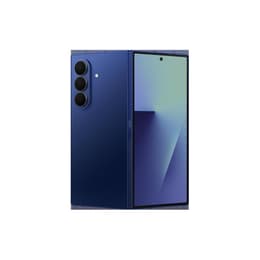
Galaxy Z Fold7
Starting at

Refurbished price:A$1,300.00

Versus A$2,499.00 new

See options
Google Pixel 7 Pro
Starting at

Refurbished price:A$442.00

Versus A$1,319.00 new

See options

Differences at a glance

The Samsung Galaxy Z Fold7 (2025) and the Google Pixel 7 Pro (2022) represent two completely different approaches to smartphone design and functionality. While the Google Pixel 7 Pro adheres to a traditional slate form factor with a curved display, the Galaxy Z Fold7 introduces a book-style foldable design that transforms from a standard outer screen into a tablet-sized inner workspace. These devices run on the Android operating system, though they feature distinct manufacturer interfaces and launch timelines that influence their long-term feature sets.

Available Models

Colour

Storage (GB)

Scores

Durability

Device age and software longevity differ significantly between these two models due to their release dates, impacting how long they will receive active system updates and security patches.

  • Release timeline and software support: The Galaxy Z Fold7 arrived in 2025 running newer software and benefits from an extensive multi-year update commitment, while the Google Pixel 7 Pro launched in 2022 with a shorter official support window.
  • Build durability: The Pixel 7 Pro relies on a rigid glass-and-metal slab construction, whereas the foldable architecture of the Galaxy Z Fold7 requires specialized folding screen layers and hinge mechanisms that influence long-term wear patterns.
  • Repairability and lifespan: Traditional slate phones like the Pixel 7 Pro generally present simpler maintenance routines, while folding devices involve more complex considerations for ongoing structural upkeep.

Release year

2025

2022

Foldable

Yes

No

Performance

Multitasking capabilities and day-to-day speed reflect the generation gap and hardware configurations built into each chassis.

  • Memory and storage configurations: The Galaxy Z Fold7 offers high-tier RAM capacity starting at 12GB paired with spacious storage tiers, matching the 12GB RAM configuration found on the Pixel 7 Pro, though utilizing more recent memory standards.
  • Everyday responsiveness: Both devices handle standard web browsing, messaging, and media streaming effortlessly, but the Galaxy Z Fold7 provides added processing headroom for demanding applications and split-screen multitasking.
  • Battery behavior: The Pixel 7 Pro utilizes a 5000 mAh battery to power its single screen, while the Galaxy Z Fold7 manages a slightly smaller 4400 mAh capacity across its dual-screen setup, resulting in different daily charging habits depending on how often the inner display is utilized.

Screen quality

Display technology forms the primary differentiator, dividing these models into conventional single-screen viewing and expansive folding canvas experiences.

  • Display architecture: The Pixel 7 Pro features a single 6.7-inch curved OLED screen, whereas the Galaxy Z Fold7 utilizes a 6.5-inch cover screen that opens up to an 8.0-inch main folding display.
  • Refresh rate and fluidity: Both phones incorporate adaptive high refresh rate technology up to 120Hz, ensuring smooth scrolling through feeds and responsive touch tracking during navigation.
  • Outdoor visibility: High peak brightness capabilities on both panels allow contents to remain legible under direct sunlight, though larger folding surfaces experience distinct reflections depending on viewing angles.

Resolution

1968x2184

1440 x 3120

Audiovisual

Photography and media output rely on distinct camera hardware arrangements and processing pipelines tailored to each brand's imaging philosophy.

  • Rear camera versatility: The Pixel 7 Pro employs a triple-lens setup featuring a high-resolution main sensor, ultra-wide lens, and a dedicated telephoto lens with long-range optical zoom, while the Galaxy Z Fold7 deploys a high-pixel main sensor alongside complementary ultra-wide and auxiliary lenses.
  • Video and low-light performance: Both units capture stable video footage and detailed low-light imagery, benefiting from software-based stabilization and exposure correction.
  • Media and audio output: Stereo speakers on both devices deliver balanced sound output for hands-free calls and casual video playback, though the larger acoustic chamber of an unfolded tablet layout alters spatial sound dispersion.

Miscellaneous

Physical dimensions, connectivity standards, and daily handling characteristics dictate how easily each device integrates into various travel or work routines.

  • Handling and physical footprint: The Pixel 7 Pro maintains a standard slim slate profile weighing 212 grams, while the Galaxy Z Fold7 offers a narrower folded profile that expands into a lightweight 215-gram tablet form factor.
  • Connectivity and ports: Both models support 5G cellular networks, modern Wi-Fi protocols, and Bluetooth standards, utilizing reversible USB-C ports for charging and data transfer.
  • Authentication sensors: Secure access is handled via biometric options, combining facial recognition features with under-display fingerprint sensors for quick unlocking.

Weight

215 oz

212 oz

Screen size (in)

8.0

67

SIM card

Dual Physical SIM + eSIM

Physical SIM + eSIM

Carrier compatibility

Unlocked

Unlocked

What the community thinks

User discussions across community forums highlight distinct preferences based on form factor and workflow needs. Owners of the Google Pixel 7 Pro frequently praise its reliable camera software, comfortable ergonomics as a standard phone, and clean interface experience. Conversely, Galaxy Z Fold7 users emphasize the productivity benefits of a pocket-sized device that expands into a larger tablet workspace for reading and multitasking. Common discussions note that traditional slate phones offer simpler one-handed use, while foldables require careful handling of the inner screen.

Users prioritizing a traditional, pocket-friendly phone with long-range optical zoom capabilities will find the Google Pixel 7 Pro well-suited to their daily routine. Meanwhile, users who value an expansive multi-window workspace for productivity or media consumption may lean toward the Galaxy Z Fold7. For those exploring a quality-assured refurbished option as an eco-friendly alternative, both models offer sustainable ways to access advanced mobile technology without purchasing brand-new hardware. Selecting between them depends entirely on whether a standard single-screen layout or a versatile folding display best fits your lifestyle.