

Compare models
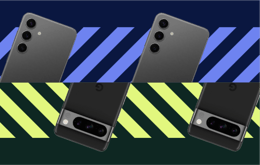
Google Pixel 7 Pro vs Google Pixel 9a
- 1-year warranty
- Free standard shipping
- Free 30-day returns
Differences at a glance
The Google Pixel 7 Pro (2022) and the Google Pixel 9a (2025) represent different approaches to Google's smartphone lineup, contrasting a flagship model from a previous generation with a more recent mid-range device. While the Pixel 7 Pro offers advanced hardware features typical of higher-end tiers, the Pixel 9a benefits from a later release year and modern refinements. Both devices run on the Android operating system, providing a clean software interface, though their release timelines result in distinct software support windows and hardware capabilities.
Choosing between these two smartphones involves weighing advanced physical features against a more modern product generation, depending on individual daily requirements.
Available Models
Colour
Storage (GB)
Scores
Durability
When examining longevity and structural endurance, both smartphones offer distinct timelines shaped by their respective release years and software support structures.
- Software Support Window: The Pixel 9a benefits from a longer guaranteed software update schedule due to its recent release year, while the Pixel 7 Pro occupies an earlier spot on the update timeline. Users seeking extended software longevity will find the newer model aligns with long-term usage goals.
- Repairability and Build: Both devices feature sealed glass and metal constructions designed for everyday wear. Professional repair networks support both models, though parts availability naturally favors the newer generation for long-term maintenance.
- Expected Practical Lifespan: Daily durability remains comparable under normal conditions, with both handsets capable of handling routine communication, navigation, and media consumption over several years of active service.
Release year
2022
2025
Foldable
No
No
Performance
Underneath the exterior, these devices handle everyday multitasking, application loading, and gaming through different generations of internal processing hardware and memory configurations.
- Multitasking and Responsiveness: The Pixel 9a handles demanding apps and background tasks smoothly thanks to its current-generation processor, whereas the Pixel 7 Pro relies on mature hardware that handles daily navigation and media playback reliably.
- Storage and Memory: Both smartphones offer multiple storage tiers to accommodate personal files, photos, and applications, supported by sufficient system memory to keep active apps running concurrently without unexpected reloads.
- Battery Behavior: The Pixel 9a benefits from modern power efficiency improvements that sustain a full day of mixed usage, while the Pixel 7 Pro's larger cell and slightly older architecture manage similar daily routines with minor variations depending on screen brightness and network connectivity.
Screen quality
Display characteristics differ significantly between the two models, influencing outdoor visibility, media playback enjoyment, and physical handling comfort.
- Display Technology and Clarity: The Pixel 7 Pro features a curved OLED panel with high resolution, while the Pixel 9a utilizes a flat OLED screen optimized for sharp text rendering and consistent color reproduction across everyday viewing angles.
- Brightness and Outdoor Use: Both devices offer sufficient peak brightness levels to maintain legibility under direct sunlight, making outdoor map reading and messaging straightforward.
- Refresh Rate and Smoothness: High refresh rate support ensures fluid scrolling through web pages and social media feeds on both models, contributing to a responsive visual experience during routine interactions.
Resolution
1440 x 3120
1080x2424
Screen type
LTPO AMOLED
P-OLED
Audiovisual
Photography and media recording capabilities vary due to differences in sensor configuration and secondary lens options available on each device.
- Camera System Setup: The Pixel 7 Pro includes a dedicated telephoto lens for optical zoom versatility alongside its main and ultra-wide sensors, whereas the Pixel 9a focuses on a dual-camera layout optimized for everyday wide and ultra-wide photography.
- Low-Light and Video Performance: Both smartphones utilize advanced computational processing to capture clear details in dim environments and stabilize video recording during movement, though the telephoto capability gives the older flagship an advantage for distant subjects.
- Audio and Media Output: Stereo speakers on both models deliver clear sound for hands-free calls and casual video viewing, supported by sensitive microphone arrays that isolate voice input effectively during calls.
Miscellaneous
Practical daily utility is shaped by physical dimensions, connectivity standards, and biometric security features built into each chassis.
- Physical Handling: The Pixel 7 Pro features a larger footprint and curved edges, while the Pixel 9a offers a more compact flat profile that fits securely in pockets and one-handed grips.
- Connectivity and Ports: Both models support modern 5G networks, Wi-Fi standards, and Bluetooth pairing, utilizing a reversible USB-C port for charging and data transfer.
- Biometrics and Sensors: Secure authentication is handled via facial recognition and fingerprint sensors integrated directly into or onto the display structure for rapid unlocking. Quality-assured refurbished options for both models provide an eco-friendly alternative for conscious consumers looking to minimize electronic waste.
Weight
212 oz
186 oz
Screen size (in)
67
6.3
SIM card
Physical SIM + eSIM
Physical SIM + eSIM
Carrier compatibility
Unlocked
Unlocked
What the community thinks
User feedback from public forums highlights distinct preferences for each device based on real-world usage patterns. Owners of the Pixel 7 Pro frequently praise its expansive display, versatile telephoto zoom lens, and premium physical presence. At the same time, users often note that its curved glass is more susceptible to accidental touches and that the battery drains faster under heavy sustained loads. Conversely, Pixel 9a owners commonly highlight the benefit of a flat screen that avoids accidental edge inputs, reliable daily battery endurance, and the advantage of a later release timeline. Common criticisms for the mid-range model center on the absence of a dedicated optical zoom lens.
Users prioritizing a larger, high-resolution screen with optical zoom capabilities may prefer the Pixel 7 Pro, while users prioritizing a modern software support timeline, a flat display surface, and a lighter physical build will lean toward the Pixel 9a. Evaluating these specific hardware differences helps ensure a suitable match for individual daily routines. Choosing a sustainable choice like a refurbished device from Back Market further allows consumers to make an environmentally responsible purchase without compromising on functional quality.