
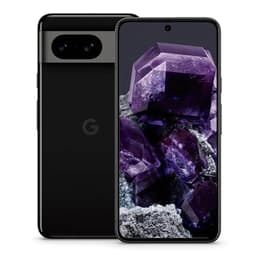

Google Pixel 7 Pro vs Google Pixel 8

Google Pixel 7 Pro
Google Pixel 7 Pro
Starting at

Refurbished price:A$520.00

Versus A$1,219.00 new

See options
Google Pixel 8
Google Pixel 8
Starting at

Refurbished price:A$465.00

Versus A$1,245.00 new

See options

Ratings

The Google Pixel 7 Pro, released in October 2022, and the Google Pixel 8, launched in October 2023, are both premium Android smartphones from Google. While sharing the core Pixel experience, they differ in design, internal components, and software support longevity. Both devices run on the Android operating system, offering a consistent user interface and access to Google's ecosystem of services.

Scores

Durability

When considering the practical lifespan of these devices, their release timelines and software support policies are key differentiators.

  • Software Support: The Pixel 7 Pro is guaranteed five years of OS and security updates from its release, extending its support until October 2027. In contrast, the Pixel 8 benefits from an extended commitment, receiving seven years of OS and security updates, ensuring support until October 2030.
  • Repairability: The Pixel 7 Pro received repairability scores ranging from 5.5 to 7 out of 10 in various assessments, with screen replacements being relatively straightforward but battery removal proving challenging due to strong adhesive. The Pixel 8 generally shows improved repairability, often scoring around 7 out of 10, with easier screen removal but still presenting challenges with battery adhesive and a soldered charging port. Google's provision of service manuals and OEM parts for the Pixel 8 series aims to enhance fixability.
  • Expected Lifespan: Users who prioritize long-term software updates and security patches will find the Pixel 8's seven-year support period a significant advantage, potentially extending its usable life by several years compared to the Pixel 7 Pro.

Release year

2022

2023

Compatible with latest Update

Yes

Yes

Foldable

No

No

Performance

Both the Pixel 7 Pro and Pixel 8 are designed to deliver smooth performance for daily tasks, though they feature different internal processing units.

  • Processing Power: The Pixel 7 Pro is equipped with a Google Tensor G2 processor, which capably handles multitasking, demanding applications, and gaming. The Pixel 8 features the newer Google Tensor G3 processor, offering enhanced performance and efficiency for more intensive computational tasks and advanced AI features.
  • Multitasking and Storage: The Pixel 7 Pro typically comes with 12GB of RAM, providing ample capacity for running multiple applications simultaneously without slowdowns. The Pixel 8 usually includes 8GB of RAM. Both devices offer storage options up to 256GB, with the Pixel 7 Pro also having a 512GB variant.
  • Battery Behavior: The Pixel 7 Pro houses a 5000 mAh battery, generally providing a full day of use for many users. The Pixel 8 has a slightly smaller 4575 mAh battery, but user feedback often indicates improved battery life and better heat management compared to its predecessor, suggesting optimized power consumption.

Memory (GB)

12 GB

8 GB

Screen quality

The visual experience on both Pixel devices is vibrant, though there are distinctions in display technology and size.

  • Display Technology and Size: The Pixel 7 Pro features a larger 6.7-inch LTPO AMOLED display with a resolution of 1440x3120 pixels, offering a sharp and expansive viewing area. The Pixel 8 has a more compact 6.2-inch OLED display with a resolution of 1080x2400 pixels.
  • Brightness and Clarity: Both phones offer excellent clarity and color reproduction. The Pixel 7 Pro provides a peak brightness of 1500 nits. The Pixel 8 boasts a higher peak brightness of 2000 nits, which can improve visibility in bright outdoor conditions.
  • Refresh Rate: Both devices feature a 120Hz refresh rate for smooth scrolling and responsive interactions. The Pixel 7 Pro's LTPO panel allows for variable refresh rates to conserve power. The Pixel 8 also offers a variable refresh rate, adjusting between 60Hz and 120Hz to optimize for content and battery efficiency.

Resolution

1440 x 3120

1080 x 2400

Screen type

LTPO AMOLED

OLED

Audiovisual

Both Pixel phones are renowned for their camera capabilities, leveraging computational photography, but they feature different hardware configurations.

  • Rear Camera System: The Pixel 7 Pro includes a versatile triple-camera setup: a 50 MP wide lens, a 48 MP telephoto lens with 5x optical zoom, and a 12 MP ultrawide lens. This telephoto lens is a notable feature for capturing distant subjects. The Pixel 8 features a dual-camera system, comprising a 50 MP wide lens and a 12 MP ultrawide lens.
  • Photography Performance: Both models excel in low-light conditions and everyday photography, producing detailed images with accurate colors thanks to Google's image processing. The Pixel 7 Pro's dedicated telephoto lens offers greater flexibility for zoomed shots. User opinions on camera quality between the two can vary, with some finding the Pixel 8's overall processing improved, while others prefer the 7 Pro's hardware for specific scenarios.
  • Video and Audio: Both devices offer high-quality video recording, including 4K at 60fps. The Pixel 8 introduces features like Audio Magic Eraser, which can reduce background noise in videos. Both phones provide stereo speakers for media consumption, with some users noting improved speaker quality on the Pixel 8.

Main camera

50 megapixels

50 megapixels

Front camera

10.8 megapixels

10.5 megapixels

Miscellaneous

Beyond core specifications, several practical elements contribute to the overall user experience of these Pixel smartphones.

  • Connectivity and Ports: Both the Pixel 7 Pro and Pixel 8 support 5G connectivity and the latest Wi-Fi standards (Wi-Fi 6E/7 for Pixel 8) for fast wireless communication. They both utilize a USB-C port for charging and data transfer, and neither includes a traditional headphone jack.
  • Biometrics and Sensors: Both devices feature under-display optical fingerprint sensors for secure unlocking. The Pixel 8 offers improved face unlock capabilities. The Pixel 7 Pro has an IP68 rating for dust and water resistance, a feature also present in the Pixel 8, ensuring durability against environmental elements.
  • Design and Handling: The Pixel 7 Pro has a larger form factor with a curved display. The Pixel 8 is slightly smaller and lighter, featuring a flat display, which some users find more comfortable for handling and less prone to accidental touches. Both phones use Gorilla Glass Victus for display protection and have aluminum frames.

Weight

212 oz

187 oz

Screen size (in)

67

6.2

SIM card

Physical SIM + eSIM

Physical SIM + eSIM

Carrier compatibility

Unlocked

Unlocked

Connector

USB-C

USB-C

Choosing between the Google Pixel 7 Pro and the Google Pixel 8 involves weighing specific priorities. User feedback often highlights the Pixel 7 Pro's strengths in its larger, higher-resolution display and the inclusion of a dedicated telephoto lens, making it appealing for those who prioritize an expansive visual experience and versatile zoom photography. Some users have noted inconsistent battery performance or GPS issues with the 7 Pro, though many report solid battery life.

The Pixel 8, while having a slightly smaller and lower-resolution screen, is frequently praised for its brighter display, improved battery life, and better heat management. Its enhanced face unlock and potentially better speaker quality are also noted improvements. The most significant advantage of the Pixel 8 is its extended software support, promising seven years of updates, which is a considerable benefit for users planning to keep their device for an extended period.

Users who prioritize a larger, higher-resolution screen and a dedicated telephoto camera for optical zoom may find the Pixel 7 Pro better suited to their needs. Conversely, users who value a more compact design, a brighter display, improved overall efficiency, and a significantly longer software support window will likely lean towards the Pixel 8. Both devices offer a robust Android experience, and considering a quality-assured refurbished option for either model can be an eco-friendly alternative for making an informed, sustainable choice.


See all articles

Our recent comparisons