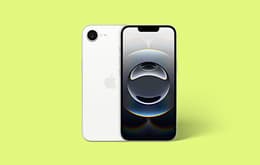
Compare models

Google Pixel 6a vs iPhone 16e

  • 1-year warranty
  • Free standard shipping
  • Free 30-day returns
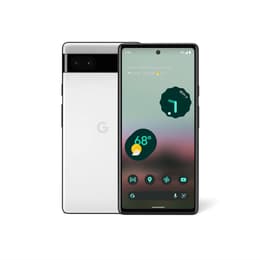
Google Pixel 6a
Google Pixel 6a
Starting at

Refurbished price:A$347.00

Versus A$569.00 new

See options
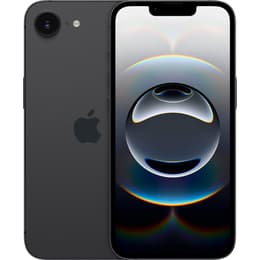
iPhone 16e
iPhone 16e
Starting at

Refurbished price:A$779.00

Versus A$999.00 new

See options

Differences at a glance

The Google Pixel 6A, released in July 2022, and the iPhone 16E, launched in February 2025, represent distinct approaches to accessible smartphone technology from their respective manufacturers. While the Pixel 6A offers a strong Android experience with Google's computational photography prowess, the iPhone 16E provides a more recent entry into Apple's ecosystem, featuring updated hardware and software capabilities. This comparison will explore their core differences, focusing on aspects that influence daily use and long-term value for consumers.

Scores

Durability

When considering the longevity of a smartphone, factors like release timeline, software support, and physical durability play a significant role.

  • Release Timeline and OS Support: The Google Pixel 6A, released in July 2022, typically receives approximately five years of OS updates from its launch, starting with Android 12. The iPhone 16E, introduced in February 2025, benefits from a newer release cycle, implying a longer period of software support and access to the latest iOS features, including Apple Intelligence.
  • Durability and Repairability: The Pixel 6A features Gorilla Glass 3 for screen protection and an IP67 water and dust resistance rating. Its construction includes a plastic back and a metal frame, and it has demonstrated good physical durability in bend tests. The iPhone 16E, on the other hand, incorporates Ceramic Shield for enhanced display protection and an aluminum frame with a glass back. While both devices are designed for everyday resilience, the iPhone 16E's newer materials suggest a potentially more robust build against drops and scratches. The Pixel 6A has a repairability score of 7 out of 10, indicating it is relatively easier to repair than some other models.
  • Expected Practical Lifespan: Given its later release, the iPhone 16E is expected to offer a longer practical lifespan in terms of receiving the latest software features and security updates. However, the Pixel 6A's solid build and continued software support for several years still make it a viable option for users seeking an eco-friendly alternative.

Release year

2022

2025

Foldable

No

No

Performance

The performance of a smartphone is largely determined by its internal processing unit, influencing everything from app responsiveness to multitasking efficiency.

  • Processor Capabilities: The Google Pixel 6A is powered by the Google Tensor chip, which was designed to deliver efficient performance for everyday tasks and advanced AI features like Magic Eraser. The iPhone 16E features Apple's A18 chip, a more recent processor optimized for generative AI and offering a 16-core Neural Engine. This newer chip in the iPhone 16E provides a notable advantage in raw processing power and efficiency for demanding applications and future software.
  • Multitasking and Responsiveness: The Pixel 6A comes with 6GB of RAM, which allows for smooth navigation and handling of multiple applications simultaneously. The iPhone 16E is equipped with 8GB of RAM, providing additional headroom for more intensive multitasking and ensuring a highly responsive user experience, especially with the integration of advanced AI features.
  • Battery Behavior: The Pixel 6A houses a 4,410 mAh battery, capable of lasting a full day with typical usage and up to 72 hours with extreme battery saver mode enabled. It supports 18W wired charging but lacks wireless charging capabilities. While specific battery capacity for the iPhone 16E is not detailed, reviewers have noted its long battery life, which is further optimized by the efficient A18 chip and iOS 18's power management. The iPhone 16E supports USB-C for charging.

Memory (GB)

6 GB

8 GB

Screen quality

The display is a primary interface for smartphone interaction, and its quality significantly impacts the user experience.

  • Display Technology and Clarity: Both the Google Pixel 6A and the iPhone 16E feature 6.1-inch OLED displays, offering deep blacks and vibrant colors. Both displays provide FHD+ resolution (2400 x 1080 pixels for Pixel 6A, 2556x1179 pixels for iPhone 16) for sharp visuals.
  • Refresh Rate and Smoothness: Both devices maintain a standard 60Hz refresh rate. This refresh rate is suitable for most daily tasks, but users accustomed to higher refresh rates on other devices might notice a difference in scrolling smoothness.
  • Brightness and Protection: The Pixel 6A's display is protected by Corning Gorilla Glass 3. The iPhone 16E features Ceramic Shield protection, which is designed for enhanced durability against drops and scratches. The iPhone 16E also offers higher peak brightness levels, reaching 800 nits typical and 1200 nits peak HDR brightness, which can improve visibility in bright outdoor conditions compared to the Pixel 6A.

Resolution

1080 x 2400

2532x1170

Audiovisual

Camera performance is a key differentiator for many users, encompassing both hardware and computational photography capabilities.

  • Rear Camera System: The Google Pixel 6A features a dual-camera system with a 12.2MP main sensor (f/1.7 with OIS) and a 12MP ultrawide sensor (f/2.2 with a 114˚ field of view). Its strength lies in Google's computational photography, offering features like Night Sight, Magic Eraser, and Real Tone for consistent and high-quality images across various conditions. The iPhone 16E sports a single 48MP main camera on the rear, which Apple describes as a "2-in-1 camera system" with integrated 2x telephoto capabilities. This higher resolution main sensor, combined with Apple's image processing, aims to deliver detailed photos and versatile shooting options.
  • Low-Light and Video Quality: Both phones excel in their respective ecosystems for low-light photography, leveraging software to enhance detail and reduce noise. For video recording, the Pixel 6A can capture 4K video at up to 60 frames per second. The iPhone 16E records 4K video with Dolby Vision at up to 60 frames per second and supports Spatial Audio, offering a more advanced video capture experience.
  • Front Camera and Audio: The Pixel 6A includes an 8MP front camera. The iPhone 16E features a 12MP TrueDepth front camera, which also enables Face ID. Both devices offer capable microphone quality for calls and recordings, and their speaker outputs provide a clear media consumption experience.

Front camera

8 megapixels

TrueDepth 12MP

Miscellaneous

Beyond core specifications, several practical features contribute to the overall user experience and device utility.

  • Connectivity and Ports: Both the Google Pixel 6A and the iPhone 16E support 5G connectivity, ensuring access to faster mobile networks. The Pixel 6A supports Wi-Fi 6 (802.11ax) and Bluetooth 5.2. The iPhone 16E is expected to support Wi-Fi 7 and Bluetooth 5.3, offering more advanced wireless capabilities. The Pixel 6A uses a USB-C port for charging and data transfer but lacks a 3.5mm headphone jack. The iPhone 16E also features a USB-C port.
  • Biometrics and Sensors: The Pixel 6A utilizes an in-display fingerprint sensor for secure unlocking. The iPhone 16E relies on Face ID for biometric authentication, integrated into its notch design. The iPhone 16E also includes an Action Button, which replaces the traditional mute switch and can be customized for various functions.
  • Design and Build Materials: The Pixel 6A has a compact design with a 6.1-inch display, a plastic back, and a metal frame. The iPhone 16E also features a 6.1-inch display and an aluminum frame with a glass back, resembling the design of the iPhone 14. The iPhone 16E also offers Emergency SOS, Roadside Assistance, Messages, and Find My via satellite for enhanced safety features.

Weight

250 oz

167 oz

Screen size (in)

6.1

6.1

SIM card

Physical SIM + eSIM

Physical SIM + eSIM

Carrier compatibility

Unlocked

Unlocked

What the community thinks

User feedback for the Google Pixel 6A often praises its exceptional camera performance, particularly its computational photography features that deliver consistent and vibrant images, even in challenging conditions. Many users also appreciate its solid battery life, often lasting a full day of heavy use. Criticisms sometimes point to the 60Hz display refresh rate, which can feel less fluid compared to devices with higher refresh rates, and the absence of wireless charging.

For the iPhone 16E, early reviews highlight its modern design, the significant upgrade to an OLED display, and the powerful A18 chip that enables advanced Apple Intelligence features. Users also commend its improved camera system and the inclusion of Face ID and the Action Button, bringing more premium features to an accessible iPhone model. Some potential concerns might revolve around the continued 60Hz refresh rate, which, like the Pixel 6A, is a standard but not cutting-edge feature for a 2025 device.

Users prioritizing a strong camera experience with advanced AI photo editing capabilities and a robust Android ecosystem may find the Google Pixel 6A well-suited to their needs. Its proven durability and repairability also make it a practical choice for those seeking a reliable device. Conversely, users who value a longer software support window, a more powerful and future-proof processor for demanding tasks and AI features, and the integrated Apple ecosystem will likely lean towards the iPhone 16E. Its enhanced display protection and modern design elements also cater to those seeking a more contemporary aesthetic and feel. Both devices offer compelling features, and choosing between them often comes down to individual preference for operating system, specific camera priorities, and long-term performance expectations. Opting for a quality-assured refurbished option for either model can provide an eco-friendly alternative for consumers.