
Google Pixel 6a vs Google Pixel 9

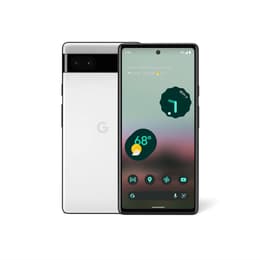
Google Pixel 6a
Google Pixel 6a
Starting at

Refurbished price:A$236.00

Versus A$569.00 new

See options
Google Pixel 9
Google Pixel 9
Starting at

Refurbished price:A$717.00

Versus A$1,349.00 new

See options

Ratings

The Google Pixel 6A, released in July 2022, and the Google Pixel 9, launched in August 2024, represent different generations within Google's smartphone lineup. While both devices operate on the Android platform, the Pixel 9 introduces significant advancements in performance, camera capabilities, and display technology, reflecting the two-year gap in their development. This comparison will highlight the practical differences to help users understand which device aligns best with their needs.

Scores

Durability

The longevity of a smartphone is often tied to its software support and physical durability. These two Pixel models offer distinct timelines for updates and varying levels of build robustness.

  • Software Support: The Pixel 6A was initially promised three years of OS updates and five years of security updates, extending its security support until at least July 2027. The Pixel 9, being a newer device, benefits from Google's extended commitment, offering seven years of OS and security updates from its August 2024 release, meaning support until at least August 2031.
  • Physical Durability: The Pixel 6A features a plastic back and Gorilla Glass 3 protection on its 6.1-inch display, along with an IP67 water and dust resistance rating. The Pixel 9, however, adopts a more industrial design with flat side rails and flat glass on both the front and back, likely featuring more advanced Gorilla Glass protection and an IP68 rating for enhanced water and dust resistance.
  • Practical Lifespan: Users prioritizing the latest software features and security patches for the longest possible duration will find the Pixel 9 offers a considerably extended practical lifespan due to its longer update commitment. The Pixel 6A, while still receiving security updates for a period, will no longer receive major Android version upgrades after July 2025.

Release year

2022

2024

Compatible with latest Update

Yes

Yes

Foldable

No

No

Performance

Performance differences between the Pixel 6A and Pixel 9 are notable, primarily due to the generational leap in their underlying hardware and software optimization.

  • Processing Power: The Pixel 6A is powered by the first-generation Google Tensor chip, which provides smooth performance for everyday tasks and handles demanding applications adequately for its release era. The Pixel 9 features a newer, more advanced Tensor G4 processor, offering a substantial upgrade in processing speed, graphics capabilities, and on-device AI processing. This translates to faster app loading, smoother multitasking, and more efficient handling of complex tasks and modern games.
  • Multitasking and Responsiveness: With 6GB of RAM, the Pixel 6A manages typical multitasking scenarios effectively. The Pixel 9, however, comes with 12GB of RAM, providing significantly more headroom for running numerous applications simultaneously and ensuring a more fluid and responsive user experience, especially with AI-driven features.
  • Battery Behavior: The Pixel 6A houses a 4410 mAh battery, which generally provides a full day of use for many users, though some reports indicate varied endurance depending on usage patterns. The Pixel 9 is equipped with a larger 4700 mAh battery and benefits from the more power-efficient Tensor G4 chip and optimized Android software, leading to improved real-world battery endurance, often lasting a full day even with mixed to heavy use.

Memory (GB)

6 GB

12 GB

Screen quality

The display experience varies significantly between these two Pixel generations, impacting visual clarity, smoothness, and outdoor visibility.

  • Display Technology and Clarity: Both devices feature OLED displays, known for deep blacks and vibrant colors. The Pixel 6A has a 6.1-inch OLED screen with a 1080x2400 (FHD+) resolution, offering good clarity for general viewing. The Pixel 9 features a 6.24-inch OLED display with a 2424 x 1080 pixel resolution, providing a sharp viewing experience.
  • Refresh Rate and Smoothness: A key differentiator is the refresh rate. The Pixel 6A is limited to a standard 60Hz refresh rate, which provides a consistent but not exceptionally fluid scrolling experience. The Pixel 9, on the other hand, boasts a 120Hz refresh rate, resulting in noticeably smoother scrolling, more fluid animations, and a more responsive feel during interactions.
  • Brightness Levels: The Pixel 9's display offers significantly higher peak brightness, reaching up to 1800 nits for HDR content, which improves visibility in bright outdoor conditions and enhances HDR media consumption. The Pixel 6A's display, while vibrant, has lower peak brightness, which can make outdoor viewing more challenging.

Resolution

1080 x 2400

1080 x 2424

Screen type

OLED

OLED

Audiovisual

Google Pixel phones are known for their camera capabilities, and while both devices deliver quality images, the Pixel 9 introduces substantial advancements.

  • Camera System Capabilities: The Pixel 6A features a dual-camera system with a 12.2MP main sensor and a 12MP ultrawide sensor. The Pixel 9 comes with a more advanced 50MP main sensor and an upgraded 48MP ultrawide lens, which also supports macro focus.
  • Photography Performance: The Pixel 6A excels in everyday photography with Google's computational photography, offering good exposure, dynamic range, and features like Night Sight and Magic Eraser. The Pixel 9 builds on this with a larger main sensor for improved low-light performance and enhanced AI-driven features like Face Unblur, Photo Unblur, and Night Sight in Panorama, delivering sharper images and more versatile shooting options.
  • Video Recording and Audio: Both devices support 4K video recording, with the Pixel 9 offering more advanced features and potentially better stabilization and detail due to its newer processor and sensors. While specific microphone and speaker details can vary, newer Pixel generations generally offer improvements in audio capture and playback quality for calls and media consumption.

Main camera

12.2 megapixels

50 megapixels

Front camera

8 megapixels

10.5 megapixels

Miscellaneous

Beyond core features, several practical elements differentiate the Pixel 6A and Pixel 9, influencing daily usability and connectivity.

  • Connectivity Options: Both devices support 5G connectivity. The Pixel 9 likely includes newer Wi-Fi and Bluetooth standards, offering more stable and faster wireless connections compared to the Pixel 6A.
  • Port Types and Biometrics: Both phones utilize a USB-C port for charging and data transfer, and neither includes a traditional headphone jack. The Pixel 6A features an in-display fingerprint sensor for biometric authentication. The Pixel 9 is expected to feature an upgraded ultrasonic fingerprint scanner, which typically offers faster and more secure unlocking.
  • Weight, Dimensions, and Build: The Pixel 6A is a compact device, weighing 178g with dimensions of 152.2 x 71.8 x 8.9 mm. The Pixel 9 maintains a relatively compact form factor, with dimensions of 152.8 x 72 x 8.5 mm and a similar weight, but with a more premium build using flat glass and metal frames. The Pixel 9 also introduces features like Adaptive Touch technology for improved screen responsiveness in various conditions.

Weight

250 oz

198 oz

Screen size (in)

6.1

6.3

SIM card

Physical SIM + eSIM

Physical SIM + eSIM

Carrier compatibility

Unlocked

Unlocked

The Google Pixel 6A and Pixel 9 cater to different user expectations, largely due to the technological advancements introduced over their two-year release gap. Users frequently praise the Pixel 6A for its strong camera performance and solid battery life for its class, often highlighting its value. However, common criticisms include its 60Hz display and slower charging speeds.

The Pixel 9, on the other hand, receives acclaim for its significantly upgraded processor, extended software support, and enhanced camera system, particularly its low-light capabilities and AI features. User sentiment often points to its improved battery life as a notable positive change from previous Pixel generations. Potential concerns might revolve around the shift in design or the absence of certain features from its Pro siblings, depending on the specific model.

Users prioritizing long-term software support, cutting-edge performance for demanding applications, and advanced camera features will find the Pixel 9 well-suited to their needs. Its higher refresh rate display and improved battery life also contribute to a more modern and fluid daily experience. Conversely, users seeking a more compact device with reliable camera performance for everyday use, and who do not require the absolute latest in processing power or display technology, may find the Pixel 6A still meets their requirements. Choosing a quality-assured refurbished option for either device can provide an eco-friendly alternative for consumers.

See all articles

Our recent comparisons