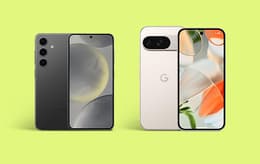
Google Pixel 6a vs Google Pixel 8

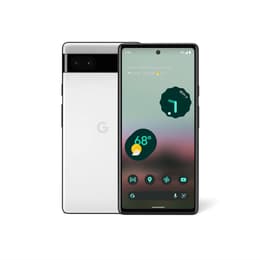
Google Pixel 6a
Google Pixel 6a
Starting at

Refurbished price:A$236.00

Versus A$569.00 new

See options
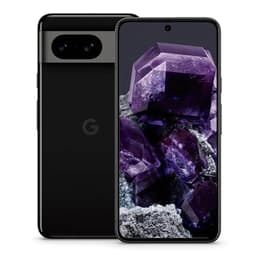
Google Pixel 8
Google Pixel 8
Starting at

Refurbished price:A$465.00

Versus A$1,245.00 new

See options

Ratings

The Google Pixel 6A, released in July 2022, and the Google Pixel 8, launched in October 2023, represent different tiers within Google's smartphone lineup. Both devices operate on the Android platform, offering a clean software experience. The Pixel 8 introduces a more advanced processor, significant camera enhancements, and a notably longer software support commitment compared to its predecessor.

Scores

Durability

When considering the long-term usability of these devices, their respective release timelines and software support policies are key differentiators.

  • Software Support: The Pixel 6A is scheduled to receive OS updates until at least July 2025 and security updates until at least July 2027, providing a solid period of support. In contrast, the Pixel 8 offers an extended commitment with seven years of both OS and security updates, lasting until October 2030. This makes the Pixel 8 a more future-proof option for users who prioritize the latest software features and security patches over a longer duration.
  • Repairability: Both devices demonstrate a reasonable degree of repairability. The Pixel 6A received a repairability score of 7 out of 10 from some assessments, noting its relatively easy-to-remove battery and display assembly. The Pixel 8 also scored 7 out of 10 in some teardowns, indicating that self-repairs are possible, though the battery can be more challenging to remove due to adhesives. Both models typically have their USB-C charging ports soldered to the mainboard, which can complicate repairs for that specific component.
  • Practical Lifespan: Given the extended software support, the Pixel 8 is designed for a longer practical lifespan in terms of receiving official updates and new features. The Pixel 6A, while still supported for a considerable time, will reach its end-of-life for major OS updates sooner.

Release year

2022

2023

Compatible with latest Update

Yes

Yes

Foldable

No

No

Performance

The performance capabilities of the Pixel 6A and Pixel 8 reflect their different generations, impacting how smoothly they handle various tasks.

  • Processing Power: The Pixel 6A is equipped with Google's first-generation Tensor processor, which delivers capable performance for everyday applications, multitasking, and moderate gaming. The Pixel 8 features the newer Google Tensor G3 processor, providing enhanced speed and efficiency. This translates to quicker app loading times, smoother transitions, and more robust handling of demanding applications and graphically intensive games on the Pixel 8.
  • Multitasking and Storage: The Pixel 6A comes with 6GB of RAM and 128GB of internal storage. The Pixel 8 offers 8GB of RAM, which contributes to more fluid multitasking and better retention of apps in memory, alongside storage options of 128GB or 256GB. While both provide ample storage for many users, the Pixel 8's additional RAM and larger storage option cater to users with more extensive app libraries or media collections.
  • Battery Behavior: The Pixel 6A houses a 4410 mAh battery, generally offering a full day of use for many users, with efficient standby power management. The Pixel 8 has a slightly larger 4575 mAh battery. User experiences with the Pixel 8's battery life have been mixed, with some reporting it as average for a full day of use, while others note occasional overheating that can impact battery performance.

Memory (GB)

6 GB

8 GB

Screen quality

The visual experience on both Pixel devices is delivered through OLED technology, but with notable differences in specifications.

  • Display Technology and Clarity: Both the Pixel 6A and Pixel 8 feature OLED displays, which provide deep blacks and vibrant colors. Both offer a Full HD+ resolution (1080 x 2400 pixels), ensuring sharp and clear visuals for text and images.
  • Refresh Rate and Brightness: The Pixel 6A has a standard 60Hz refresh rate, which is suitable for most daily interactions. The Pixel 8 upgrades to an adaptive refresh rate that can go up to 120Hz, resulting in noticeably smoother scrolling and more fluid animations. The Pixel 8 also boasts significantly higher peak brightness, reaching up to 2000 nits, making it more comfortable to view outdoors in bright sunlight compared to the Pixel 6A.
  • Screen Size and Protection: The Pixel 6A features a 6.1-inch display protected by Corning Gorilla Glass 3. The Pixel 8 has a slightly larger 6.2-inch display with more robust Corning Gorilla Glass Victus protection, offering enhanced durability against scratches and drops.

Resolution

1080 x 2400

1080 x 2400

Screen type

OLED

OLED

Audiovisual

Google Pixel phones are known for their camera capabilities, and both the 6A and 8 offer compelling photography experiences, though the Pixel 8 introduces significant advancements.

  • Rear Camera System: The Pixel 6A features a dual-camera setup with a 12.2 MP main sensor and a 12 MP ultrawide sensor. It excels in daylight photography, producing crisp and colorful images, and includes Pixel-specific software features like Magic Eraser and Night Sight. The Pixel 8 elevates this with a 50 MP main sensor and a 12 MP ultrawide sensor, offering improved low-light performance, better detail capture, and more advanced computational photography features.
  • Front Camera and Video: For selfies, the Pixel 6A has an 8 MP front camera. The Pixel 8 features a 10.5 MP front camera, providing slightly higher resolution for self-portraits. In terms of video recording, the Pixel 6A offers good quality in well-lit conditions but can show limitations in low light. The Pixel 8 provides enhanced video capabilities, including better stabilization and improved quality across various lighting conditions, though some users have noted occasional inconsistencies in video focus.
  • Audio and Media: Both devices offer stereo speakers for media consumption. The Pixel 6A's speakers are generally well-regarded. The Pixel 8 also provides a good audio experience, with some reviews highlighting its stereo setup.

Main camera

12.2 megapixels

50 megapixels

Front camera

8 megapixels

10.5 megapixels

Miscellaneous

Beyond core specifications, several practical elements contribute to the overall user experience of these smartphones.

  • Connectivity and Ports: Both the Pixel 6A and Pixel 8 support 5G connectivity. The Pixel 6A includes Wi-Fi 6 and Bluetooth 5.2, along with a USB-C 3.1 port. The Pixel 8 features more current standards, including Wi-Fi 7 and Bluetooth 5.3, and a faster USB-C 3.2 port, offering improved wireless performance and quicker data transfer speeds.
  • Biometric Security: Both models incorporate an in-display fingerprint sensor for secure unlocking. The Pixel 6A's fingerprint sensor has been noted by some users as being slower or less responsive than desired. The Pixel 8 enhances security options by adding Face Unlock in addition to the fingerprint sensor, providing more versatile authentication methods.
  • Build Materials and Durability: The Pixel 6A features a plastic back and a recycled aluminum frame, contributing to its lighter weight and a comfortable in-hand feel. It carries an IP67 rating for dust and water resistance. The Pixel 8 boasts a more premium construction with Gorilla Glass Victus on both the front and back, an aluminum frame, and an IP68 rating, offering superior protection against environmental elements.

Weight

250 oz

187 oz

Screen size (in)

6.1

6.2

SIM card

Physical SIM + eSIM

Physical SIM + eSIM

Carrier compatibility

Unlocked

Unlocked

User feedback for the Google Pixel 6A often praises its capable camera performance for its segment, its compact form factor, and the clean, bloatware-free Android experience. Many appreciate its haptic feedback and efficient background app management. Common criticisms include the 60Hz display, a slower fingerprint sensor, and charging speeds. Some users also reported occasional overheating.

The Google Pixel 8 generally receives acclaim for its significantly upgraded camera system, vibrant and smooth display, and the industry-leading seven years of software support. Its AI features and refined design are also frequently highlighted as positives. However, some users have expressed concerns about its average battery life, susceptibility to overheating during demanding tasks, and occasional inconsistencies in video recording quality. The in-display fingerprint sensor, while present, has also been a point of mixed reviews.

For users prioritizing a compact device with a reliable camera for everyday photos and a pure Android experience, the Pixel 6A remains a solid choice, especially if a 60Hz display and slightly slower performance are acceptable trade-offs. It suits those who value a practical smartphone without needing the absolute latest features or the longest software support. Users who demand cutting-edge camera capabilities, a smoother and brighter display, enhanced performance for intensive applications, and a device with an exceptionally long software support lifespan will find the Pixel 8 better suited to their needs. It caters to those who want a premium Android experience with advanced features and future-proofing. Both models are available as quality-assured refurbished options, providing an eco-friendly alternative for consumers.

See all articles

Our recent comparisons