Compare models
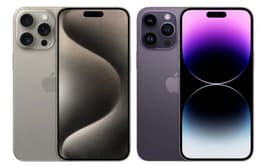
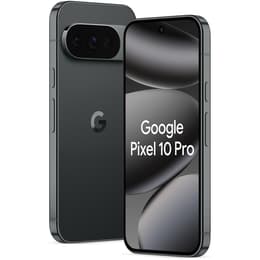
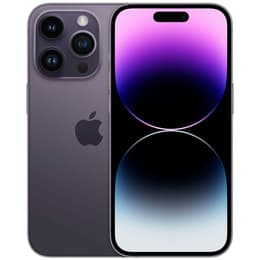
Google Pixel 10 Pro vs iPhone 14 Pro
- 1-year warranty
- Free standard shipping
- Free 30-day returns
Differences at a glance
The Google Pixel 10 Pro (2025) and the iPhone 14 Pro (2022) represent distinct generations and ecosystems in the high-end smartphone market. While both devices cater to users seeking capable multi-camera setups and premium build quality, they differ fundamentally in their operating systems, release timelines, and hardware design philosophies. The Google Pixel 10 Pro operates on Android, emphasizing artificial intelligence integration and customisable software, whereas the iPhone 14 Pro runs on iOS within Apple's tightly integrated ecosystem.
Available Models
Colour
Storage
Scores
Durability
Both smartphones provide robust long-term reliability, though their release years and software update structures differ significantly for everyday owners.
- Release timeline and age: The iPhone 14 Pro debuted in late 2022, whereas the Google Pixel 10 Pro launched later in 2025, offering a more recent hardware baseline.
- Software support duration: Google provides multi-year operating system and security patch commitments for its flagship line, while Apple typically supports devices with iOS updates for roughly five to six years from release.
- Repairability and practical lifespan: Both models feature durable glass-and-metal construction with official water resistance ratings, though component availability makes professional repairs straightforward for both ecosystems.
Release year
2025
2022
Operating system
Android
iOS
Foldable
No
No
Performance
System responsiveness and everyday operation differ based on the internal hardware integration and memory configurations of each device.
- Storage and memory: Both models offer multiple internal storage tiers to accommodate media libraries, while the Pixel 10 Pro features a higher baseline amount of random access memory to handle simultaneous background tasks.
- Everyday execution: Both handsets handle demanding applications, web browsing, and mobile gaming smoothly, ensuring rapid app loading times and fluid user interface transitions.
- Battery behavior: The Pixel 10 Pro incorporates a larger physical battery capacity, whereas the iPhone 14 Pro relies on hardware-software efficiency to manage power consumption throughout a standard day of mixed use.
Screen quality
Viewing experiences on both devices rely on advanced display technologies designed for high clarity and outdoor visibility.
- Display technology: Both smartphones utilize high-resolution organic light-emitting diode panels with deep contrast levels, vibrant color reproduction, and adaptive refresh rates scaling up to 120 hertz for smooth scrolling.
- Brightness levels: Both screens reach high peak luminance figures, ensuring clear legibility under direct sunlight or bright outdoor environments.
- Size and form factor: The iPhone 14 Pro features a compact 6.1-inch screen suited for one-handed operation, while the Pixel 10 Pro provides a slightly larger 6.3-inch viewing area for enhanced media consumption.
Resolution
1280x2856
1179 x 2556
Audiovisual
Imaging capabilities on these flagship devices accommodate diverse photography and videography workflows through multi-lens rear configurations.
- Camera hardware: Both models feature a versatile triple-lens system incorporating main, ultra-wide, and dedicated telephoto optical zoom capabilities for capturing distant subjects.
- Low-light and video capture: Both devices deliver clear low-light photography and stable high-resolution video recording with advanced stabilization features.
- Audio and media output: Stereo speaker setups on both phones provide clear sound output for hands-free calls, podcasts, and video playback without requiring external speakers.
Miscellaneous
Physical dimensions and connectivity standards shape how each smartphone integrates into daily routines and travel requirements.
- Connectivity and ports: Both devices support modern 5G cellular networks, Wi-Fi standards, and Bluetooth connections, utilizing USB Type-C for the Pixel and Lightning connectivity for the iPhone.
- Authentication sensors: The Pixel 10 Pro provides facial recognition alongside an under-display fingerprint sensor, while the iPhone 14 Pro relies exclusively on secure facial mapping technology.
- Dimensions and handling: Weighing similarly around 206 to 207 grams, both models offer solid ergonomics, though subtle variations in width and corner curvature affect pocketability and grip.
Weight
213 oz
206 oz
Screen size (in)
6.3
6.1
SIM card
Physical SIM + eSIM
Physical SIM + eSIM
Carrier compatibility
Unlocked
Unlocked
What the community thinks
User discussions across online communities highlight distinct preferences for each device based on software preferences and hardware layout. Owners frequently praise the iPhone 14 Pro for its reliable app ecosystem, fluid iOS integration, and durable stainless steel frame. Conversely, Pixel 10 Pro users often emphasize the intuitive Android experience, advanced computational photography features, and deeper artificial intelligence tools. Some critics note that the iPhone 14 Pro relies on an older proprietary charging port, while certain Pixel users point out that the device's camera bar design requires specific case compatibility.
Users who prioritize deep customization, advanced artificial intelligence integrations, and an Android environment will find the Google Pixel 10 Pro well-suited to their workflow. Meanwhile, users who value long-standing iOS familiarity, compact ergonomics, and Apple ecosystem continuity may lean toward the iPhone 14 Pro. For buyers exploring sustainable purchases, opting for a quality-assured refurbished option provides a practical way to acquire either device while minimizing environmental impact. Ultimately, the choice depends on preferred operating system ecosystems and individual day-to-day functional priorities.