Compare models
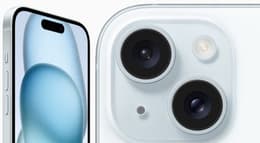
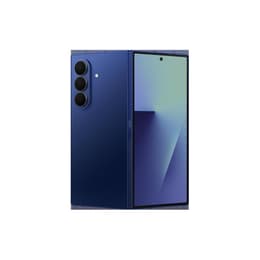
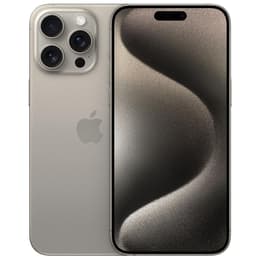
Galaxy Z Fold7 vs iPhone 15 Pro Max
- 1-year warranty
- Free standard shipping
- Free 30-day returns
Differences at a glance
The Samsung Galaxy Z Fold7 (2025) and the Apple iPhone 15 Pro Max (2023) represent two distinct approaches to high-end mobile technology, balancing a book-style foldable design against a traditional large-format flagship structure. While both devices target users seeking expansive screen workspace and high processing capabilities, they differ fundamentally in form factor, operating system, and daily handling. These differences shape how each device fits into distinct workflows and personal routines.
Available Models
Colour
Storage (GB)
Scores
Durability
When evaluating long-term usability and update support, both devices provide extended software lifespans paired with robust physical construction standards.
- Software Support: The Galaxy Z Fold7 provides extended OS upgrades running on Android, whereas the iPhone 15 Pro Max follows Apple's established multi-year iOS support cycle.
- Build Longevity: Both devices incorporate high-strength frame materials and reinforced glass protection, though foldable displays require specific care regarding hinge mechanisms and inner screen layers over years of continuous folding.
- Practical Lifespan: Users can expect both smartphones to maintain responsive daily performance and security updates for many years, supporting long-term ownership as a quality-assured refurbished option.
Release year
2025
2023
Operating system
Android
iOS
Foldable
Yes
No
Performance
Both smartphones deliver high-level system responsiveness for demanding applications, multitasking, and media consumption through current-generation internal architecture.
- Multitasking and Memory: The Galaxy Z Fold7 utilizes high-capacity RAM configurations designed to handle concurrent split-screen applications smoothly, while the iPhone 15 Pro Max manages background tasks efficiently through integrated hardware-software optimization.
- App Loading and Gaming: Both models execute intensive mobile games and complex applications quickly, maintaining stable frame rates and thermal management during extended use.
- Battery Behavior: Battery consumption varies based on screen usage patterns, with the foldable model utilizing more power when running tasks on the expansive inner display throughout a standard day.
Screen quality
Display characteristics define the core identity of both devices, offering divergent viewing experiences tailored to different visual preferences.
- Display Technology: The Galaxy Z Fold7 features a dual-screen setup with a flexible inner OLED display that unfolds into a tablet-sized workspace alongside a standard exterior cover screen.
- Single-Panel Viewing: The iPhone 15 Pro Max utilizes a rigid OLED display equipped with high peak brightness and adaptive refresh rates for smooth scrolling and outdoor clarity.
- Visual Workspace: Users who prefer an expansive canvas for viewing multiple windows will find the foldable screen configuration distinct from the traditional widescreen layout of the Apple flagship.
Resolution
1968x2184
1290 x 2796
Audiovisual
Imaging capabilities on both devices support versatile photography and video recording across diverse lighting conditions.
- Main Sensor Performance: Both smartphones capture high-resolution images with accurate color reproduction, utilizing computational photography to preserve detail in complex lighting environments.
- Zoom and Telephoto: The iPhone 15 Pro Max incorporates a specialized folded glass telephoto lens for long-range optical zoom, while the Galaxy Z Fold7 utilizes a high-megapixel main sensor configuration to maintain clarity across various zoom levels.
- Video and Audio: Video recording remains stable and detailed on both models, supported by responsive audio capture for calls, media recording, and everyday communication.
Miscellaneous
Practical daily usability is influenced by physical dimensions, connectivity standards, and biometric authentication methods.
- Handling and Portability: The iPhone 15 Pro Max maintains a traditional wide-body slab profile, whereas the Galaxy Z Fold7 offers a narrow cover display that opens into a broader square-like tablet form factor.
- Connectivity: Both models support 5G cellular networks, advanced Wi-Fi standards, and Bluetooth for reliable peripheral pairing and data transfer.
- Authentication and Ports: The Apple device relies on Face ID and a USB-C port with high-speed data transfer support, while the foldable alternative integrates fingerprint recognition into the side power key alongside its own USB-C port.
Weight
215 oz
221 oz
Screen size (in)
8.0
6.7
Network
5G
5G
SIM card
Dual Physical SIM + eSIM
Physical SIM + eSIM
Carrier compatibility
Unlocked
Unlocked
What the community thinks
Community discussions and user feedback indicate that satisfaction with either device heavily depends on individual form-factor preferences. Users frequently praise the iPhone 15 Pro Max for its reliable battery longevity, durable titanium body design, and refined single-screen usability. Conversely, owners of the Galaxy Z Fold7 highlight the versatility of the expansive inner display for multitasking, productivity, and media viewing, though some note the trade-offs of handling a thicker folded profile and managing a flexible inner screen.
Users prioritizing a traditional, highly pocketable smartphone layout with streamlined one-handed operation will find the iPhone 15 Pro Max well-suited to their daily habits. Meanwhile, users who value a multi-window workspace, tablet-sized viewing on demand, and advanced productivity layouts may prefer the Galaxy Z Fold7. Exploring a quality-assured refurbished option can also provide a sustainable choice for acquiring either of these advanced mobile devices without compromising on functional reliability.